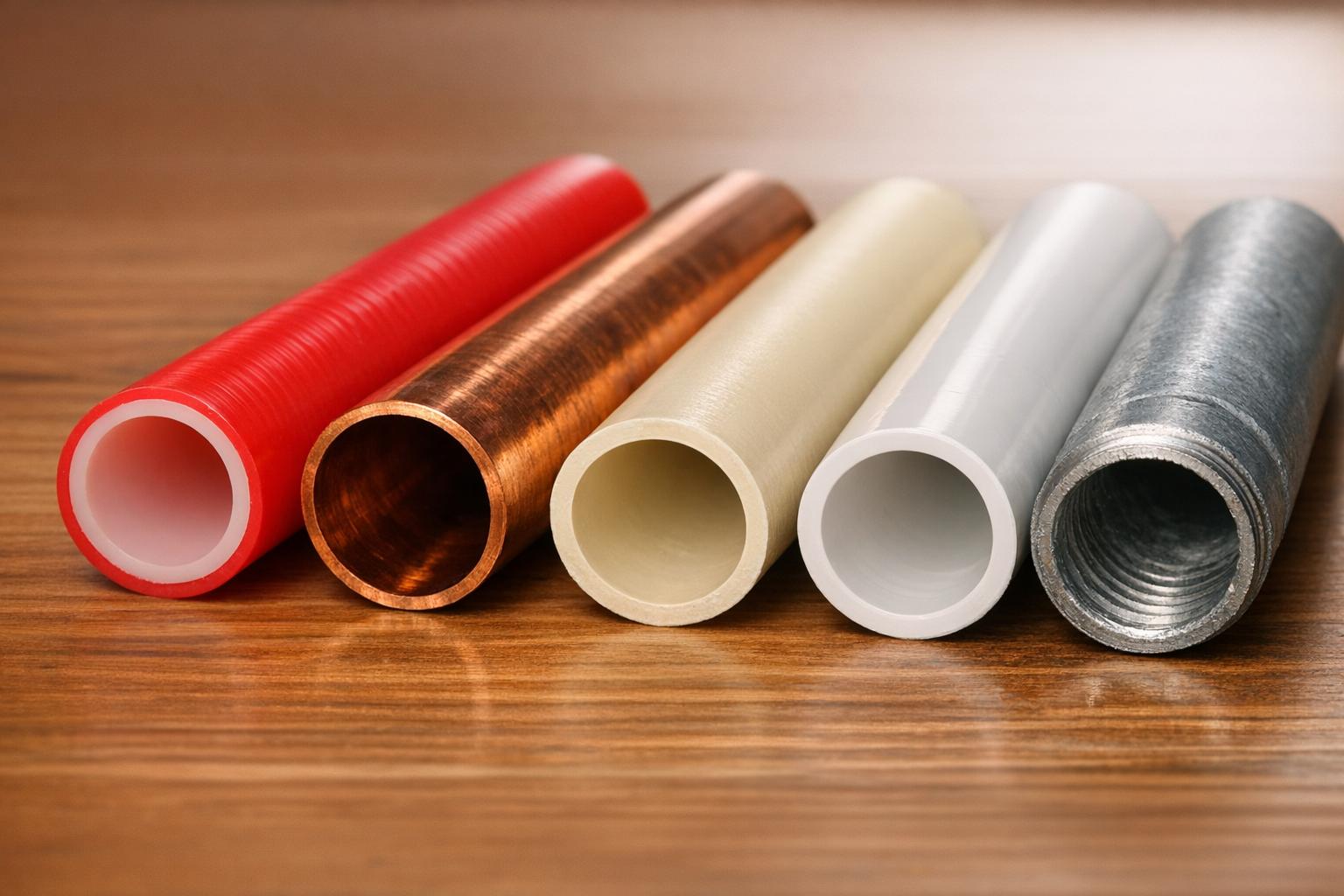

Older Toronto homes often have outdated plumbing systems that can cause health risks, water quality issues, and costly repairs. If your home was built before the 1960s, it may have lead pipes or galvanized steel, both of which deteriorate over time. Replacing these with modern materials like PEX, copper, or CPVC can improve safety, reliability, and performance.
Key Takeaways:
- PEX: Affordable, flexible, freeze-resistant, and easy to install. Lifespan: 25–70 years.
- Copper: Durable, antimicrobial, and long-lasting (50–70+ years), but costly and less freeze-resistant.
- CPVC: Budget-friendly for hot water systems, but brittle in freezing conditions. Lifespan: 40–70 years.
- PVC: Suitable for drainage only, with a 25–40-year lifespan.
- Galvanized Steel: Outdated, prone to corrosion, and no longer compliant with modern building codes.
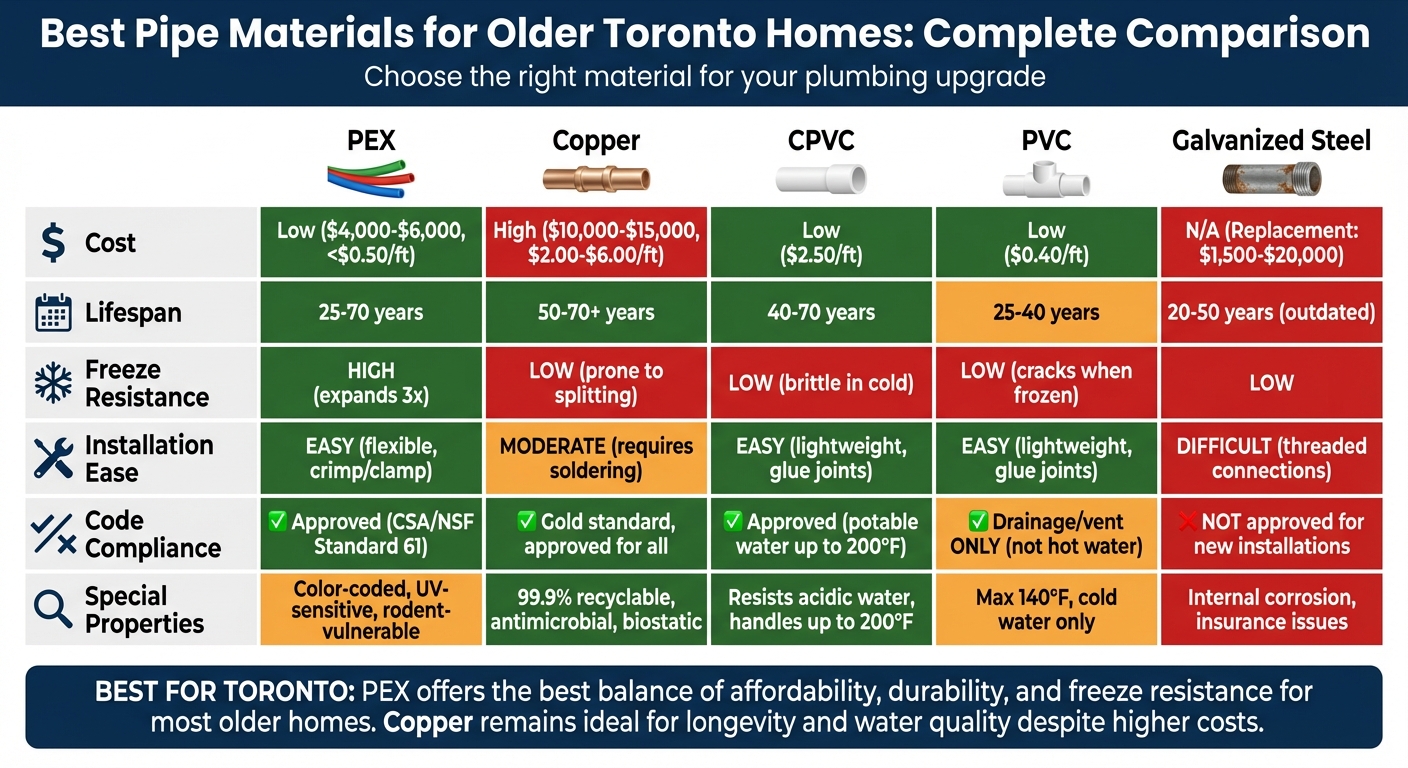
Quick Comparison Table:
| Material | Cost | Lifespan | Freeze Resistance | Installation Ease | Code Compliance |
|---|---|---|---|---|---|
| PEX | Low | 25–70 years | High | Easy | Approved for potable water |
| Copper | High | 50–70+ years | Low | Moderate (requires soldering) | Approved for potable water |
| CPVC | Low | 40–70 years | Low | Easy | Approved for potable water |
| PVC | Low | 25–40 years | Low | Easy | Drainage only |
| Galvanized Steel | N/A | 20–50 years | Low | Difficult | Not approved |
For most older Toronto homes, PEX offers the best balance of affordability, durability, and freeze resistance. However, copper remains a reliable choice for its longevity and water quality benefits, despite its higher cost. Consult a licensed plumber to assess your home’s specific needs.
Pipe Materials Comparison for Toronto Homes: Cost, Lifespan & Performance
PEX vs COPPER vs CPVC plumbing pipes
1. PEX
PEX piping offers a level of flexibility that makes it a great fit for older Toronto homes, especially when preserving heritage finishes. Its ability to weave through walls without major disruption is a clear advantage. Unlike galvanized steel, PEX resists corrosion and avoids the pinhole leaks commonly associated with aging copper systems.
Cost
One of PEX's standout benefits is its affordability. For a 1,500-square-foot home with two bathrooms, a full PEX installation typically costs between $4,000 and $6,000. In comparison, copper installations for the same space range from $8,000 to $10,000. The material cost further highlights this gap: PEX costs less than $0.50 per foot, while 3/4-inch copper runs about $2.00 per foot. A 2016 study published in the Journal of Cleaner Production revealed that using PEX instead of copper could reduce total building costs by up to 63% over the structure's lifetime.
Lifespan
PEX pipes are designed to last anywhere from 25 to 70 years, with some manufacturers even suggesting they could reach 100 years under ideal conditions. While copper can have a slightly longer lifespan (50–70+ years), PEX’s resistance to corrosion ensures consistent performance over time. This durability eliminates the risk of pinhole leaks that often plague older copper systems.
Freeze Resistance
Toronto winters can be brutal, and pipes need to stand up to freezing temperatures. PEX is well-suited for this, as it can expand up to three times its diameter to accommodate freezing water without bursting. As Mr. Rooter Plumbing explains:
"PEX plumbing is generally considered the best option for Canadian winters because it resists freezing and bursting".
That said, it’s still important to insulate PEX pipes in vulnerable areas like basements, attics, and crawl spaces. While PEX can handle freezing conditions, it typically begins to freeze when temperatures hit around –7°C (20°F).
Installation Ease
PEX makes installation straightforward. It uses crimp rings, cinch clamps, or expansion connections, eliminating the need for soldering with propane torches - a major plus in older wooden homes. Additionally, its colour-coded system (red for hot water, blue for cold, and white or clear for either) simplifies future repairs and maintenance.
Code Compliance
PEX is fully approved for residential plumbing in Toronto. It meets drinking water safety standards under NSF/ANSI/CAN Standard 61 and adheres to Canadian Standards Association (CSA) requirements. However, it’s worth noting that PEX degrades when exposed to UV light and can be vulnerable to rodent damage. This means it’s best avoided in areas with direct or indirect sunlight or in spaces prone to pests.
Next, we’ll look at copper, a traditional choice with its own set of strengths and challenges.
2. Copper
Copper has been a staple material in Toronto plumbing for decades. It's often the top choice for replacing outdated lead service lines, thanks to its proven reliability. For instance, a recent upgrade in a century-old home showcased how effectively copper can replace old galvanized steel pipes. Let’s break down the key aspects of copper, including its cost, durability, and installation challenges.
Cost
Copper is the priciest option among commonly used pipe materials. The material itself costs between $2.00 and $6.00 per foot, and refitting a 1,500-square-foot home can run between $10,000 and $15,000. To put that into perspective, a 65-foot service line requires about $286 worth of copper compared to just $46 for PEX. However, copper has a unique advantage: it’s 99.9% recyclable, and reclaimed copper retains 80–90% of its original value.
Lifespan
Copper pipes are built to last, with an impressive lifespan of 50 to 70+ years under normal conditions. This durability stems from copper’s natural resistance to mineral buildup, a common issue with older galvanized steel pipes in Toronto homes. Additionally, copper is biostatic and impermeable, meaning it prevents contaminants like petroleum or fertilizers from seeping into the water supply. That said, copper isn’t without its vulnerabilities. Highly acidic water can cause pinhole leaks over time. As Morris VanAndel of Vanwest Developments Ltd. notes:
"If you see blue-green or white corrosion on the pipe... get your water tested to see if the pH of the water is acidic or basic".
Freeze Resistance
Copper's rigidity makes it less forgiving in Toronto's frigid winters. Unlike PEX, copper pipes are prone to splitting if water inside them freezes. Proper insulation in areas like basements and attics is essential to prevent damage.
Installation Ease
Installing copper pipes is no small task and requires professional expertise. The process involves soldering joints with a propane torch, which is far more time-intensive than working with plastic alternatives. For example, copper fittings take around 40 seconds per joint, compared to just 5 seconds for certain plastic speed-fit connections. Open flames also pose fire risks, especially in older homes, making it crucial to hire licensed professionals. For residential plumbing, Type L copper (blue stamps) is the standard, while Type K (green stamps) is used for underground service lines due to its thicker walls. If you’re considering copper for your home, local experts like Creed Plumbing can help ensure a safe and efficient installation.
Code Compliance
Copper is often regarded as the "gold standard" for plumbing materials in Toronto. It meets all CSA standards and building codes for both hot and cold water supply. Its antimicrobial properties help resist bacterial growth, and with a melting point of 1,100°C, copper offers unmatched heat resistance compared to any plastic pipe. A survey of 155 municipal water utilities revealed that 66% reported issues with plastic service lines, while fewer than 20% encountered problems with copper.
Next, we’ll compare these factors across various pipe materials to see how copper stacks up.
3. PVC/CPVC
PVC and CPVC play specific roles in Toronto’s plumbing systems. PVC is primarily used for drain, waste, and vent (DWV) applications, while CPVC is better suited for potable water systems. The key difference between the two lies in their ability to handle temperature. PVC is designed for cold water only, with a maximum temperature of 140°F (about 60°C). CPVC, on the other hand, can handle temperatures up to 200°F (around 93°C), making it ideal for hot water systems. These materials offer modern solutions for the challenges of aging plumbing systems commonly found in older Toronto homes. Let’s take a closer look at their cost, lifespan, and other practical considerations.
Cost
When it comes to cost, there’s a noticeable difference between the two materials. Schedule 40 PVC costs around $0.40 per foot, while Schedule 40 CPVC is priced significantly higher at about $2.50 per foot. CPVC sheets are also available, costing between $0.50 and $1.00 per square foot. As David Carey, a Master Plumber at Worcester Technical High School, explains:
"If you're on a tight budget and don't want to solder pipes, CPVC is your best option".
Lifespan
PVC pipes typically last between 25 and 40 years under normal conditions. With optimal care, their lifespan can sometimes extend even further. CPVC, however, is more durable, with an expected lifespan of 40 to 70 years. Both materials have the advantage of being resistant to corrosion, which is a significant concern in some Toronto neighbourhoods with acidic water. Mitch Smedley, a Master Plumber at Smedley Plumbing, highlights this benefit:
"CPVC piping and fittings are perfect for areas of the country with aggressive water that eats away at copper pipes".
Freeze Resistance
One drawback of both PVC and CPVC is their rigidity, which makes them susceptible to cracking in freezing conditions. This is in contrast to the flexibility of PEX piping. To prevent burst pipes during Toronto’s cold winters, proper insulation is crucial in unheated spaces like basements and crawlspaces.
Installation Ease
PVC and CPVC are lightweight and easy to cut, which simplifies installation - especially in older Toronto homes where dry timber framing can make soldering difficult. These materials also eliminate the need for soldering tools. However, it’s essential to use the correct adhesive: PVC cement should never be used on CPVC pipes, and vice versa. Each material requires its own specific solvent cement to ensure a secure, leak-free bond.
CPVC does require some additional considerations during installation. For example, support brackets should be placed every 32–36 inches (81–91 cm) to prevent sagging. Additionally, a 10-foot (3.05 m) section of CPVC can expand by up to 1/2 inch (around 1.3 cm) when exposed to heat. Despite these factors, both materials meet local CSA and Ontario building code standards.
Code Compliance
Both PVC and CPVC are approved by the Canadian Standards Association (CSA) and comply with Ontario building codes. However, their applications differ. PVC is restricted to drain, waste, and vent systems and cannot be used for hot water supply. CPVC is approved for potable water systems because it can handle water temperatures up to 200°F (93°C) at 100 psi, exceeding the requirements of most homes.
sbb-itb-466cac3
4. Galvanized Steel
Galvanized steel pipes were once the go-to choice for Toronto homes, especially those built before the 1960s. While these pipes were designed to last 40–50 years, many systems have far outlived their intended lifespan, now operating at 80–90 years.
The main issue with galvanized steel lies in its tendency to corrode from the inside out. Over time, the zinc coating that protects the steel wears away internally, often making the damage invisible until a pinhole leak appears. As Mister Plumber puts it:
"The process happens from the inside out, too, as the protective layer of zinc eats away, making it hard to detect."
Let’s take a closer look at the lifespan, costs, installation challenges, and compliance issues associated with galvanized steel.
Lifespan
Galvanized pipes installed in the 1950s and 1960s have long outlasted their expected 40–50-year lifespan. Over time, internal corrosion causes calcium, lime, and rust to build up inside the pipes, steadily reducing water flow. For instance, a 1/2-inch pipe can see its diameter shrink significantly within 30 years. This not only affects water pressure but also raises health concerns, as these pipes can leach lead into the water supply from old service lines.
Cost
Replacing galvanized plumbing is often a necessary but expensive undertaking. Costs typically range from $1,500 to $20,000, depending on the home's size and the materials chosen for replacement. Adding to the urgency, many Toronto insurance companies have updated their policies, either refusing coverage or increasing deductibles for homes with galvanized pipes. Advanced Plumbing highlights this issue:
"Most home insurance companies will decline coverage until such pipes have been replaced."
Installation Challenges
Galvanized pipes are bulky and rely on threaded connections, making them harder to work with compared to modern materials. Repairs can be particularly tricky; threading new joints onto rusted pipes is nearly impossible, leading plumbers to resort to temporary fixes rather than permanent solutions. Additionally, connecting new copper pipes to existing galvanized steel requires a brass or bi-metallic fitting to avoid a chemical reaction that could speed up corrosion. These complications make galvanized steel impractical for modern plumbing needs.
Code Compliance
Galvanized steel no longer meets the standards of modern building codes. While it’s still available for purchase, it is no longer used in new construction and is rarely recommended for residential plumbing. The City of Toronto considers galvanized pipes "substandard" and often replaces them during watermain or service line upgrades. If you’re planning plumbing renovations, you’ll need to use materials like PVC, ABS, or copper to comply with current codes, which often require additional clean-outs for proper maintenance.
Comparison of Pipe Materials
Choosing the right pipe material in Toronto’s challenging freeze-thaw climate means weighing cost, durability, and performance.
| Material | Cost | Lifespan | Freeze Resistance | Installation Ease | Code Compliance |
|---|---|---|---|---|---|
| PEX | Affordable | 25–50 Years | Excellent (Expands/contracts) | High (Flexible, push-fit) | CSA Approved |
| Copper | High | 50–70+ Years | Poor (Rigid, can split) | Moderate (Requires soldering) | CSA Approved |
| CPVC | Low | 40–75 Years | Limited (Brittle in cold) | High (Glue/join) | CSA Approved |
| PVC | Low | 25–40 Years | Poor (Drainage only) | High (Glue/join) | CSA Approved (DWV only) |
| Galvanized Steel | N/A | 20–50 Years | Poor | Low (Threaded) | Not permitted for new installations |
From the table, PEX stands out for its freeze resistance and ease of installation. Its flexibility allows it to expand and contract with freezing water, reducing the risk of bursting. This makes PEX a practical option for retrofits in Toronto’s climate. Additionally, its push-fit connections simplify the installation process, saving both time and labour.
Copper, on the other hand, is known for its durability and ability to maintain excellent water quality. Its natural antimicrobial properties help inhibit harmful bacteria. However, copper’s higher cost and the need for soldering make it a more expensive and labour-intensive choice.
For those on a budget, PVC and CPVC are viable alternatives. PVC is limited to drainage and venting applications, while CPVC can handle hot water (up to 100°C) but may become brittle in colder conditions over time.
Galvanized steel, once common, is now outdated due to its tendency to corrode internally. It’s no longer approved for new installations.
Conclusion
Choosing the right pipe material is essential for maintaining and upgrading older Toronto homes. Each option comes with its own strengths, and understanding their benefits can help you make an informed decision.
For homes around 1,500 square feet, PEX piping provides a practical and budget-friendly choice. With installation costs ranging between $4,000 and $6,000 - approximately half the price of copper - PEX is not only affordable but also incredibly versatile. Its flexibility makes it easy to install without extensive wall demolition, and it’s designed to expand rather than burst during freeze-thaw cycles, a key consideration in Toronto’s climate.
On the other hand, copper piping remains a long-lasting option, with a lifespan of 50 to 70 years and natural antibacterial properties. While it’s an excellent choice for main service lines, its rigidity means it requires proper insulation in unheated spaces to prevent damage during colder months.
Beyond material choices, it’s critical to ensure your plumbing system is up to modern standards. Many older homes still contain outdated and potentially hazardous materials like lead or corroded galvanized steel pipes. A professional inspection can identify these risks and recommend appropriate upgrades.
If you’re considering a system update or need winter-proofing for Toronto’s challenging freeze-thaw cycles, reach out to Creed Plumbing. Their licensed team offers expert inspections and efficient pipe replacement services. While PEX delivers affordability and flexibility, copper remains the benchmark for durability - both options are available to meet your home’s unique needs.
FAQs
What makes PEX pipes a good choice for older homes in Toronto?
PEX (cross-linked polyethylene) pipes are a smart choice for older Toronto homes, thanks to their versatility, strength, and affordability. They can easily bend around tight corners, like those found in wall cavities and studs, making them perfect for retrofitting without the need to tear down walls. This not only speeds up the installation process but also helps maintain the integrity of heritage homes.
Beyond their ease of installation, PEX pipes stand out for their resistance to corrosion - a common problem with copper pipes in Toronto’s hard water conditions. They’re also designed to handle extreme temperatures by expanding and contracting, which helps prevent bursts during Canada’s freezing winters. On top of that, PEX is significantly cheaper than copper, costing roughly one-third per metre, and its straightforward connections reduce both labour and ongoing maintenance expenses.
For homeowners aiming to upgrade their plumbing while maintaining the character of their older homes, PEX offers a dependable and modern solution. Professionals like Creed Plumbing ensure expert installation, delivering reliable performance and clear, upfront pricing in Canadian dollars.
What are the cost and durability differences between copper and PEX piping?
Copper piping comes with a hefty price tag compared to PEX. In Canada, copper costs about $2 to $8 CAD per foot (roughly $6.50 to $26 per metre), whereas PEX is far more budget-friendly, priced at just $0.50 to $2 CAD per foot (around $1.60 to $6.50 per metre). That means PEX can be four to six times cheaper than copper - an important consideration for cost-conscious homeowners.
When it comes to lifespan, copper typically lasts 50 to 70 years with proper care, outlasting PEX, which has a life expectancy of 25 to 50 years. But here’s where PEX shines: it’s highly resistant to corrosion and freeze damage, a big advantage for those living in Toronto’s harsh winters. So, while copper offers a longer-lasting but pricier solution, PEX combines affordability with durability and excellent performance in freezing conditions.
Why isn’t galvanized steel a good option for plumbing in older Toronto homes?
Galvanized steel pipes have fallen out of favour due to the gradual wearing away of their zinc coating. Over time, this deterioration leads to internal rust and corrosion, which can result in problems like lower water pressure, rusty or discoloured water, and mineral deposits. These issues not only affect the quality of your water but can also raise health concerns and undermine the dependability of your plumbing system.
In many older Toronto homes, upgrading from galvanized steel pipes to modern plumbing materials offers a safer, longer-lasting, and more efficient solution that aligns with current plumbing standards.