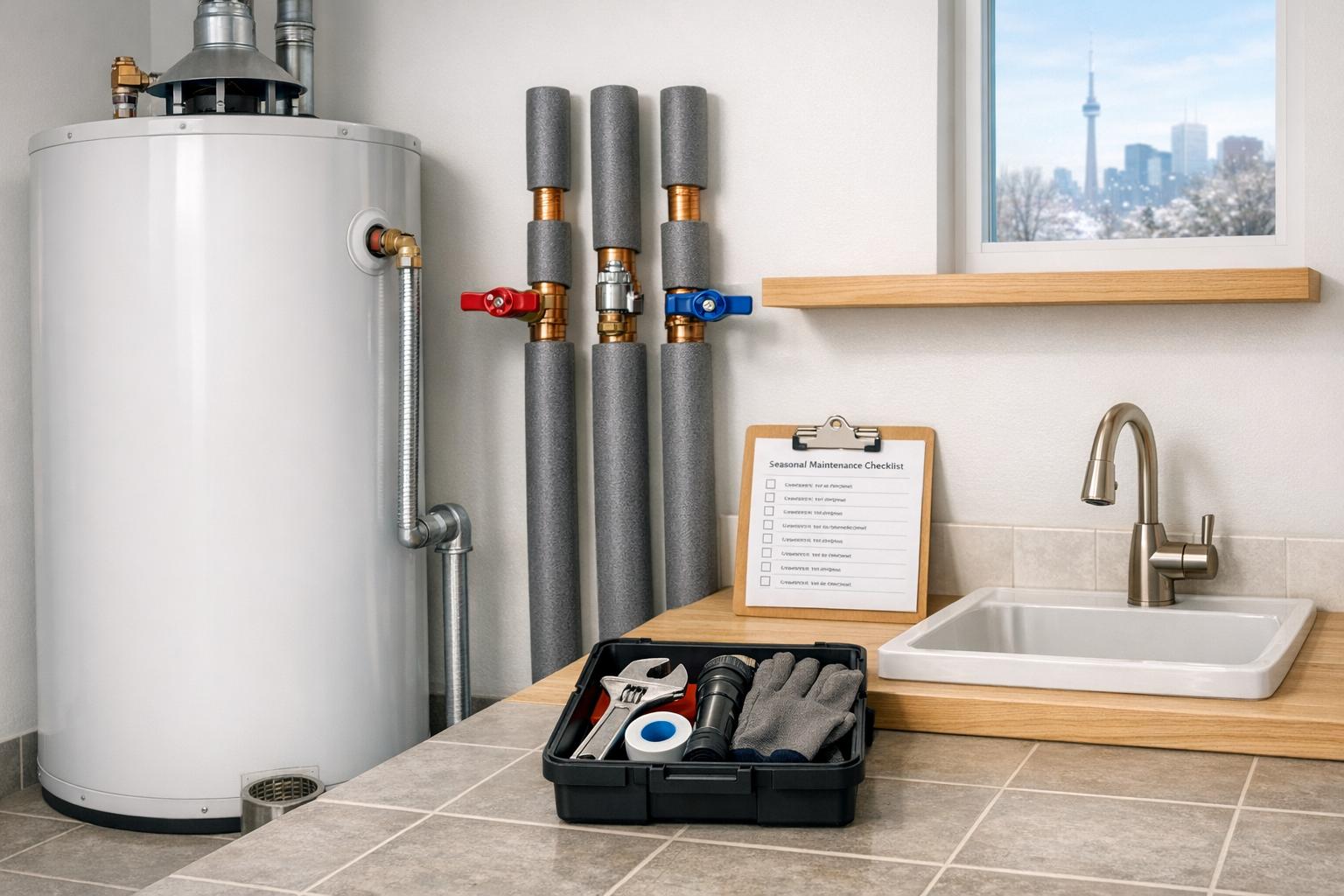

Maintaining your home's fixtures - like faucets, toilets, and drains - is essential to avoid costly repairs, especially in Toronto's challenging climate. From freezing winters to humid summers, Toronto's weather can wreak havoc on plumbing systems. Here's what you need to know:
- Why It Matters: A single burst pipe can cause thousands in damage. Regular maintenance prevents emergencies and saves money.
- Costs: Emergency plumbing can cost $150–$400 per visit, while annual maintenance plans range from $150–$300.
- Key Tasks: Seasonal steps like winterizing outdoor taps, inspecting for leaks, and flushing water heaters keep fixtures in top shape.
- DIY Tips: Use tools like wrenches, plungers, and eco-friendly cleaners to handle minor fixes yourself.
- Call a Pro: Persistent issues like multiple clogged drains or water heater failures often require a licensed plumber.
Toronto homeowners can save time, money, and water by staying ahead of common plumbing problems. Read on for seasonal checklists, DIY fixes, and when to hire a professional.
Why Toronto Residents Need Regular Fixture Maintenance
How Toronto's Climate Affects Your Fixtures
Toronto's unpredictable weather takes a toll on plumbing fixtures throughout the year. Freezing temperatures and sudden cold snaps can wreak havoc by causing pipes to burst, freezing water heaters, and failing sump pumps. When water freezes inside pipes, it expands, potentially splitting supply lines. This can lead to structural damage and, within just 24 hours, mould growth.
Summers, while warmer, bring their own set of problems. High humidity and increased water usage during this season often expose hidden leaks that might have gone unnoticed in cooler months. Heavy rainfall can overwhelm drainage systems, while spring's melting snow and rising groundwater levels heighten the risk of basement flooding. On top of that, Toronto’s moderately hard water (7–10 grains per gallon) contributes to sediment buildup in fixtures year-round, which can shorten their lifespan if not addressed through regular maintenance. Tackling these issues early can save you from costly emergencies down the road.
Avoiding Expensive Repairs and Emergencies
The cost difference between routine maintenance and emergency repairs is massive. In Toronto, emergency plumbing services start at $150 to $400 for a call-out, with labour rates often 1.5 to 2 times higher than standard fees. On the other hand, annual maintenance plans, which typically cost between $150 and $300, can identify and fix problems before they escalate.
For instance, repairing a burst pipe can set you back $500 to $3,000, while fixing a failed water heater costs between $200 and $1,200. Sump pump failures or flooding can climb to $500 to $4,000, and sewer backups or drain blockages range from $100 to $800. Annual inspections can detect about 80% of potential plumbing issues early, and simple measures like insulating pipes can cut winter emergencies by half. Even a single unrepaired leak wastes over 11,000 litres of water annually, costing you an extra $60 to $80 in water bills.
Water Conservation and Environmental Benefits
Well-maintained fixtures not only save you money but also align with Toronto's environmental initiatives. A faucet dripping just once per minute wastes around 130 litres of water every year. Given that bathrooms account for roughly 50% of indoor water use in Toronto homes, even minor leaks can result in significant water loss.
"Using less water, keeping rainwater on your property and managing what enters our storm sewer system means you are protecting both your home, the environment and saving money." - City of Toronto
Upgrading to water-efficient fixtures can make a noticeable difference. For example, installing a low-flow toilet can save 20,000 litres annually and reduce your water bill by $75 to $100. Adding a faucet aerator conserves 7,000 litres and saves $25 to $40 each year. These upgrades not only lighten the load on Toronto's water infrastructure but also contribute to the city’s sustainability goals. With buildings responsible for about 56% of Toronto’s total emissions, efficient fixtures play a key role in reducing the city’s environmental footprint. Regular maintenance ensures your fixtures stay efficient, saving you money while supporting broader environmental efforts.
sbb-itb-466cac3
Artos Training Series: How to Maintain and Clean Luxury Plumbing Fixtures

Tools and Supplies You Need for Fixture Maintenance
Toronto's tough climate can take a toll on your fixtures, making regular upkeep essential. Having the right tools and supplies on hand is key to staying ahead of potential problems and avoiding expensive repairs.
Basic Repair and Cleaning Tools
To handle routine maintenance and minor fixes, a well-stocked toolkit is a must. Start with these essentials:
- Wrenches: An adjustable wrench for versatility, a pipe wrench for gripping round pipes, and a basin wrench to tackle those hard-to-reach nuts under sinks.
- Pliers: Slip-joint pliers are perfect for larger nuts, like those on P-traps.
- Clog Removal Tools: Keep a cup plunger for sinks, a flange plunger for toilets, and a plumber's snake or drain auger for deeper blockages.
- Sealing Materials: Teflon tape is great for wrapping male pipe threads to prevent leaks, while plumber's putty creates watertight seals around drains and faucet bases.
Other must-haves include a flashlight or headlamp for visibility, a bucket and rags for managing spills, and a wet/dry vacuum for larger leaks or messes.
Safe and Eco-Friendly Cleaning Products
Cleaning your fixtures doesn’t have to mean using harsh chemicals that could damage surfaces or harm the environment. Safer, plant-based alternatives are a great choice. Here are some DIY solutions:
- For metal and chrome fixtures, mix 2 cups of water, ½ cup white vinegar, 1 tsp dish soap, and 1 tsp baking soda.
- To clean toilets, combine ¼ cup baking soda, ¼ cup Borax, and 1 cup white vinegar. Let the mixture sit in the bowl for 30 minutes before scrubbing away stains.
For natural stone fixtures like marble or granite, avoid vinegar - it can etch the surface. Instead, mix 2 cups water, ¼ cup rubbing alcohol, and 5–10 drops of clear dish soap for a stone-safe cleaner. If you're using concentrated eco-friendly cleaners, follow these dilution ratios: 1:2 for shower stalls, 1:8 for aluminium or chrome, and 1:80 for glass fixtures and windows.
Safety Equipment for Maintenance Work
Protecting yourself during maintenance is just as important as protecting your fixtures. Here’s what you’ll need:
- Heavy-duty rubber gloves: These shield your hands from caustic cleaners, sharp debris, and unsanitary waste.
- Safety goggles or glasses: Crucial for older homes in areas like The Beaches or High Park, where rust and debris from cast iron pipes can become an issue.
- Non-contact voltage checker: Always check for live wires before working near water fixtures.
- Rubber-soled shoes: Essential for working in wet areas to reduce the risk of electrical shock. If you're in a flooded space, stand on a dry board or rubber mat for added safety.
- Knee pads: These can save your joints during low-to-the-ground tasks like fixing toilet flanges.
- Headlamp: Keeps your hands free and ensures you can see clearly in tight or dimly lit spaces.
Seasonal Fixture Maintenance Guide for Toronto

Toronto Seasonal Plumbing Maintenance Checklist by Season
Toronto's ever-changing weather puts a lot of stress on plumbing fixtures, making year-round maintenance essential. Each season has its own set of challenges, and staying ahead of them can save you from costly repairs and unexpected emergencies. Here's what you need to know to keep everything in working order.
Winter: Preventing Frozen Fixtures
When temperatures drop below -6°C, pipes are at risk of freezing and bursting. This happens because water expands by about 9% when it freezes, creating immense pressure - enough to rupture even sturdy copper pipes. A single burst pipe can leak over 250 gallons of water in just one day.
Winterize outdoor faucets by late October or early November, especially when overnight temperatures approach 0°C. A good rule of thumb is to use Canadian Thanksgiving as your annual reminder. Start by disconnecting hoses, splitters, and nozzles from exterior taps. Then, shut off the interior valve (usually in your basement near the foundation wall) and open the outdoor faucet fully to drain the line. Don’t forget to open the small bleeder valve on the interior shut-off to release any trapped water - place a bucket underneath to catch drips. Once the water stops, close the bleeder and leave the outdoor faucet in the "open" position for the winter.
"Every spring [plumbers] get calls for failed frost‐free faucets. When they fail, they fail big time!" – Plumber, Quartermaster
Even frost-free faucets need winterizing in Toronto since they can fail if water gets trapped and freezes. For pipes in unheated areas like garages or crawl spaces, insulate them with foam sleeves or fiberglass insulation, which cost about $1–$10 depending on the material and length. In areas prone to freezing, heat tape (priced around $30–$50 for a 6-foot section) may be necessary.
Seal air leaks around doors, windows, and pipe entry points using caulk or expanding foam. This prevents cold drafts from freezing pipes. Keep your thermostat at a minimum of 13°C (55°F) to protect indoor plumbing. During extreme cold spells - when temperatures drop below -10°C - open cabinet doors under sinks to let warm air circulate around the pipes. You can also let a pencil-thin stream of water run from the lowest tap in the house to keep water moving.
If you're leaving home for more than three days, shut off your main water valve and drain the system by opening a tap at the lowest point in your house. Knowing where your main shut-off valve is located can save you valuable time if a pipe bursts.
As winter transitions to spring, carefully inspect your plumbing for any freeze-related damage.
Spring: Cleaning and Checking for Leaks
Spring in Toronto often brings rapid snowmelt and heavy rains, which can overwhelm the city's combined sewer systems and increase the risk of basement flooding.
Test your sump pump by pouring a bucket of water into its pit. The float switch should activate immediately. If it doesn’t, schedule repairs before the next rainstorm. Check all faucets, toilets, and exposed pipes for leaks or condensation that might have developed over the winter. Even small drips can waste water and lead to bigger issues down the line.
Clear debris from outdoor drains and catch basins to prevent blockages that could cause flooding. Also, inspect the area around your water heater for any signs of moisture or corrosion.
Summer: Maintaining Fixture Efficiency
Summer often puts extra strain on plumbing due to higher water usage. This can lead to drops in water pressure and problems with condensation on cold pipes, which may cause mould or water damage.
Monitor your water meter when no water is being used. If the meter is moving, it could indicate a hidden leak. Clean your garbage disposal by running ice cubes and dish soap through it to remove buildup from summer gatherings. Also, check outdoor sprinkler heads for leaks or clogs - fixing these can reduce water waste and keep your lawn hydrated efficiently.
Keep indoor humidity levels between 30% and 40% to avoid condensation on pipes. If you notice water droplets forming, consider improving ventilation or adding pipe insulation.
Fall: Getting Fixtures Ready for Winter
Fall is the final chance to prepare your plumbing for the cold months ahead. Flush your water heater to remove sediment that may have accumulated over the year. This simple step improves its efficiency and ensures it can handle the increased demand during winter.
Clean gutters and downspouts thoroughly to prevent ice dams, which can force water back into your plumbing system. Clogged gutters are a common cause of winter water damage in Toronto homes. Inspect weatherstripping around doors and windows, replacing any worn sections to keep cold air out and protect your pipes.
Repeat the outdoor faucet winterization process by late October to avoid frozen lines.
| Season | Primary Risk | Essential Task |
|---|---|---|
| Winter | Frozen/Burst Pipes | Insulate pipes; maintain thermostat above 13°C; let faucets drip during freezes |
| Spring | Flooding/Sewer Backup | Test sump pump; inspect for leaks; clear outdoor drains |
| Summer | High Water Demand | Check for leaks; clean garbage disposal; monitor water usage |
| Fall | Frozen Outdoor Lines | Disconnect hoses; drain outdoor taps; flush water heater |
"Ten minutes of prevention beats weeks of repairs." – Sally Abdelnabi, Content Editor, Quartermaster
Common Fixture Problems and DIY Fixes
Taking care of your plumbing can often be as simple as addressing a few common issues yourself. In Toronto homes, typical problems include leaky faucets, clogged drains, and low water pressure. With the right tools and a bit of patience, you can tackle these issues and potentially save on costly emergency repairs.
Repairing Leaky Faucets and Toilets
Did you know that a dripping faucet can waste thousands of litres of water every year? Even a small, steady drip adds up to about 56 litres a month. The usual culprits are worn-out washers, damaged O-rings, corroded valve seats, or mineral buildup.
Toronto homes feature various faucet types - compression, cartridge, ball, or ceramic disk - each with its own quirks. Identifying your faucet type is key to finding the right replacement parts.
Here’s how to tackle a leaky faucet:
- Cover the drain with a rag to avoid losing small screws.
- Turn off the water supply using the shut-off valves under the sink. If these are stuck or missing, shut off the main water valve, usually located where the pipe enters your home.
- Disassemble the faucet: Pry off the decorative cap with a flathead screwdriver, unscrew the handle, and remove the packing nut or retaining clip. Then, pull out the cartridge or stem.
- Inspect and replace parts: Check the O-ring, washer, or cartridge for cracks or wear. Take the old part to a local hardware store to ensure a perfect match.
For stubborn mineral deposits, soak metal parts in white vinegar before reassembling. Apply plumber’s grease to moving parts and plumber’s tape on threads to ensure a tight seal. Reassemble everything in reverse order, tightening just enough to avoid damaging new seals.
| Faucet Type | Common Leak Source | Typical Fix |
|---|---|---|
| Compression | Worn rubber washer | Replace washer and/or O-ring |
| Cartridge | Damaged O-ring/cartridge | Replace the entire cartridge |
| Ceramic Disk | Mineral buildup/seals | Clean the disk or replace the seals |
| Ball Faucet | Worn springs/seals | Replace the cam assembly and seals |
"Even a small drip can easily waste two litres of water per day. Over the month, that's upwards of 56 litres." – DrainWorks Plumbing Toronto
If the leak persists or your faucet is especially complex, like a ceramic disk model, it’s time to call a licensed Toronto plumber.
Clearing Clogged Drains and Pipes
Clogged drains are another common headache. About 47% of plumbing issues come from grease buildup, while 75% of bathroom clogs are caused by hair and soap scum. Skip harsh chemical cleaners - they can corrode pipes and harm the environment.
For minor clogs, try this eco-friendly solution:
- Pour 1/2 cup of baking soda down the drain, followed by 1/2 cup of vinegar.
- Let it fizz for 15–30 minutes.
- Flush with a kettle of boiling water.
For greasy kitchen clogs, use hot water and dish detergent to soften the blockage before plunging. Always block the overflow drain to maintain suction, and use the right plunger - a flange plunger for toilets and a cup plunger for sinks.
If plunging doesn’t work, try a manual drain snake to break up the clog. For tougher cases, remove and clean the P-trap (the curved pipe under the sink) to clear debris.
Watch for warning signs like gurgling sounds, bad odours, or multiple clogged fixtures - these could signal a main sewer line issue requiring professional help.
Fixing Low Water Pressure
Low water pressure is especially frustrating during showers. In Toronto, water pressure at the curb typically ranges from 40–80 psi, with 40 psi being the legal minimum. Anything below 50 psi can feel inadequate for homes with multiple bathrooms.
Common causes include aging pipes, mineral buildup in aerators, a failing pressure-reducing valve (PRV), or hidden leaks. Peak demand times, like early mornings and evenings, can also temporarily reduce pressure in some Toronto neighbourhoods.
Here’s how to diagnose and fix low water pressure:
- Check the pressure: Attach a gauge (about $15) to an outdoor faucet or laundry tub. Ideal pressure is 40–60 psi.
- Clean aerators and showerheads: Soak them in vinegar overnight to dissolve mineral buildup.
- Inspect valves: Ensure the main water meter valve is fully open (parallel to the pipe).
- Test for leaks: Turn off all fixtures and watch the water meter for five minutes. Any movement indicates a hidden leak.
"Toronto homeowners rank 'weak shower' among the top three plumbing complaints we receive each month." – Anta Plumbing Master Plumber
If pressure issues persist during peak hours, the problem may be neighbourhood-wide. Contact Toronto Water Services to check for main breaks or maintenance.
For homes with consistently low pressure, installing a booster pump near the main water line can help. If your home has a PRV, sediment buildup or a worn-out spring may be the issue. Regular maintenance and these DIY fixes can keep your plumbing running smoothly year-round.
When to Hire a Professional Plumber
DIY repairs can be handy, but some plumbing problems require the expertise of a licensed professional. Knowing when to bring in a plumber can save you from costly damage and long-term headaches.
Problems That Need Professional Help
If you find yourself repeatedly fixing the same issue, it’s likely time to consult an expert. For instance, in Toronto homes, ongoing problems with a toilet or faucet often point to a deeper issue than just a faulty washer or seal. Repeated attempts to fix it yourself can waste both time and money, whereas a plumber can identify and address the root cause.
Here are some red flags that signal it’s time to call a professional:
- Structural damage: Cracks in a toilet bowl or tank can lead to leaks or even sudden flooding.
- Unusual noises: Sounds like banging (water hammer), hissing, or gurgling may indicate trapped air, blockages, or pressure problems.
- Foul odours: Persistent smells near sinks or drains could be caused by sewage backup or a failed drain primer hookup.
- Multiple slow drains: When more than one drain is sluggish, it often means a blockage in the main drain line, not just a local clog.
- Visible corrosion: Rust, green spots, or discoloured pipes are signs of material failure that could lead to bursts.
- Water heater issues: Rusty water, corrosion at the base of the tank, or inconsistent water temperature might mean the unit is nearing the end of its life.
- Older copper pipes: Homes built in Toronto between the 1960s and 1980s are prone to pinhole leaks in aging copper lines.
- Smart fixtures: Modern plumbing fixtures with electronic components often require specialized tools and expertise.
"What seems like a simple problem could be a disaster if you do not know exactly what you are doing." – Advanced Plumbing Inc.
If you encounter any of these issues, turn off your home’s main water valve (usually in the basement) and call a licensed plumber immediately. To detect hidden leaks, check your water meter when no water is being used - if the meter moves, you’ve got a leak.
These types of persistent problems highlight the importance of regular preventive maintenance, which we’ll cover next.
Benefits of Professional Preventive Maintenance
Proactive care for your plumbing system can prevent costly emergencies. A small $100 repair today could save you over $5,000 in water damage down the line. Regular inspections by a licensed Toronto plumber can catch small issues before they become major disasters.
Professional plumbers use advanced tools like camera inspections and hydro-jetting to detect hidden blockages or structural weaknesses that a DIY approach might overlook. They also ensure your water pressure stays within the optimal range of 40–65 psi. If pressure exceeds 80 psi, it can damage fixtures or even cause pipes to burst.
Routine maintenance extends the life of your plumbing fixtures and appliances. For example, flushing your water heater annually prevents sediment buildup, helping the unit last its typical 10–15 years. Professionals can also spot early signs of rust, corrosion, or mineral buildup that could lead to costly failures if ignored. In Toronto’s climate, with its freeze-thaw cycles and hard water, this kind of upkeep is especially important.
Another key advantage is ensuring code compliance. Professional plumbers make sure your fixtures meet Toronto’s plumbing codes, which protects your property value and avoids potential insurance issues. DIY fixes that don’t meet local codes could even void your home insurance policy.
In Toronto, maintenance plans typically range from $150 to $300 annually and can help you avoid emergency repairs that often cost over $1,000. Keeping an eye on your water bills for unexplained spikes can also alert you to hidden leaks in fixtures or underground pipes.
Given the potential risks and rewards, investing in professional maintenance is a smart choice.
Creed Plumbing's Fixture Maintenance Services in Toronto
Creed Plumbing offers licensed services in Toronto, specializing in both emergency repairs and preventive maintenance. Their maintenance program includes thorough leak checks, water pressure testing, water heater inspections, drain cleaning, and efficiency assessments to help homeowners avoid costly emergencies and extend the life of their plumbing systems.
For emergencies, Creed Plumbing provides rapid response for urgent issues like burst pipes, overflowing toilets, major leaks, and water heater failures. They also address challenges unique to Toronto, such as high-rise plumbing concerns (e.g., clogged stacks, low water pressure) and flood prevention for older homes using backwater valves and sump pumps.
Their services come with transparent pricing and repair warranties. To save time and money before your plumber arrives, clear at least three feet of space around the issue and empty any under-sink cabinets - this can reduce billable labour by 30–60 minutes, saving you $50–$150.
For flexible scheduling and expert plumbing services in Toronto, visit Creed Plumbing.
Conclusion
Keeping your fixtures in good shape doesn’t require advanced skills - just regular habits, a few basic tools, and knowing when to call in a professional. Routine maintenance helps safeguard Toronto homes from common issues caused by the local climate, like freeze-thaw cycles that can crack pipes or hard water that clogs fixtures.
It’s worth noting: even a small leak can result in significant water waste and costly damage. Simple tasks, such as weekly checks and disconnecting outdoor hoses before winter hits, can prevent bigger problems down the road.
Scheduling annual professional inspections is another smart move. These checks can uncover hidden problems, such as sediment buildup in your water heater or early signs of pipe corrosion. Plus, some Ontario insurers offer 5–10% discounts on premiums for homeowners who install smart water-leak sensors and automatic shut-off valves. Taking these steps helps you stay ahead of potential issues while complementing professional support when needed.
For Toronto residents, Creed Plumbing offers licensed preventive maintenance services, including leak detection and drain cleaning, all backed by transparent pricing and a one-year repair warranty. Visit Creed Plumbing to schedule your inspection.
FAQs
How often should I book a plumbing inspection in Toronto?
Scheduling a plumbing inspection in Toronto every 1 to 2 years is a smart move. Regular inspections can catch potential problems early - especially in older systems or those showing signs of wear. This proactive approach can save you from expensive repairs later on.
What’s the quickest way to tell if I have a hidden leak?
If you notice a sudden jump in your water bill or spot unexpected activity on your water meter when no water is being used, it’s a strong clue that you might have a hidden leak. These subtle signs often point to water escaping in places it shouldn’t, even if you can’t see it right away.
When should I stop DIY and call a licensed plumber?
If you're dealing with persistent plumbing issues like severe clogs, recurring leaks, cracked fixtures, or signs of sewer line trouble (such as foul odours or water backing up), it's time to call a licensed plumber. Similarly, any repairs that involve accessing walls, calculating water pressure, or using specialized tools are best left to the professionals. Attempting to fix these problems yourself can lead to expensive damage, safety risks, or incomplete repairs that might weaken your plumbing system.