
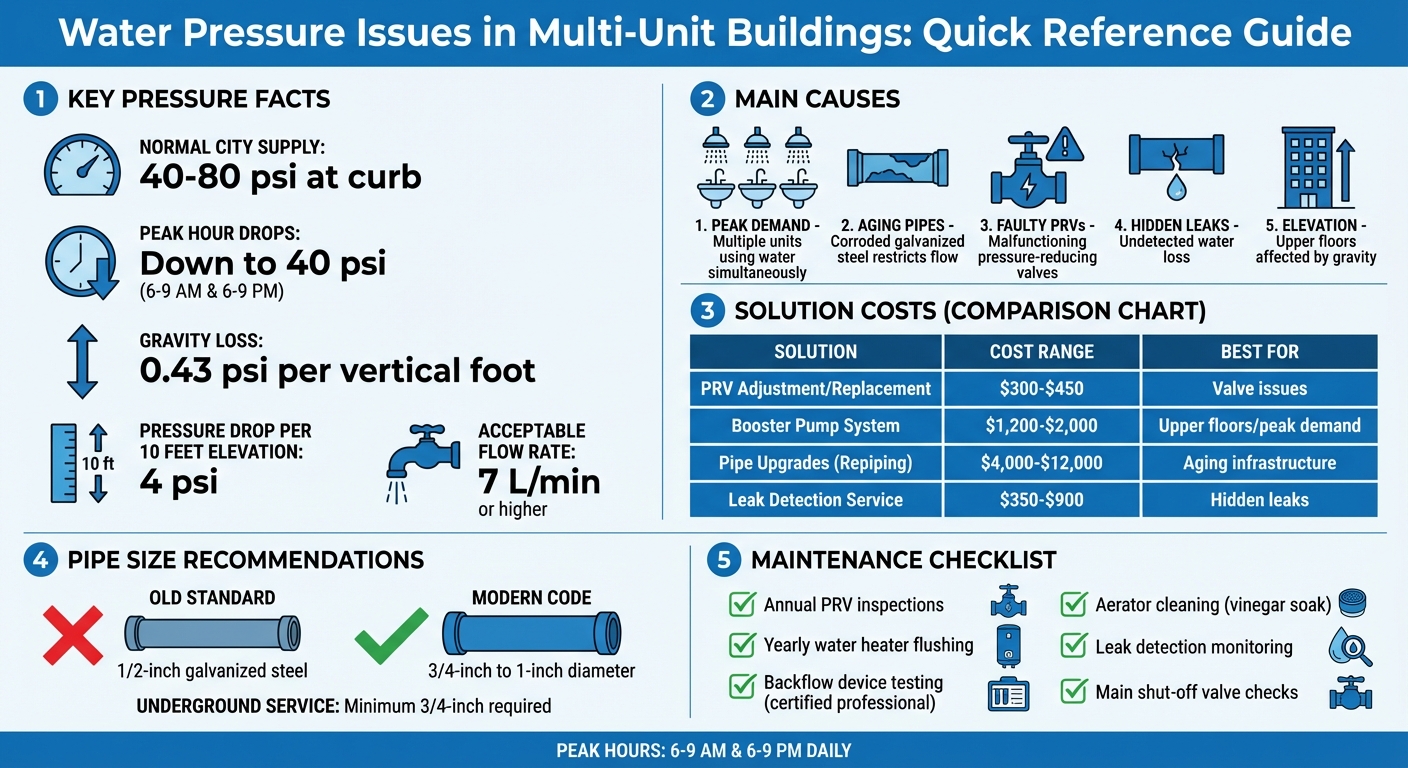
Water pressure problems in multi-unit buildings are a frequent concern in Toronto. These issues often disrupt daily life, particularly during peak usage hours, and can stem from factors like aging infrastructure, faulty pressure-reducing valves (PRVs), or hidden leaks. Upper floors in high-rises are especially affected due to gravity reducing pressure by 0.43 psi per vertical foot.
Key causes include:
- Peak demand: Pressure drops to 40 psi during peak hours (6–9 a.m. and 6–9 p.m.).
- Outdated pipes: Corroded galvanized steel pipes restrict flow.
- Faulty PRVs: Malfunctioning valves fail to regulate pressure effectively.
- Hidden leaks: Undetected leaks waste water and lower pressure.
Solutions range from PRV adjustments (costing $300–$450) to pipe upgrades ($4,000–$12,000) or installing booster pumps ($1,200–$2,000). Regular maintenance, such as annual PRV inspections and leak detection, is essential to prevent costly repairs and maintain steady water flow.
Water Pressure Problems: Causes, Costs, and Solutions for Multi-Unit Buildings
Common Water Pressure Problems in Multi-Unit Buildings
Inconsistent Water Flow Between Units
Water flow inconsistencies in multi-unit buildings often stem from gravity and distance. For every 10 feet of elevation, water pressure drops by about 4 psi. Units farther from the main supply line or booster pump face additional pressure losses due to friction as water travels through extended piping. Older buildings with 1/2‑inch galvanised steel pipes are particularly vulnerable since these pipes can narrow over time from corrosion and mineral buildup. Modern building codes now recommend using 3/4‑inch to 1‑inch pipes to better handle the demands of multiple fixtures. The challenges of elevation, pipe distance, and aging infrastructure combine to create uneven water flow.
| Problem Symptom | Likely Cause | Impact on Resident |
|---|---|---|
| Weak flow during 6–9 a.m./p.m. | Peak demand/City-side limits | Frustrating showers; slow morning routines |
| Low pressure only on upper floors | Elevation/Gravity loss | Inconsistent service compared to lower units |
| Weak flow in hot water only | Water heater sediment/faulty valve | Difficulty with dishes and hot showers |
| Sputtering at a single faucet | Clogged aerator or fixture blockage | Localised inconvenience |
Low Hot Water Pressure
If cold water flows normally but hot water pressure feels weak, the problem often lies with the central water heater or a specific local issue. Sediment accumulation in the heater tank - especially in areas with hard water - can restrict flow. A faulty shut-off valve near the heater may also limit hot water from reaching taps. When only one shower is affected while other hot water outlets work fine, the culprit is likely a worn-out internal mixing valve. These problems can make daily tasks like showering or running dishwashers unnecessarily frustrating.
Pressure Drops During Peak Hours
Peak usage times, typically between 6–9 a.m. and 6–9 p.m., can cause noticeable drops in water pressure throughout the building. This results in toilets and bathtubs filling slowly, dishwashers and washing machines taking longer to complete cycles, and showers delivering weak streams. Buildings with undersized or outdated piping systems often struggle to maintain sufficient pressure when multiple fixtures are in use simultaneously. These peak-hour pressure drops highlight the strain on aging infrastructure and the need for system upgrades to meet modern demands.
How to Fix Low Water Pressure in Apartments | Top Causes & Solutions
What Causes Water Pressure Issues in Multi-Unit Buildings
Understanding the root causes of water pressure problems is crucial for both property managers and residents in Toronto's older, high-demand multi-unit buildings. Factors like peak usage, outdated infrastructure, and faulty components all play a role in how well the system performs.
Peak Demand and City Supply Limitations
Toronto's municipal water supply typically operates within a pressure range of 40–80 psi at the curb. However, during peak usage times - 6:00 a.m. to 9:00 a.m. and 6:00 p.m. to 9:00 p.m. - pressure often dips to the lower limit of 40 psi. This drop becomes noticeable when multiple units in a building simultaneously use showers, dishwashers, and washing machines, potentially overwhelming the system. While 40 psi meets legal standards, many modern homes with multiple bathrooms find anything below 50 psi insufficient. To identify building-specific issues, try testing the water pressure at 7:00 a.m. and again at midday using a $15 hose-bib gauge.
Aging or Undersized Pipes
In older Toronto buildings, galvanised steel pipes are common. Over time, these pipes corrode internally and accumulate hard-water scale, such as calcium and carbonate deposits, which narrow the pipe's interior and restrict water flow. Since pressure testing isn’t conducted on lead or galvanised steel pipes, replacing these outdated materials is a necessary first step before investigating further. Another issue is undersized pipes. While static pressure (measured when no water is running) may seem adequate, dynamic pressure can drop significantly when multiple fixtures are in use. Older buildings with shared "Y" connections also experience pressure drops, as these systems divide the available flow between units, causing noticeable reductions when both are in use.
Faulty Pressure-Reducing Valves (PRVs)
Pressure-reducing valves (PRVs) are essential for regulating the water pressure entering a building. These valves protect plumbing fixtures from excessive pressure, but over time, issues like spring fatigue or sediment buildup can cause them to malfunction, leading to reduced flow throughout the property. If there’s a sudden drop in pressure across all units, inspecting the PRV should be a top priority. Replacing a failed PRV typically costs between $300 and $450, making it a manageable fix for restoring proper system performance.
Leaks and Blockages in the System
Hidden leaks can significantly reduce water pressure while also contributing to water wastage and potential damage. A partially closed main shut-off valve, often located in the basement near the water meter, can also restrict flow to the entire building. Gate valves that are stuck or seized may create similar issues. To check for leaks, turn off all taps and monitor the water metre; any movement after about two hours indicates a leak. Additionally, clogged aerators and water-saving restrictors can mimic low pressure. Cleaning these components by rinsing out debris or mineral buildup can resolve minor issues without extensive plumbing work. According to the City of Toronto, a flow rate of 7 L/min or higher is considered acceptable. If the flow falls below this threshold, the service pipe may qualify for replacement, which is typically addressed within seven days.
sbb-itb-466cac3
How to Fix Water Pressure Problems
To address water pressure issues, it’s essential to pinpoint the cause and select an appropriate solution. Options include adjusting valves, upgrading pipes, installing booster pumps, or conducting leak detection.
Adjust or Replace Pressure-Reducing Valves
Pressure-reducing valves (PRVs), typically found near the main shut-off valve, are bell-shaped devices that control water pressure. In Toronto, these are usually set to maintain 45–60 psi. However, over time, sediment buildup or wear can lead to failure. Before making adjustments, use a hose-bib pressure gauge to measure the current pressure. If it’s dropped to a trickle or risen above 80 psi, the valve likely needs attention. To increase pressure, turn the adjustment screw in small, quarter-turn increments, but never exceed 80 psi to avoid damaging fixtures or causing water hammer noise. If the valve doesn’t respond to adjustments, replacing it with a new, adjustable lead-free bronze model is recommended. In the Greater Toronto Area, replacement costs typically range from $300 to $450.
Upgrade Pipes and Distribution Systems
When valve adjustments aren’t enough, upgrading the plumbing system may be necessary. Replacing old galvanized steel or lead pipes with modern materials like PEX-A or copper can eliminate rust and scaling issues. Increasing pipe diameter - upgrading from 1/2-inch to 3/4-inch or even 1-inch - can significantly improve water flow and maintain pressure when multiple fixtures are in use. Toronto’s plumbing codes now require a minimum 3/4-inch diameter for underground service pipes to meet today’s demands. For minimal disruption, trenchless methods like "torpedo drilling" can be used to upgrade underground lines without disturbing landscaping or building foundations. Costs for repiping in the GTA typically range from $4,000 to $12,000, depending on accessibility. Note: Pressure tests are avoided on lead or galvanized pipes until they’ve been replaced.
Install Booster Pumps
In cases where pipe upgrades don’t fully resolve pressure problems, a booster pump may be the answer. This is especially true for taller buildings, where water pressure decreases by about 0.43 psi for every vertical foot. Booster pumps automatically detect low flow and provide additional pressure, ensuring that even upper floors receive adequate water supply during peak demand times, such as 6–9 a.m. and 6–9 p.m.. Before installing a booster pump, conduct a peak-hour pressure test using a hose-bib gauge to compare readings at 7 a.m. and 7 p.m. against a midday baseline. To prevent frequent cycling, pair the pump with a pressure tank. A whole-house or small multi-unit booster pump system with a pressure tank generally costs between $1,200 and $2,000 in the GTA. It’s worth noting that the City of Toronto doesn’t currently offer subsidies for these systems.
Professional Leak Detection and Pipe Maintenance
Hidden leaks not only waste water but also reduce pressure and can cause structural damage. Professional acoustic leak detection services in Toronto typically cost between $350 and $900, depending on accessibility. Routine inspections should include checking that all main shut-off valves are fully open, as a partially closed gate valve can restrict water flow by up to 20%. Annual system maintenance is highly recommended. This includes PRV inspections, leak checks, and drain cleaning to catch issues early. Creed Plumbing offers preventive maintenance plans in Toronto, covering leak detection, water pressure tests, water heater inspections, and drain cleaning. Such regular upkeep helps property managers maintain consistent water pressure across multi-unit buildings while avoiding costly emergency repairs.
Preventive Maintenance for Long-Term Water Pressure Management
Keeping up with routine maintenance is key to avoiding pressure drops and expensive repairs. Instead of waiting for tenants to report weak water flow or slow-filling toilets, property managers should establish a regular inspection schedule to catch potential issues early. Below are essential tasks to help maintain steady water pressure year after year.
Annual PRV and System Inspections
Pressure-reducing valves (PRVs) require yearly check-ups. Over time, problems like spring fatigue or sediment buildup can cause water pressure to either plummet or spike dangerously above 80 psi. Annual inspections should confirm that main shut-off valves are fully open, as older gate valves can seize up and restrict water flow. For multi-unit residential properties, backflow prevention devices (like DCVA or RP) must be tested annually by certified professionals to ensure proper operation and water safety. During these inspections, technicians should also monitor water meters during periods of zero usage to detect hidden leaks that can silently drain pressure.
Drain Cleaning and Leak Detection
To maintain good flow, water heaters need to be flushed every year to clear out sediment buildup. Likewise, soaking faucet aerators and showerheads in vinegar can restore proper water flow by dissolving mineral deposits. Acoustic leak detection is another valuable tool - this method can pinpoint leaks early, preventing structural damage and reducing utility costs.
Preventive Maintenance Plans with Creed Plumbing
Incorporating these routine tasks into a structured maintenance plan simplifies ongoing management and ensures a plumbing system performs reliably over the long term. Creed Plumbing, based in Toronto, offers preventive maintenance plans that include leak detection, water pressure testing, water heater inspections, and drain cleaning. These plans are designed to help property managers maintain consistent water pressure across all units while avoiding costly emergency repairs. With clear pricing and licensed, insured technicians, Creed Plumbing ensures that PRVs, fixtures, and plumbing systems get the care they need before minor issues grow into major problems.
Conclusion
Water pressure issues in multi-unit buildings often stem from a few common culprits: peak-hour demand, aging or undersized pipes, faulty pressure-reducing valves (PRVs), and hidden leaks that quietly drain system pressure. On top of that, gravity loss can make upper floors suffer even more, while corroded galvanized steel pipes and mineral buildup in aerators leave tenants dealing with weak showers and sluggish appliances.
The good news? Most problems can be resolved without too much hassle. Solutions like replacing a PRV or installing a booster pump typically range from $300 to $2,000. For older buildings, sectional repiping is a more permanent fix, restoring proper flow and avoiding bigger headaches down the line. The trick is addressing these issues early, before a minor pressure drop turns into a burst pipe or costly water damage.
Preventive maintenance is the secret to avoiding these problems altogether. Simple steps like annual PRV inspections, regular cleaning of aerators, and using acoustic leak detection can help property managers stay ahead of potential issues. A proactive approach ensures consistent water pressure, keeps tenants happy, and extends the lifespan of the plumbing system - all while reducing the risk of expensive emergency repairs.
For property managers in Toronto aiming to keep their buildings running smoothly, Creed Plumbing offers tailored preventive maintenance plans. These include services like leak detection, water pressure testing, water heater inspections, and drain cleaning. With licensed and insured technicians, plus clear pricing, Creed Plumbing ensures your plumbing system stays reliable year after year - keeping tenants satisfied and operations running efficiently.
FAQs
What are the signs of a faulty pressure-reducing valve (PRV) in a multi-unit building?
A faulty pressure-reducing valve (PRV) is often the culprit behind inconsistent or low water pressure throughout an entire building, not just in one specific area. Some telltale signs of a malfunctioning PRV include fluctuating pressure when multiple fixtures are running, strange noises such as hissing or banging (commonly called water hammer), and visible issues like leaks or corrosion around the valve. These problems suggest the PRV isn’t doing its job of regulating water flow properly.
To confirm, you can measure the static water pressure using a gauge. Attach it to an outdoor hose bib or a washing machine connection. For properties in Toronto, the normal pressure range is typically 50–70 psi (345–480 kPa). If your reading is consistently below this range or drops quickly, the PRV might need adjustment or replacement. Sometimes, turning the valve’s adjustment screw clockwise can temporarily increase the pressure. However, if this doesn’t resolve the issue or the valve shows visible wear and tear, it’s likely time to replace it. For a safe and efficient fix, reach out to a licensed Toronto plumber, such as Creed Plumbing, to inspect and handle the problem professionally.
How can property managers prevent water pressure issues in multi-unit buildings?
To keep water pressure issues at bay in multi-unit buildings, property managers should take a hands-on, preventative approach to plumbing maintenance. Start by conducting routine inspections. Check water pressure at the main inlet and in a few representative units to ensure it stays within the optimal range of 40–60 psi. Confirm that the main shut-off valve is fully open and that all pressure-reducing valves (PRVs) are working as they should. Don't overlook potential trouble spots like hidden leaks, corrosion in older pipes, or clogged fixture screens and aerators caused by mineral deposits.
Preventative care is just as crucial. Schedule annual system flushing to clear out mineral build-up, and bring in a licensed plumber - such as Creed Plumbing - for services like pressure-regulator calibration, pipe relining, and valve maintenance. Installing smart water-monitoring sensors on key risers is another smart move, as these devices can catch leaks early, saving you from extensive damage and expensive repairs.
Finally, make sure to educate tenants and staff about the importance of reporting issues like sudden drops in water flow, noisy pipes, or visible leaks. By combining regular inspections, professional maintenance, and tenant vigilance, property managers can ensure a smooth-running plumbing system and consistent water pressure for everyone in the building.
What are some affordable ways to improve water pressure on upper floors in multi-unit buildings?
Low water pressure on upper floors is a frequent challenge in multi-unit buildings, particularly in Toronto. This happens because water needs to travel upwards, battling gravity and friction, which naturally reduces pressure. But before jumping into expensive renovations, there are a few simple fixes you can try:
- Check the main shut-off valve: Make sure it’s fully open.
- Clean faucet aerators and showerheads: Clogs can restrict water flow.
- Inspect the pressure-reducing valve (PRV): Found near the water meter, this valve might need adjustment or replacement.
- Look for hidden leaks or partially closed valves: Fixing these can restore several PSI of water pressure.
If these quick fixes don’t solve the problem, consider installing an inline booster pump or a pressure tank system. These options are both effective and affordable, typically costing between $200 CAD and $800 CAD, including labour. They’re a much cheaper alternative to replacing entire sections of piping. For older buildings, selectively replacing corroded or narrow pipes can also enhance water flow without the need for a full-scale repiping project.
Since every building comes with its own set of challenges, consulting a licensed plumber is always a smart move. Creed Plumbing, based in Toronto, offers professional services with transparent pricing. Whether it’s PRV adjustments, leak repairs, or booster pump installations, they can help restore proper water pressure to those hard-to-reach upper floors.