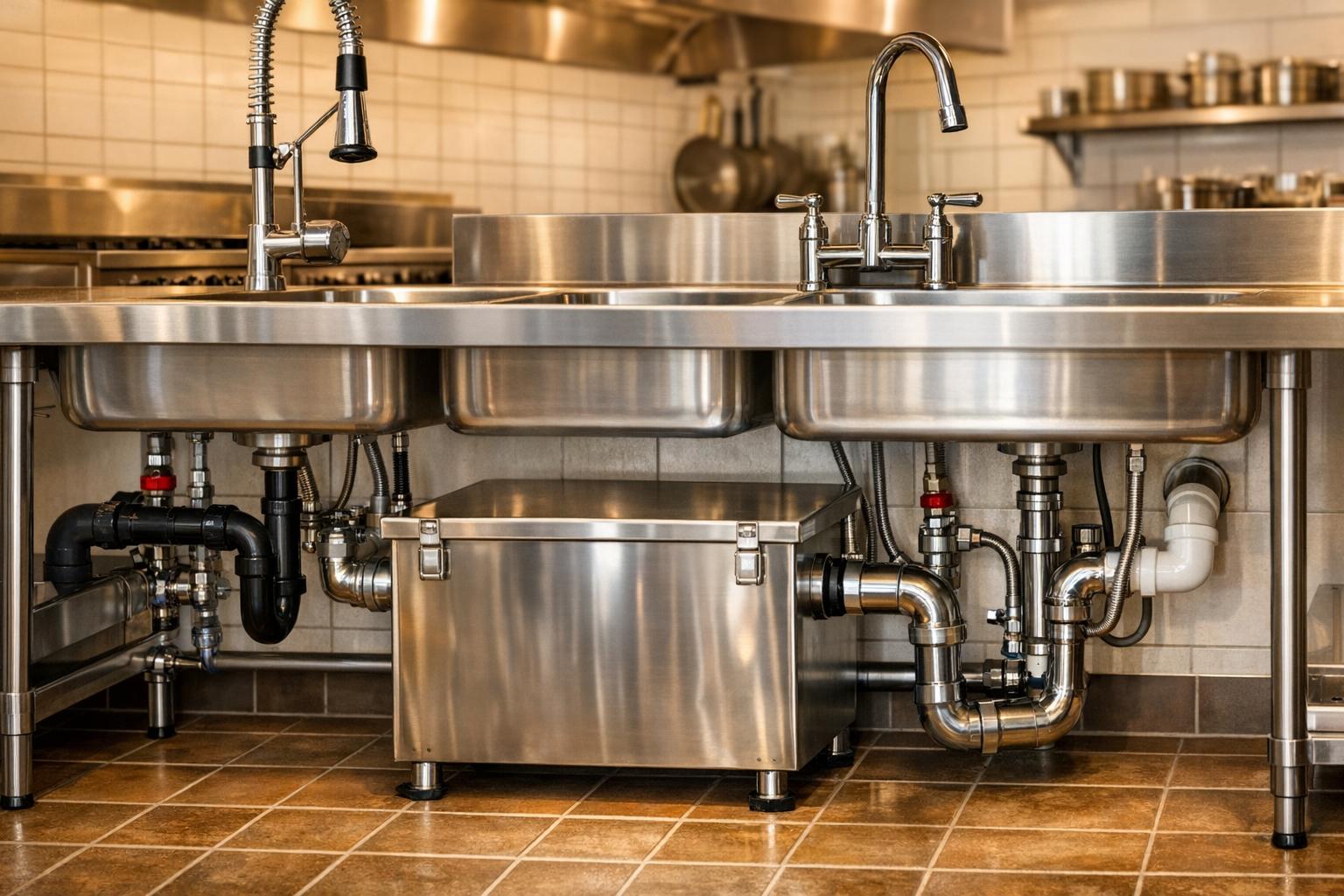

Running a commercial kitchen in Toronto requires meeting strict plumbing codes to avoid fines, closures, and health violations. The Ontario Building Code 2024 outlines essential regulations, including:
- Hand-Washing Sinks: Every food prep area must have a dedicated sink with hot/cold water, liquid soap, and paper towels.
- Dishwashing Requirements: Kitchens need two or three-compartment sinks based on dishwashing needs, even with a dishwasher.
- Grease Interceptors: Mandatory for food-related operations to prevent sewer clogs; must meet CSA standards and be cleaned monthly.
- Hot Water Standards: Store water at 60°C but deliver at safe temperatures (max 49°C for general use).
- Drainage & Venting: Indirect connections and proper venting prevent contamination and ensure system efficiency.
- Permits & Inspections: Licensed contractors must complete work, and permits are required for installations. Fees include $29.75 per fixture and $37.18 per grease interceptor.
Failing to comply can result in fines up to $100,000. Proper documentation, regular maintenance, and licensed professionals are key to compliance and smooth operations.
Required Fixtures for Commercial Kitchens
Minimum Fixture Counts and Rules
In Toronto, commercial kitchens must adhere to specific plumbing codes that vary depending on the type of operation. One key requirement is that every food preparation area must have a dedicated hand-washing sink. This sink needs to be equipped with hot and cold running water, liquid soap in a dispenser, and single-use paper towels. For larger prep areas, multiple hand sinks may be necessary to ensure they are easily accessible.
When it comes to dishwashing, the type of service model determines the setup. Kitchens using reusable dishware are required to have a three-compartment sink for washing, rinsing, and sanitizing. If single-use items are the norm, a two-compartment sink is acceptable instead. Even if a commercial dishwasher is installed, a two-compartment sink is still mandatory for cleaning oversized pots and pans. Additionally, a separate service sink must be available for disposing of mop water and other floor-cleaning waste.
For kitchens involved in cooking, heating, or processing food, grease interceptors are essential. These devices are installed on pipes connecting to the sanitary sewer to trap fats, oils, and grease, preventing them from clogging the system. Equipment like ice machines and refrigerators must discharge wastewater through an air gap - this gap should be at least twice the diameter of the outlet pipe or no less than 1 inch (25 mm) - to avoid backflow contamination. Washroom fixture requirements depend on the occupancy level as determined by the Ontario Building Code, though most food stores and take-out establishments must provide at least one washroom.
Beyond just the number of fixtures, the materials used in these kitchens must meet stringent durability and hygiene standards.
Material and Durability Standards
Fixtures in commercial kitchens are held to high standards to ensure they can endure heavy usage while maintaining sanitary conditions. The 2025 Ontario Plumbing Code now permits the use of PE-RT (Polyethylene of Raised Temperature) tubing for hot and cold potable water supply lines, in addition to traditional materials like copper and PEX. All plumbing fittings must have CSA labels, and potable water treatment systems must be certified under CAN/CSA-B483.1.
Sinks and other fixtures in food preparation areas need to be made from non-absorbent materials. Type 304 stainless steel is the go-to material for commercial kitchens due to its excellent corrosion resistance and long-lasting durability. Commercial sinks typically use 16-18 gauge stainless steel, with 16 gauge being the preferred choice for heavy-duty use. Drainage systems should also feature corrosion-resistant materials like stainless steel or cast iron. Similarly, racks and shelves must be non-absorbent and easy to clean.
Lastly, all plumbing designs for commercial projects must be completed by a qualified designer in compliance with the Ontario Building Code. These designs must include registration numbers and signatures to ensure proper authorization.
sbb-itb-466cac3
Avoid These Plumbing Code Mistakes in Restaurant Builds | Pro Tips for Compliance & Safety
Hot Water Systems and Anti-Scald Requirements

Toronto Commercial Kitchen Hot Water Temperature Requirements by Fixture Type
Hot Water Temperature Standards
In Toronto, commercial kitchens must store water at a minimum temperature of 60°C (140°F) to prevent the growth of Legionella bacteria, which thrive between 25°C and 42°C. However, the hot water delivered to taps must not exceed 49°C (120°F) - or 43°C (109°F) in sensitive settings such as daycares and healthcare facilities - to reduce the risk of scalding. It's important to note that water stored at 60°C (140°F) can cause severe burns if mishandled.
Commercial dishwashers, on the other hand, have stricter temperature requirements. The wash cycle must operate between 65°C and 71°C (150°F–160°F), while the rinse cycle must reach 82°C (180°F) to meet sanitation standards.
| Fixture/System Type | Minimum Required Temp | Maximum Allowed Temp |
|---|---|---|
| Electric Storage Water Heaters | 60°C (140°F) | N/A |
| General Commercial Fixtures (Hand Sinks) | Adequate Supply | 49°C (120°F) |
| Sensitive Environments (Daycares/Healthcare) | Adequate Supply | 43°C (109°F) |
| Commercial Dishwasher (Wash Cycle) | 65°C (150°F) | 71°C (160°F) |
| Commercial Dishwasher (Rinse Cycle) | 82°C (180°F) | N/A |
These temperature regulations, paired with the use of anti-scald devices, are designed to protect both users and equipment. Toronto's building codes also mandate specific anti-scald measures to further enhance safety.
Anti-Scald Device Installation
To ensure water temperatures remain safe, Thermostatic Mixing Valves (TMVs) are widely used. These devices mix hot and cold water before it reaches the tap, maintaining a consistent and safe temperature. TMVs must meet CSA certification standards, be installed according to manufacturer instructions, and be positioned close to fixtures to ensure accuracy. Additionally, the 2025 Ontario Plumbing Code requires the use of automatic compensating valves to stabilize water temperatures, even during fluctuations.
For proper maintenance, all temperature-limiting devices, including TMVs, should be installed in accessible locations. This makes it easier to test and service them when needed. During installation, fixture temperatures must be verified using a calibrated thermometer to ensure compliance with safety standards.
Drainage Systems, Grease Interceptors, and Venting
Following Toronto's plumbing codes for drainage is not just about avoiding penalties - it also ensures your kitchen operates efficiently and hygienically.
Grease Interceptor Requirements
According to the City of Toronto Sewers By-law (Municipal Code, Chapter 681), any food service business that cooks, heats, processes, or prepares food must install and maintain a grease interceptor on pipes connected to the sanitary sewer system. These devices work by slowing wastewater flow, allowing fats, oils, and grease (FOG) to solidify and float while solids settle at the bottom. This process ensures only treated wastewater enters the sewer system.
"Under the City of Toronto Sewers By-law, it is mandatory for establishments that cook, heat, process or prepare food on-site to install, operate and maintain a grease trap (interceptor) on any pipe that connects directly or indirectly to a sanitary sewer system." – City of Toronto
Hydromechanical grease interceptors (HGIs) must meet CSA B481.1 standards by capturing at least 90% of grease. The Ontario Building Code also requires these interceptors to be installed close to the fixtures they serve and include internal flow control. Regular cleaning is essential - grease traps should be emptied before grease and solids reach 25% of their liquid capacity. Typically, this means scheduling pump-outs at least once a month using a Ministry of the Environment, Conservation and Parks (MECP) certified waste hauler. Failure to comply can result in fines of up to $100,000.
Avoid discharging hot water into grease traps, as it can melt FOG and cause it to bypass the interceptor. Similarly, garbage disposers or grinders can overload the grease trap with solids. To protect your system, use screens over sinks and floor drains to catch food particles and dispose of grease and food waste in green bins.
Proper grease trap design and venting are equally important for maintaining your kitchen's plumbing system.
Drainage System Design and Trap Primers
The Ontario Building Code requires indirect connections for equipment used in food preparation, storage, or display to prevent backflow contamination. For instance, prep sinks and steam tables must have an air gap or air break, while walk-in cooler floor drains should connect to the sanitary drainage system either indirectly (via an air break) or directly with a backwater valve.
To prevent sewer gases from entering your kitchen, ensure trap seals are maintained. Trap primers - devices that periodically add small amounts of water to floor drains - are especially useful for keeping these seals intact in drains that see little use. Without proper trap seals, unpleasant and potentially harmful sewer gases could escape into your workspace.
Good venting practices further enhance the effectiveness of these drainage measures.
Venting and Airflow Standards
Venting plays a key role in the proper functioning of grease interceptors. Each interceptor must have a vent pipe at least 1.5 inches in diameter connected to its outlet, which integrates into the building's overall plumbing venting system. A vent pipe should also be installed within 1,500 mm of the interceptor's inlet and include a cleanout for maintenance. In outdoor areas prone to frost, the vent pipe must be at least 3 inches wide to prevent frost blockages.
Proper venting ensures balanced pressure in the system, which protects the water seals in fixture traps. To maintain optimal performance, vent pipes should slope toward the drainage system so moisture can drain by gravity - standing water can obstruct airflow. Additionally, dry vents must rise vertically to at least 6 inches above the flood level rim of the highest fixture served before connecting to other vent pipes.
| Fixture/Component | Requirement |
|---|---|
| Grease Interceptor Outlet Vent | Minimum 1.5 inches in size |
| Grease Interceptor Inlet Vent | Must be within 1,500 mm of the inlet |
| Outdoor Vent (Frost Areas) | Minimum 3 inches in size |
| Dry Vent Vertical Rise | At least 6 inches above flood level rim |
Permits and Inspections for Fixture Installations
Getting your fixtures installed properly starts with a solid plan. This not only helps with the permit application but also ensures inspections go smoothly, saving you time and avoiding costly re-inspections.
How to Apply for Permits in Toronto
Before kicking off any plumbing work, you’ll need to submit a permit application. You can do this through Toronto Building Online Services or by emailing bldapplications@toronto.ca for approved projects. Your application will fall into one of two categories: "Stand-alone" (for plumbing work unrelated to other construction) or "Related" (if it’s part of a larger building permit).
Your submission should include a PDF with the following documents:
- Application to Construct or Demolish Form
- Plumbing Data Sheet
- Schedule 1 (for non-engineer/architect designers)
- Scaled plumbing plans showing fixture layouts
- A site or key plan
If the Ontario Building Code requires professional design and field review, you’ll also need a Commitment to General Reviews form, signed by both the owner and a professional architect or engineer.
Key Tip: Ensure your drawings are prepared by a qualified designer. Their name, registration number, qualification ID, signature, and stamp must appear on all plans. Also, remove personal details like phone numbers or names from your building plans, as these documents are public records under the Municipal Freedom of Information and Protection of Privacy Act.
Starting January 1, 2025, permit fees for commercial kitchens will include:
- $29.75 per fixture
- $37.18 for each grease interceptor
- $89.22 for backflow prevention devices requiring testing
- $2.52 per linear metre for inside sanitary and storm piping
Once you submit your application, intake staff will review it for completeness. After that, a plans examiner will check if it complies with building codes and zoning by-laws. Once approved, inspections will ensure everything meets the required standards.
What Inspectors Check for Compliance
After your permit is approved, inspectors will thoroughly assess your installation to confirm it meets all code requirements. They’ll ensure compliance with the Ontario Building Code, the Water Supply By-law, and the Sewers By-law.
For establishments that cook, heat, or process food, inspectors verify that grease interceptors are installed on pipes connected to the sanitary sewer. These interceptors must be correctly sized based on the flow rates of your fixtures. Backflow prevention devices - such as reduced-pressure zone valves or double check valves - are also checked to ensure they safeguard the potable water supply.
Other critical checks include:
- Hand-washing sinks and compartment sinks: Inspectors confirm these are installed as required.
- Waste discharge from equipment: Ice machines and refrigerators must discharge waste through an air gap at least twice the diameter of the outlet pipe or no less than 1 inch to prevent backflow contamination.
- Drainage and venting systems: Inspectors ensure proper pipe slope, correct sizing based on fixture-unit values, and accessible clean-outs at horizontal runs and direction changes. They also check that all fixtures are vented to prevent siphoning of trap seals.
If your inspection doesn’t pass, you’ll need to fix the issues and pay a $50.00 re-inspection fee. To keep things moving, make sure all work is accessible for inspection.
Conclusion
Following Toronto's plumbing codes for commercial kitchens isn’t just about ticking boxes - it’s about protecting your business, your customers, and the city’s infrastructure. Staying compliant helps you avoid hefty fines of up to $100,000 and the risk of business closures. Proper installation and upkeep of critical fixtures, like grease traps, play a major role in preventing sewage backups and the build-up of fats, oils, and grease (FOG), which can create serious public health concerns. These regulations are designed to protect both your operations and the well-being of the community.
Hiring licensed contractors and securing the right permits are key to ensuring safety and functionality. As one expert highlights, “Compliance is essential because failed inspections delay opening, lead to fines and can even result in business closures”. This professional oversight ensures your kitchen meets all required health and safety standards.
Preventive maintenance is just as important. Grease traps should be pumped out at least once a month and cleaned before FOG and solids reach 25% of the trap’s liquid volume. Simple habits, like placing “No fat, oil or grease down the drain” signs and using screens over sinks and floor drains, can help keep your systems running smoothly between professional cleanings. Sticking to these practices ensures ongoing compliance and keeps your kitchen performing at its best.
FAQs
What are the consequences of not following Toronto's plumbing codes for commercial kitchens?
Failing to follow Toronto's plumbing codes for commercial kitchens - like not installing or maintaining a grease trap - can lead to hefty fines. Businesses could be penalized with fines as high as $100,000 for breaking these rules.
Staying compliant is crucial to avoid these financial setbacks. Ensuring all plumbing fixtures meet local standards and are regularly maintained not only keeps you within the law but also shields your business from operational interruptions and environmental concerns.
Why do commercial kitchens in Toronto need a grease interceptor?
In Toronto, commercial kitchens must have a grease interceptor, as required by the City’s Sewers By-law. This regulation applies to food-service establishments that prepare food on-site. A grease interceptor works by capturing fat, oil, and grease (FOG) before these substances can enter the sanitary sewer system. This is crucial for avoiding clogs, sewer backups, and other environmental issues.
Non-compliance with these rules can lead to hefty fines, reaching up to $100,000. To stay within the by-law's guidelines, it’s important to ensure your grease interceptor is installed correctly, operated efficiently, and maintained regularly. Doing so not only protects your business from penalties but also helps safeguard the environment.
How can I make sure my commercial kitchen's hot water system meets Toronto's plumbing and safety standards?
To make sure your commercial kitchen’s hot water system meets Toronto’s plumbing and safety standards, you’ll need to follow the Ontario Building Code and secure the required plumbing permits. This involves submitting detailed plumbing plans that outline the layout of hot water pipes, the placement of water heaters, and key safety features like temperature controls and pressure relief valves. These plans must be reviewed and approved by a qualified designer and must align with all municipal regulations.
After installation, it’s crucial to maintain safety by keeping water temperatures at or below 49°C, using pressure and temperature-relief valves, insulating hot water pipes, and scheduling regular inspections to look for leaks or signs of wear. Working with a licensed and insured plumber, such as Creed Plumbing, ensures that your system is properly installed and maintained according to the rules. Also, keeping detailed records of permits, inspections, and maintenance will help prove compliance during municipal reviews.