Planning new construction plumbing in Toronto? Here's what you need to know:
- Stages: The process includes rough-ins, drainage, water supply lines, pressure testing, and final fixture installation.
- Costs: Expect $12,000–$20,000 for a 2,000 sq. ft. home, with rough-ins starting at $8,000. Labour costs range from $110–$200/hour.
- Permits: Fees start at $206.53 for water and buried piping. Inspections are mandatory at key stages.
- Timelines: Small homes take about 5 days for fixture installation; larger projects can take weeks. Weather, material delays, and inspections may extend timelines.
- Compliance: All work must meet Ontario Building Code standards. Licensed plumbers and accurate plans are essential to avoid costly mistakes.
Proper preparation, including early planning, hiring licensed professionals, and scheduling inspections, ensures a smooth process and long-lasting plumbing.
Plumbing Basics for Single-Family Home Construction: A Complete Guide
The 5 Main Stages of New Construction Plumbing
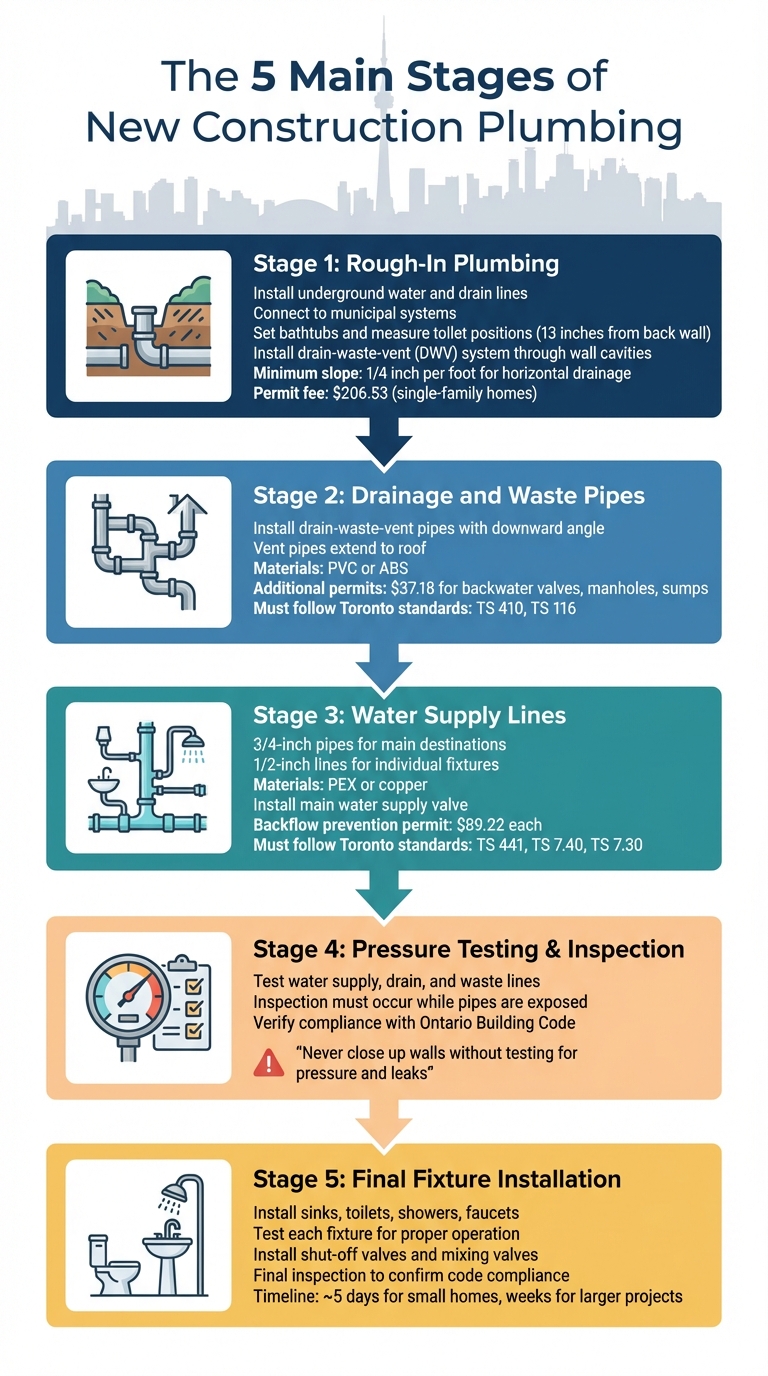
5 Stages of New Construction Plumbing in Toronto
New construction plumbing involves five key stages, each step carefully building upon the last. Knowing these stages can help you better understand the process and what to expect.
Rough-In Plumbing: Setting Up Underground Pipes
The rough-in stage lays the groundwork for your plumbing system before concrete is poured or drywall goes up. This phase involves excavating the yard to install underground water and drain lines, connecting them to municipal systems and the building's foundation. At this point, plumbers may also set and level bathtubs to pinpoint drain locations, and toilet positions are typically measured 13 inches from the back wall.
Before the concrete slab is poured, all underground pipes must meet specific requirements for bedding, backfill, and testing. The drain-waste-vent (DWV) system is installed through wall cavities, with vent stacks extending to the roof to safely release sewer gases. Horizontal drainage pipes are angled at a minimum slope of 1/4 inch per foot to ensure proper gravity flow.
"Never close up walls without testing for pressure and leaks." - Stephanie Figy, ServiceTitan
It's important to coordinate with framing, electrical, and HVAC teams to ensure pipes have the necessary access before walls are closed. In Toronto, the permit fee for single-family homes covering water services, sanitary, and storm buried piping is $206.53. For other building types, the fee is $2.52 per linear metre for inside and outside piping.
Installing Drainage and Waste Pipes
With underground pipes in place, the next step is creating an effective drainage system to handle wastewater and maintain sanitation. Plumbers install drain-waste-vent pipes, ensuring horizontal lines are angled downward for gravity to move wastewater efficiently. Venting to the roof prevents siphoning in traps and safely expels sewer gases. Materials commonly used include PVC or ABS, and plumbers carefully avoid conflicts with floor joists when drilling for toilet or tub drains.
Toronto's construction standards, such as TS 410 for sewer pipe installation and TS 116 for hydrostatic leak testing, must be followed. Additional permits apply, including $37.18 for backwater valves, manholes, and sumps.
Installing Water Supply Lines
Water supply lines distribute clean hot and cold water throughout the building. Plumbers typically use 3/4-inch pipes for main destinations like kitchens and bathrooms, reducing to 1/2-inch lines for individual fixtures to maintain steady pressure. The main water supply valve is installed at this stage, along with the routing for hot and cold water. Common materials include PEX or copper.
Toronto regulations require compliance with TS 441 for watermain installation and TS 7.40 for installing tracer wires to aid future utility locating. Before use, new watermains must be disinfected as per TS 7.30, and backflow prevention devices, which require testing, have a permit fee of $89.22 each. Once the supply lines are in place, plumbers perform pressure tests to ensure the system is leak-free.
Pressure Testing and Code Inspection
Pressure testing checks for leaks in water supply, drain, and waste lines before they are sealed behind drywall or concrete. This ensures all connections, valves, and fittings can handle the pressure of the municipal water supply. Inspections must occur while the pipes are exposed, allowing Toronto Building inspectors to verify compliance during the rough-in phase.
"Rough-in work should be inspected before finish plumbing begins." - Timothy Dale, The Spruce
Conducting pressure tests at this stage avoids costly repairs later. Plumbers use a rough-in checklist to confirm that all vents, slopes, and supports meet Ontario Building Code standards.
Final Fixture Installation and Connection
In the final stage, plumbers install and connect fixtures like sinks, toilets, showers, and faucets to the supply and drainage systems established earlier. Each fixture is tested to ensure proper operation, pressure, and drainage. Hot water systems are equipped with shut-off valves for maintenance and mixing valves to regulate temperature for safety and energy efficiency. The final step involves a thorough inspection to confirm all connections meet code and municipal standards.
Toronto Building Codes and Plumbing Permits
When it comes to plumbing in new construction, Toronto requires strict adherence to the Ontario Building Code (OBC), particularly Division C, Part 3, Section 3.2, which outlines standards for qualified designers. Before starting any work, contractors must submit a complete permit application through the City of Toronto's electronic system or at a local Building Service office.
The application process involves submitting several key documents, including a Permit to Construct or Demolish, a Plumbing Data Sheet, scaled fixture plans for each floor, and a detailed site plan. If the project requires professional design as per the OBC, you’ll also need a Commitment to General Reviews form signed by both the property owner and a licensed architect or engineer. All submissions must meet specific requirements for format, scale, dimensions, signatures, and dates.
"Any building elements covered before the related mandatory inspection has been made will have to be uncovered for inspection and passed before the completion of your project." - City of Toronto
Creed Plumbing ensures full compliance with these regulations by keeping all necessary documentation organized and coordinating mandatory inspections. Under the leadership of Tony, a Master Plumber with over 20,000 hours of experience, they guarantee that all work aligns with OBC requirements and passes inspections on the first attempt. They maintain full-scale, coloured copies of permit drawings for inspectors and never cover plumbing components until the relevant inspection has been completed and approved.
For minor projects, express service applications are reviewed within three business days, while more complex projects require 10–15 business days. Custom home projects take longer, with reviews typically lasting six to 10 weeks. Planning water and sewer service connections well in advance is crucial, as the City estimates 12–14 weeks from application to completion. Once your permit is issued, inspections must be scheduled at critical stages, including underground piping, rough-in, and final fixture installation, before the permit can officially be closed. These timelines and inspections play a significant role in determining the overall cost and duration of your project.
How Long Does New Construction Plumbing Take?
For a typical small home in Toronto, the fixture installation phase usually takes about five days. However, when it comes to larger multi-family homes or complex custom builds, the plumbing work can stretch over several weeks. This is largely due to the increased number of bathrooms and fixtures required, making the scale of the project a key factor in determining the timeline.
In larger projects, plumbing is generally split into two main phases: rough-in and final installation. The rough-in phase happens during the framing stage and involves installing the piping. The final installation phase comes later, during the interior finishing stage, when plumbing fixtures are connected and made operational.
Several external factors can further extend these timelines. Toronto’s weather - whether it’s snow, rain, or sleet - can create unsafe or muddy conditions that slow down outdoor pipe installation. Material shortages can also cause delays, especially if specialty fixtures or specific piping materials are backordered. Additionally, inspections are required after both the rough-in and final installation stages, and work cannot proceed until these inspections are successfully completed.
To keep the project on track, it’s crucial to plan ahead. Finalize plumbing layouts and choose fixtures well in advance. Order items like tubs, toilets, and faucets weeks before they’re needed. Provide your plumbing team with detailed plans to avoid mid-project changes, and work with your contractor to pre-schedule city inspections, as Toronto’s building department can sometimes experience backlogs.
sbb-itb-466cac3
What New Construction Plumbing Costs in Toronto
When planning for new construction plumbing in Toronto, several factors will shape your overall expenses, including the size of your property, the number of fixtures, material choices, and labour rates. On average, costs hover around $4.50 per square foot.
For a standard 2,000-square-foot home with two to three bathrooms, rough-in plumbing typically falls between $8,000 and $12,000. Adding fixture installations brings the total cost to $12,000 to $20,000. Smaller homes might range from $3,000 to $6,500, while larger projects can surpass $16,000.
Labour and Permits
Labour costs are a significant chunk of your budget. Licensed plumbers in Toronto charge anywhere from $110 to $200 per hour, with specialists sometimes charging upwards of $180 per hour. Permit fees are another cost to consider. For example, permits for backwater valves cost $121, while water service replacements require $245.
Material Costs
The materials you choose will heavily influence your budget. PEX tubing is a more affordable option, costing $0.50 to $2.00 per linear foot. In contrast, copper piping runs between $3.00 and $12.00 per linear foot. Opting for PEX instead of copper can save you approximately $5,000 on a typical home installation. Additionally, connecting your home to municipal water mains adds another expense, with street-to-home installations ranging from $2,000 to $2,700.
Additional Considerations
It’s wise to include a 10–15% contingency in your budget for unexpected expenses. Finalizing fixture locations before construction begins can help you avoid costly changes mid-project. If you're building in downtown Toronto, don’t forget to account for parking fees, which can range from $25 to $50 per day for your plumbing crew. Coordinating installations can also help cut travel and labour costs by up to 20%.
How to Prepare for Your Plumbing Installation
Proper preparation can save you time, money, and headaches, while keeping your plumbing project on track. Start by confirming your contractor’s credentials and ensuring you have all the necessary paperwork ready to go.
First, check that your contractor holds the required licences and certifications. Look for a valid Plumbing Contractor licence (which costs $476.08 to obtain), a Master Plumber on staff, and a Certificate of Qualification from Skilled Trades Ontario. Also, confirm they have full insurance coverage. The City of Toronto defines a Master Plumber as someone who "engages in planning, supervising and installing of plumbing and employs people who perform plumbing work". This ensures your contractor has the expertise and authority to handle your project.
Next, gather the required documentation. You’ll need a Building Permit, which includes the "Application for a Permit to Construct or Demolish" and a Plumbing Data Sheet. Additionally, fully dimensioned floor plans must detail the location of every fixture. Ensure these documents are in PDF format for easy submission through Toronto Building Online Services. If a qualified designer is involved, their drawings must include their registration number and signature.
Careful scheduling is another key step. Rough-in plumbing, which requires open access to framing, must align with the schedules of other trades like electrical and HVAC installations. To avoid delays, ensure rough-in plumbing is completed before moving on to the next construction phase. Also, walls should remain open until a building inspector confirms code compliance. Request a detailed timeline from your contractor that includes fixed start and completion dates.
Lastly, plan your fixture placements early. Decide on the exact locations of all fixtures before construction begins. Changing these placements during the project can lead to increased costs and delays. Early planning helps avoid unnecessary disruptions. Creed Plumbing highlights the importance of transparency, stating, "The price we quote is the price you pay, with no hidden fees or surprises". They also prioritize working around your schedule to minimize inconvenience during the installation process.
Conclusion
New construction plumbing in Toronto requires thorough planning, strict compliance with the Ontario Building Code, and seamless coordination among trades. From rough-in installations to final fixture connections, every step must pass inspection before progressing. As the City of Toronto explains, "A building permit... gives you formal permission to begin work, and your plans must be reviewed for compliance with the Ontario Building Code, zoning by-laws, and other applicable laws". These regulations make hiring experienced professionals a top priority.
Working with licensed and insured contractors - verified by a City of Toronto Plumbing Contractor licence (which costs $476.08 annually and includes renewal, record checks, and insurance) - provides not only peace of mind but also ensures the job is handled with expertise.
When budgeting, factor in permit fees, starting at $206.53 for water services and buried piping, inspection expenses, and a 10–15% contingency for unexpected costs. It's also critical to complete pressure testing while the plumbing remains exposed. As home repair expert Timothy Dale advises, "Rough-in plumbing is just the start of the installation process, so if you spot any issues, fix the problem now before hanging drywall which will cover up the plumbing infrastructure".
Creed Plumbing specializes in delivering code-compliant plumbing for new construction projects, offering transparent pricing and a team that understands the importance of meeting inspection deadlines to keep your project on track.
Careful planning and proactive collaboration, as emphasized in this guide, can save you from costly repairs down the road. Always verify your contractor's credentials, obtain permits early, and maintain open communication throughout the process to ensure your new construction plumbing meets Toronto’s rigorous safety and performance standards. By following these steps, you’ll have a plumbing system designed to stand the test of time.
FAQs
What are the main steps involved in new construction plumbing in Toronto?
New construction plumbing in Toronto follows a structured process that aligns with the overall building timeline. It all starts with the design and planning phase, where architects, builders, and licensed plumbers come together to draft blueprints, select materials, and secure permits. This step ensures everything complies with the Ontario Building Code and local regulations.
Once the planning is done, the project moves to the rough-in stage. Here, the essential plumbing framework - like water supply lines, drain pipes, and vent stacks - is installed after the foundation and framing are completed. This stage lays the groundwork for the entire plumbing system.
After that comes the fixture installation phase, where sinks, toilets, showers, and other fixtures are put in place and connected to the system. This is also the time to add any specialised equipment, such as water heaters or water-softening systems.
The final step involves testing and inspections to ensure the system meets municipal standards. Once approved, any finishing touches - like caulking or trim work - are completed. Licensed experts, such as those at Creed Plumbing, play a crucial role in delivering quality work, adhering to local codes, and ensuring a seamless process for both homeowners and builders.
How can I make sure my new construction plumbing complies with the Ontario Building Code?
To ensure your plumbing aligns with the Ontario Building Code (OBC), start by creating detailed, code-compliant plans. These plans must be prepared by a qualified designer, including their name, registration number, and signature. The submission should feature plumbing layouts for each floor, a site or key plan, the Plumbing Data Sheet, and the Application to Construct or Demolish form, all provided in PDF format. The City of Toronto will review these documents to verify compliance with the OBC and other relevant regulations before granting a permit.
During construction, it's essential to schedule mandatory inspections at critical stages, such as rough-in, pressure testing, and final approval. Measurements should follow the metric system (e.g., millimetres, litres per minute), and all work must meet OBC standards for pipe materials, sizing, venting, and backflow prevention. If you need assistance with drawings, permits, or inspections, Creed Plumbing offers licensed and insured services, providing clear pricing and dependable workmanship to guide you through the process.
What can impact the timeline of a new construction plumbing project in Toronto?
The timeline for a new construction plumbing project in Toronto depends on several key factors. One major influence is the size and complexity of the building. Larger homes or those with intricate designs naturally take longer, as they require more extensive pipe installations, careful placement of fixtures, and coordination with other trades.
Another important aspect is design and planning decisions. Finalizing the plumbing layout or selecting custom fixtures can either streamline the process or cause delays, particularly if changes are made frequently during the project.
Permit approvals and inspections also play a significant role. The City of Toronto needs to review and approve building and plumbing permits before work can proceed. Delays can arise if the documentation is incomplete or if revisions are required. Inspections must align with the construction timeline, and any re-inspections can add extra time to the schedule.
Additionally, material availability and crew scheduling can impact progress. Back-ordered materials or a shortage of skilled plumbers may slow things down. While projects with larger budgets might have quicker access to resources, careful planning remains crucial to avoid unnecessary setbacks. Creed Plumbing collaborates closely with homeowners and builders to address these challenges and ensure the project stays on track.