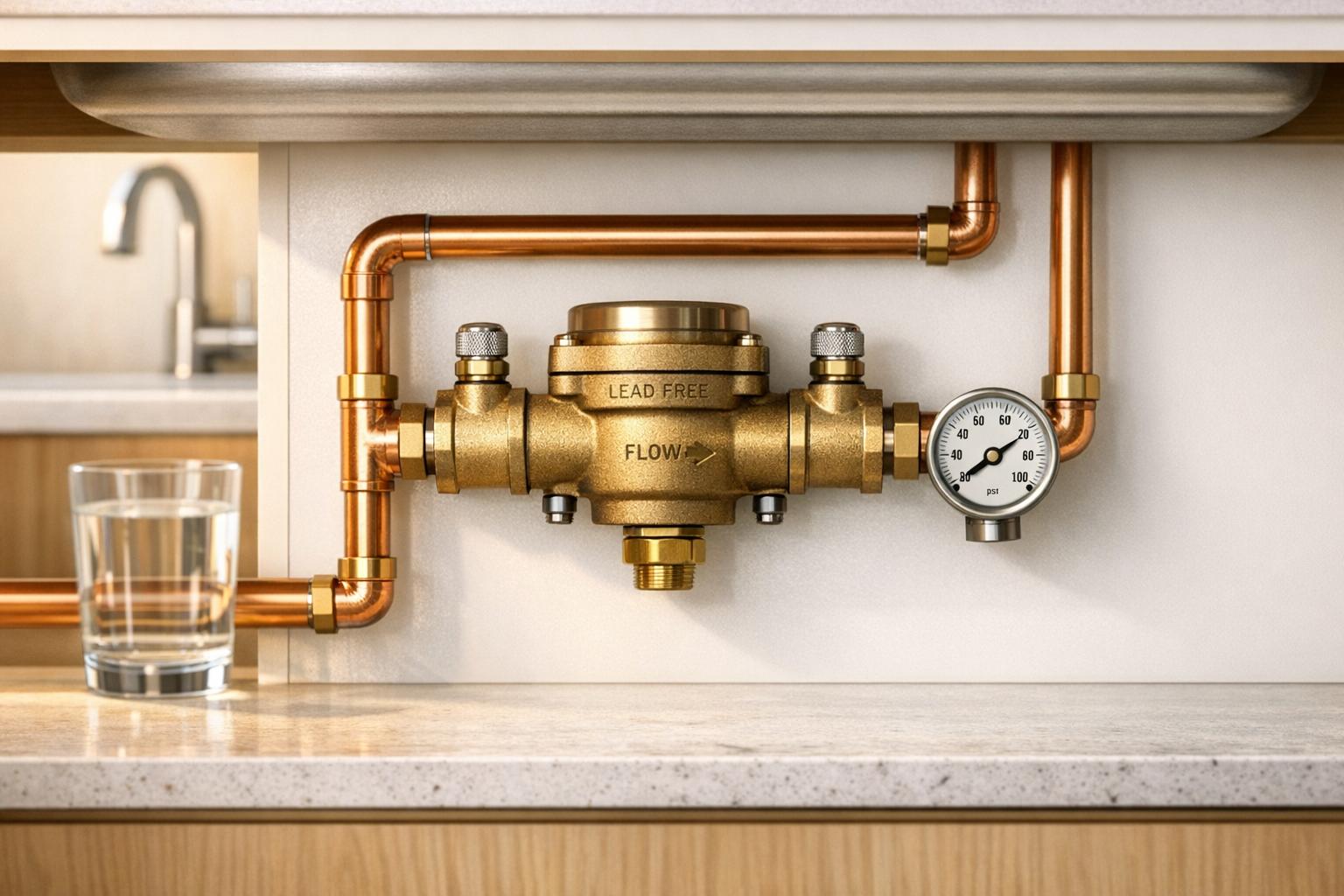

Keeping your water safe starts with understanding how contamination happens and taking simple steps to prevent it. Contaminants like bacteria, chemicals, and metals can enter your water supply through backflow, aging pipes, and cross-connections in your plumbing. Here’s what you can do:
- Install backflow prevention devices: These stop contaminants from reversing into your clean water. Options include air gaps, RPZ devices, and double-check valves.
- Maintain your plumbing: Regularly inspect pipes, clean fixtures, and replace aging materials like lead or galvanized steel.
- Test annually: Backflow devices need yearly testing by certified professionals to ensure they’re working properly.
- Flush stagnant systems: After long periods of inactivity, run your taps to clear out stagnant water and harmful bacteria.
- Choose safe materials: Use copper, CPVC, or Class A PEX pipes to reduce risks of corrosion and biofilm buildup.
Taking these steps ensures your water remains safe for drinking, cooking, and bathing. Regular maintenance and attention to potential risks can prevent issues before they become serious.
How Backflow Preventers Work | Protect Your Water from Contamination
sbb-itb-466cac3
How Water Contamination Happens in Plumbing Systems
Knowing how contaminants infiltrate your plumbing system is crucial for prevention. Contamination often occurs when unsafe water mixes with your clean water supply. These conditions can arise in any home, regardless of its age or location.
What is Backflow and Why is it Dangerous?
Backflow is a reversal of water flow that allows contaminants to enter your drinking water. It happens in two main ways: back-siphonage and backpressure.
- Back-siphonage occurs when a vacuum forms in the water system, pulling contaminated water into the clean supply. This can happen during events like water main breaks, firefighting activities, or repairs that cause a drop in pressure. For instance, if a garden hose is submerged in a pool, a sudden pressure drop could siphon pool water into the system.
- Backpressure happens when the pressure in a downstream system - such as a boiler or a booster pump - exceeds the pressure of the municipal water supply. This forces non-potable water back into the clean water lines.
"For a drinking water supply to become contaminated via a cross-connection three things need to happen simultaneously: an open source of drinking water supply piping must be unprotected; a physical cross-connection must be made; and hydraulic event/backflow conditions must occur." - Government of Ontario
The real danger of backflow lies in the harmful contaminants it can introduce into your drinking water. These contaminants can include pathogens like Campylobacter, which is the leading cause of bacterial gastrointestinal illness in Canada. The country sees annual incidence rates of 25.4 to 29.2 cases per 100,000 people, and certain strains of C. jejuni can cause illness with just a few hundred bacteria. Other risks include sewage, heavy metals, and industrial chemicals.
Backflow isn't the only risk; other cross-connection points in your home can also lead to contamination.
Common Contamination Sources in Homes
While backflow events are a major concern, everyday household fixtures can also serve as entry points for contaminants. These are known as cross-connections, where your potable water system connects to non-potable sources.
- Hose bibs are one of the most common culprits. If a hose is submerged, it creates a direct pathway for contaminated water to enter the system.
- Irrigation and sprinkler systems pose risks, especially when connected to storage tanks or used with fertilizers and pesticides. Stagnant water in these systems can harbour bacteria that may flow back into your drinking water during pressure drops.
- Heating systems and boilers often operate at higher pressures and may contain chemical additives for corrosion control. If backflow prevention fails, non-potable water from these systems can enter your clean water supply.
- Aging pipes can also contribute to contamination. Older pipes may develop biofilms, which are ideal breeding grounds for opportunistic pathogens like Legionella and Mycobacterium. As Health Canada points out, "the absence of indicator bacteria (e.g., Escherichia coli, total coliforms) does not indicate the absence of opportunistic pathogens such as Legionella and Mycobacterium". These pathogens thrive in stagnant water, especially at temperatures between 20°C and 50°C.
| Contamination Source | How It Happens | Risk Level |
|---|---|---|
| Hose bibs | Back-siphonage when the hose is submerged | High |
| Irrigation systems | Stagnant water with fertilizers; pressure drops | Medium to High |
| Boilers and heating systems | Backpressure from pumps or chemical additives | High |
| Aging pipes | Biofilm growth and metal leaching | Medium |
| Utility sinks | Submerged faucets and lack of air gaps | Medium |
Improper pipe sizing can also cause pressure fluctuations, increasing the likelihood of back-siphonage. When pipes are too small for the water demand, pressure drops become more frequent, creating opportunities for contamination.
The key point here is that contamination doesn't always result from major plumbing failures. Everyday fixtures and appliances in your home can create risks. Being aware of these vulnerabilities is essential for keeping your water supply safe.
Installing and Maintaining Backflow Prevention Devices

Backflow Prevention Devices Comparison Guide for Home Plumbing
Protecting your water system from contamination is a top priority. Backflow prevention devices act as a safeguard, stopping pollutants from entering your water supply. Choosing the right device and maintaining it properly are key steps in ensuring your water remains safe.
Types of Backflow Prevention Devices
The type of device you need depends on the level of protection required. Here’s a breakdown of common options:
- Air Gaps: These provide a physical separation between the water outlet and the flood-level rim of a fixture. To be effective, the gap must be at least twice the diameter of the supply pipe and no less than one inch. Air gaps are often used in sinks and dishwashers where the faucet is raised above the basin.
- Reduced Pressure Zone (RPZ) Devices: Ideal for high-risk areas like industrial or medical facilities, RPZ devices include two independent check valves and a relief valve to handle back-pressure and back-siphonage. They need to be installed above ground with proper drainage.
- Double Check Valve Assemblies (DCVA): These offer medium-level protection with two spring-loaded check valves in series. They’re commonly found in condos, commercial spaces, and fire suppression systems. While they handle both back-pressure and back-siphonage, they don’t match the security of RPZ devices.
- Pressure Vacuum Breakers (PVB): Typically used for lawn irrigation and sprinkler systems, PVBs protect against back-siphonage but not back-pressure. They must be installed at least 12 inches above the highest downstream piping.
For outdoor faucets, hose bibb vacuum breakers are an affordable option. These devices attach directly to the faucet and prevent back-siphonage by venting to the atmosphere when the water supply is turned off. Single-family homes often rely on dual check valves at the water meter for low-risk protection, though these lack test cocks and aren’t as reliable as DCVAs.
| Device Type | Hazard Level | Protection Type | Common Application |
|---|---|---|---|
| Air Gap | High | Back-pressure & Back-siphonage | Sinks, dishwashers, tanks |
| RPZ / RPA | High | Back-pressure & Back-siphonage | Industrial, chemical, medical facilities |
| DCVA | Medium / Moderate | Back-pressure & Back-siphonage | Condos, commercial properties, fire lines |
| PVB | Medium / Low | Back-siphonage ONLY | Lawn irrigation, sprinkler systems |
Where to Install Backflow Prevention Devices
Proper placement is crucial for effective protection. To safeguard the municipal water supply, install devices immediately after the water meter and bypass piping. This method, known as premise isolation, ensures that water from private plumbing cannot flow back into the city’s supply. The City of Toronto advises:
"Devices should be installed immediately after the water meter and by-pass piping. This ensures that water from the private plumbing system will not flow back through the meter into the City's water supply".
Keep devices accessible - no higher than 5 feet from the ground - and ensure there’s enough space for tools and testing. This makes maintenance easier and ensures compliance with inspection standards.
For added protection, you can install devices at specific points of potential contamination, such as irrigation systems, boilers, or hose bibbs. This approach, called point-of-use protection, focuses on internal plumbing rather than the municipal system. Adding shutoff valves on both sides of the device can simplify maintenance.
Since backflow preventers close your system, you’ll need an expansion tank or pressure relief valve to handle thermal expansion.
Testing and Maintenance Requirements
Installing a backflow device is just the first step - it also requires regular testing to ensure it’s functioning properly. Most municipalities mandate annual testing by a certified professional. Testing is also necessary after installation, repairs, or system changes. In some areas, residential irrigation systems may only need testing every three years.
A certified technician will use a differential pressure gauge to check pressure levels, which typically range between 1.0 and 5.0 psi. They’ll also inspect for leaks, damage, and worn components like springs and seals. If the device fails, these parts will need replacement.
After testing, a tag with the results must be attached to the device, and a report is usually submitted to the municipality within 14 to 15 days. Keep these records on-site for five to seven years, as they may be required during audits. Missing deadlines can lead to penalties - for instance, Waterloo charges $57.25 for late submissions.
Between professional tests, inspect devices monthly for leaks, corrosion, or damage. Setting reminders for annual testing can help you avoid fines or service interruptions. Properly maintained devices have a failure rate of less than 1%.
Installing a backflow device typically costs $800 to $1,500, while annual testing for one or two devices ranges from $150 to $250. Repairs or replacements can cost between $250 and $600. Always hire a plumber who’s registered with your local municipality.
How to Keep Your Plumbing System Clean
Maintaining clean, durable pipes is just as important as installing backflow devices when it comes to protecting your water from contamination. The materials you choose, how you care for them, and knowing when to replace them all play a role in keeping your water safe.
Choosing and Maintaining Pipe Materials
While backflow devices prevent external contaminants, the right pipe materials and proper upkeep ensure your water remains uncontaminated from within. The type of pipes in your home has a direct impact on water quality. Copper is often considered the best choice - it doesn’t release plastic chemicals and has natural antimicrobial properties that limit bacteria growth. The Environmental Working Group highlights:
"Copper pipes with lead-free joint materials are the best choice for water pipes. They are long-lasting and won't leach chemicals into your drinking water".
However, if your water supply has a pH below 6.5 - common with private wells - copper may corrode, releasing copper ions into the water. In such cases, CPVC (Chlorinated Polyvinyl Chloride) is a better alternative. It’s resistant to chlorine-based disinfectants and has minimal biofilm formation. Jonathan Simon, a plumbing expert, explains:
"CPVC piping consistently has a comparatively low biofilm formation potential. That can translate to a reduced risk of harmful bacteria in drinking water".
PEX (Cross-linked Polyethylene) is another option, known for its flexibility and affordability, but it has limitations. PEX can degrade under high temperatures (above 60°C) or pressures exceeding 80 psi. If you go with PEX, choose Class A, which has a lifespan of over 100 years, compared to 50 years for Class B or C. Avoid older polybutylene pipes marked "PB2110" - these are prone to failure and should be replaced immediately.
| Material | Biofilm Potential | Chemical Leaching | Durability/Life | Best Use Case |
|---|---|---|---|---|
| Copper | Low (Antimicrobial) | Low (if pH > 6.5) | High (50+ years) | Main water supply lines |
| CPVC | Very Low | Moderate | High | Chlorine-heavy municipal water |
| PEX (Class A) | Moderate | Moderate | Very High (100+ years) | Flexible retrofits; radiant heat |
| Galvanized Steel | High (due to rust) | High (Lead/Zinc) | Low (Corrodes) | Gas lines (avoid for water) |
Disinfecting Pipes with Shock Chlorination
Shock chlorination is a powerful way to clean your pipes, eliminating bacteria, mould, algae, and biofilm. This method is recommended after new well construction, plumbing repairs, flood exposure, or if tests reveal coliform bacteria.
Here’s how it works: Start by turning off your main water supply and draining water heaters and pipes to clear out sediment. Bypass water softeners and carbon filters to prevent chlorine damage. Use unscented, potable bleach at 50–200 ppm.
Introduce the chlorine solution into your system, then run all faucets (hot and cold) until you smell chlorine at each outlet. Let the solution sit in the pipes for 12–24 hours. Afterward, check to ensure the chlorine levels are still at least 10 ppm; if not, repeat the process. Flush the system by running an outdoor faucet until the chlorine smell fades, then flush indoor fixtures. Always wear safety gear, like goggles and gloves, when handling concentrated chlorine.
Identifying Signs of Aging Plumbing
Spotting signs of wear and tear in your pipes early can prevent bigger problems. Brown or discoloured water often points to corrosion in galvanized pipes, while green stains suggest copper pipe decay. Watch for greening on copper pipe exteriors, bubbling or discoloured PEX surfaces (a sign of chlorine damage), and thinning pipe walls.
Other warning signs include reduced water pressure and frequent pinhole leaks, which may indicate scale buildup or corrosion. According to Tap Score:
"Legionnaires' disease, the illness caused by Legionella, kills more people in the U.S. than any other waterborne pathogen".
If your home has lead service lines - greyish-black pipes soft enough to dent with a knife - replace them immediately. Faucets and fixtures made before 1997 may contain up to 8% lead, while those after 2014 are limited to 0.25%. Health Canada's strict lead limit for drinking water is 0.005 mg/L, one of the lowest in the world.
Regular maintenance also helps. Clean faucet aerators and showerheads to remove sediment or biofilm. Run the cold tap for at least a minute before drinking or cooking. Keep water heaters at 60°C to kill Legionella, but use thermostatic mixing valves at taps to avoid scalding.
Staying on top of plumbing maintenance is just as important as installing backflow devices to ensure your water remains safe and clean.
Long-Term Prevention Measures
Protecting water systems over the long haul involves ongoing efforts, like preventing cross-connections, scheduling regular plumbing inspections, and flushing systems after periods of vacancy.
Preventing Cross-Connections
A cross-connection happens when drinking water pipelines come into contact with potential contaminants. In cities like Calgary, most buildings have at least one cross-connection. Common examples include hose bibs (outdoor taps), irrigation systems, utility sinks, boilers, and high-pressure washers.
Some simple habits can help prevent contamination. For instance, never submerge garden hoses, as pressure drops can siphon contaminated water back into your home. Similarly, handheld showerheads should not rest in bathtub water, and bidet attachments need proper backflow protection. One effective way to prevent backflow is by using air gaps - a physical separation between the water outlet and potential contaminants. The gap should be at least twice the pipe's diameter or at least 2.5 cm (one inch). For more complex systems, such as irrigation setups, mechanical devices like atmospheric vacuum breakers or Reduced Pressure Zone (RPZ) assemblies provide added safety. It's also a good idea to test backflow systems every spring when reactivating irrigation systems.
Regular checks ensure these measures stay effective over time.
Scheduling Regular Plumbing Inspections
Professional plumbing inspections can uncover issues before they escalate into costly repairs. While annual inspections are crucial, monthly visual checks for leaks, corrosion, or damage can help spot trouble early.
"Distribution systems should have regularly tested backflow prevention valves that can prevent or at least isolate incursions".
At Creed Plumbing, services include backflow assembly testing, water quality assessments, visual pipe audits, and hazard evaluations to identify cross-connection risks. After repairing or relocating backflow preventers, schedule an immediate re-test to ensure everything is functioning correctly. Keeping a log of inspection results not only tracks your system’s health but also helps meet local regulations. For example, Vancouver requires a $30 fee to file backflow test reports through its online portal.
While inspections are essential, flushing systems after prolonged vacancies is another key step.
Flushing Systems After Extended Vacancies
When a property sits empty for a week or longer, water stagnates in the pipes. This can cause chlorine disinfectants to break down, water temperatures to rise, and metals like lead and copper to leach into the water. These conditions can also encourage harmful pathogens, such as Legionella and Mycobacterium avium, to grow. Restoring the system to normal may take up to 12 weeks of regular use.
To flush the system, remove aerators, filters, and showerheads to prevent sediment buildup. Start flushing from the water entry point, working towards the farthest outlet. Always flush the cold water lines fully before moving to hot water. Run each fixture for 10–30 minutes until the water temperature matches that of the municipal supply. For the initial flush, set your hot water heater to at least 60°C to kill pathogens. After flushing, replace all point-of-use filters, such as those in refrigerators or coffee makers, as these can harbour bacteria during periods of low use. Don’t forget to pour water into floor drains and flush toilets weekly to keep sewer gases from escaping through dry traps.
Conclusion
Keeping your water supply safe means focusing on proper device installation, regular maintenance, and mindful practices. Backflow prevention devices act as a key defence, creating a barrier between your home's plumbing and the municipal water system. To maintain their effectiveness, annual testing by certified professionals is essential. Taking these steps ensures your home's water remains secure.
Safe habits also play a big role. Simple actions like maintaining air gaps at fixtures, avoiding submerging hoses in pools or chemical containers, and fixing cross-connections quickly all contribute to protecting your drinking water. Regular inspections and professional assessments can catch potential problems early, preventing them from becoming serious issues.
"Distribution systems should have regularly tested backflow prevention valves that can prevent or at least isolate incursions." - Justice O'Connor, Report of the Walkerton Inquiry
In Toronto, it's important to keep backflow test records for at least seven years to meet the Water Supply By-law requirements. Additionally, any repairs to backflow devices must be followed by re-testing within 72 hours. Professional services can handle these technicalities, submit required reports through municipal platforms, and even guide you through rebate programs for water safety upgrades. Staying proactive with these measures, along with regular maintenance, helps ensure your plumbing system remains reliable and free from contamination.
At Creed Plumbing, licensed specialists offer services like backflow assembly testing, hazard assessments, and preventive maintenance to help Toronto homeowners safeguard their water quality. Whether it's annual testing, cross-connection surveys, or emergency repairs, their qualified technicians ensure your plumbing stays safe and compliant.
FAQs
Do I need a backflow preventer in my home?
Yes, adding a backflow preventer is a smart way to protect your home’s water supply from potential contamination due to backflow. This is particularly crucial in areas known as cross-connections - where pollutants could seep into the potable water system. A backflow preventer acts as a barrier, keeping your water safe and clean for everyday use.
How do I know if my home has a cross-connection risk?
A cross-connection risk arises when your plumbing system connects the potable water supply to potential contamination sources, such as irrigation systems, boilers, or fire protection systems. These links can allow backflow, which may introduce contaminants into your drinking water if proper backflow preventers aren’t in place. Unsure if your system is secure? Or maybe you’ve received a cross-connection testing notice? It’s a good idea to have a certified tester inspect your system to ensure it’s properly safeguarded against contamination risks.
When should I replace old plumbing pipes?
If you're dealing with discoloured water, low water pressure, frequent leaks, or odd noises, it might be time to replace your plumbing pipes. Materials like galvanized steel or lead, commonly used in older homes, usually have a lifespan of 40–70 years, though with good upkeep, they can sometimes last up to a century. However, homes built before the mid-1950s often feature outdated materials like lead, which should be replaced as a precaution to prevent health concerns and expensive repairs down the line.