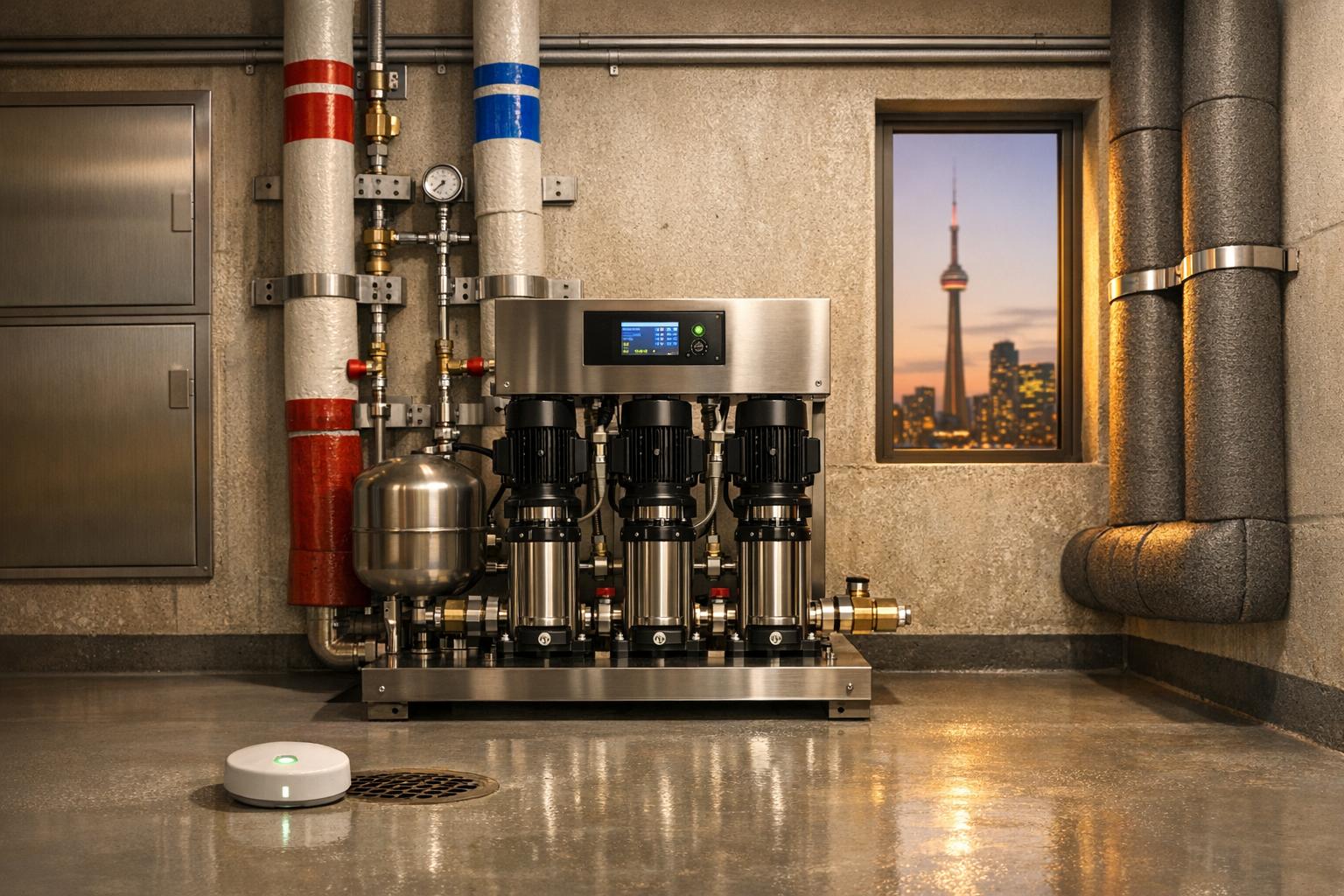

High-rise buildings in Toronto face complex plumbing issues that can disrupt daily life and lead to costly repairs. Key challenges include:
- Low water pressure on upper floors due to gravity, outdated systems, or high demand.
- Leaks and hidden pipe damage, often in older buildings with copper or cast-iron pipes.
- Clogged drainage stacks and backups, caused by improper disposal of items like grease and wet wipes.
- Burst or frozen pipes during winter, especially in poorly insulated systems.
These problems require regular maintenance, inspections, and modern solutions like booster pumps, leak detection sensors, and proper insulation. Addressing these issues proactively ensures smoother operations, reduces repair costs, and improves living conditions for residents.
Plumbing In HIGH Risse Buildings Is A Lot More Dangerous Than You Think!
sbb-itb-466cac3
Common Plumbing Problems in Toronto High-Rises
Living in a Toronto high-rise comes with its own set of plumbing challenges that can disrupt daily routines and create headaches for property managers. These issues highlight the importance of regular maintenance and quick repairs to keep residents comfortable and buildings running smoothly. Let’s look at some of the most common problems and practical ways to address them.
Low Water Pressure on Upper Floors
It’s no secret that water pressure tends to drop on upper floors of high-rises. Gravity plays a major role, but other factors like outdated booster pumps, ageing plumbing systems, and high water demand during peak hours can make things worse - even when the minimum flow rate of 7 L/min is technically met. Sudden drops in pressure can also be caused by external factors like watermain breaks or construction nearby.
Some issues are easier to fix than you might think. For example, clogged aerators on taps can make it seem like the building has low water pressure. Simply cleaning these screens can restore normal flow. On a larger scale, property managers might consider dividing the building into hydraulic zones. This setup provides dedicated booster systems for upper floors and pressure-reducing measures for lower ones, ensuring more consistent water pressure throughout the building.
Leaks and Hidden Pipe Damage
Older high-rises often rely on copper and cast-iron pipes, which are prone to developing pinhole leaks over time. Since these leaks often occur behind walls, they can go unnoticed until significant damage has already been done. Repairs can be costly, with major work like replacing risers or drain stacks running anywhere from $10,000 to $50,000 or more. On top of that, disputes over whether unit owners or the condo corporation are responsible for repairs can complicate matters. If a leak isn’t fixed within 48 hours, mould can start to grow, adding even more costs and potentially forcing residents to temporarily relocate.
The best way to tackle this issue? Prevention. Annual inspections of risers, stacks, and drain systems can help identify early signs of corrosion or leaks. Installing smart leak detection sensors is another proactive step - they can alert property managers to problems even if residents are away. Adding clean-outs every 4–5 floors also makes inspections and maintenance much easier.
Clogged Drainage Stacks and Backups
Shared drainage stacks in high-rises can easily clog when inappropriate items - like wet wipes or grease - are flushed or poured down drains. Chemical drain cleaners, while tempting, often do more harm than good by corroding cast-iron pipes. To make matters worse, blockages in vent stacks can disrupt air pressure, further impairing drainage.
"When a blockage occurs in the main line, it affects multiple units - often triggering backup from the lowest level upward." – 17 Plumbing & Construction Design Ltd
Education is key here. Encouraging residents to follow the "3 P’s" rule - only flushing pee, poo, and toilet paper - can prevent many blockages. For tougher issues like grease buildup, professional hydro-jetting is far more effective (and safer for pipes) than chemical cleaners. Seasonal inspections of vent stacks can also prevent blockages caused by debris or frost during the winter months.
Burst or Frozen Pipes During Winter
Toronto winters are no joke, and freezing temperatures can wreak havoc on high-rise plumbing. Pipes that aren’t properly insulated are at risk of freezing, which can lead to bursts, flooding, and water flow issues that affect multiple units.
During cold spells, residents can help by opening cabinet doors under sinks to let warm air circulate around exposed pipes. However, property managers should ensure that risers and other vulnerable pipes are well-insulated to minimize the risk of freezing and bursting during harsh winters.
Solutions for High-Rise Plumbing Problems
Improving Water Pressure
If water pressure on upper floors is low, start with simple fixes. One quick solution is cleaning the aerators on your taps - these small screens can get clogged with debris, especially after construction work. If the pressure suddenly drops, call 311 Toronto. City staff usually inspect the municipal supply within 24 hours.
For ongoing pressure issues, variable-speed booster pumps can help. These systems use variable frequency drives (VFDs) to adjust water pressure based on demand, which also saves energy during low-use periods like at night. Since water pressure decreases by 0.433 psi for every foot of elevation, tall buildings need these systems to maintain consistent flow. To balance pressure across the building, pressure-regulating valves (PRVs) can keep lower floors from experiencing excessive pressure while still delivering enough to higher floors. Another energy-efficient option is a hydro-pneumatic system. This setup uses a pressure vessel and air compressor, activating booster pumps only when demand exceeds what the vessel can supply.
Don’t forget to check for hidden leaks and consider pipe upgrades to address long-term issues.
Leak Detection and Pipe Upgrades
Hidden leaks can cause significant problems, but modern tools make detection easier. Thermal imaging cameras can spot temperature changes caused by moisture behind walls, while video pipe inspections provide a live view inside plumbing lines. Pressure testing is another method to pinpoint leaks or blockages by identifying drops in water pressure.
When leaks are located, replacing old pipes with more durable materials can prevent future issues. Upgrading to PEX (cross-linked polyethylene) or copper improves resistance to corrosion. For hard-to-reach pipes, Cured-In-Place Pipe (CIPP) lining is a trenchless solution that creates a seamless, root-proof pipe within the existing line. This method avoids major demolition and can reduce restoration costs by up to 30% compared to traditional approaches.
Clearing Drainage Blockages
Clogged drainage stacks and backups can be resolved with camera inspections, which help locate the exact cause of the blockage. If damage is found, epoxy pipe relining can repair cracks internally without the need for wall demolition. Regular maintenance is essential to avoid recurring problems. Watch for signs like fluctuating water pressure, discoloured water, unexplained running water sounds, or persistent dampness in basements and hallways. Additionally, flushing rarely used water outlets can prevent microbial growth and ensure water quality.
Once blockages are cleared, it’s important to take steps to protect your plumbing system during winter months.
Preventing Winter Pipe Bursts
Toronto winters can be harsh, but there are ways to protect your pipes. Insulate pipes with foam covers, especially those near exterior walls, in crawl spaces, or garages. Seal air leaks and keep thermostats set to at least 17°C to prevent cold air from freezing pipes. As JPS Canada highlights:
A small gap of just one inch in a window or patio door can result in rapidly freezing pipes. Never leave windows or exterior doors open, especially when the temperature is at or below zero.
In extreme cold, open cabinet doors under sinks to allow warm air to reach pipes near exterior walls. For pipes that are prone to freezing, let a small stream of water flow from the lowest tap to keep water moving. Before winter, disconnect outdoor hoses, shut off outdoor water supplies, and drain taps. Installing pressure-relief valves can also help manage water pressure and reduce stress on pipes during temperature changes. If a pipe does freeze, thawing can take anywhere from one to six hours, depending on the severity of the freeze.
Installing Backflow Prevention Devices
To prevent cross-connection risks, install CSA-approved backflow prevention devices. These devices stop contaminated water from flowing backward into Toronto's water supply. They must meet CSA standards and undergo annual testing by TSSA-certified professionals to comply with Toronto Water regulations and the Ontario Building Code. Property managers should ensure that all devices are installed correctly and tested on time to stay compliant with Toronto Municipal Code §851.
Preventive Maintenance for High-Rise Plumbing
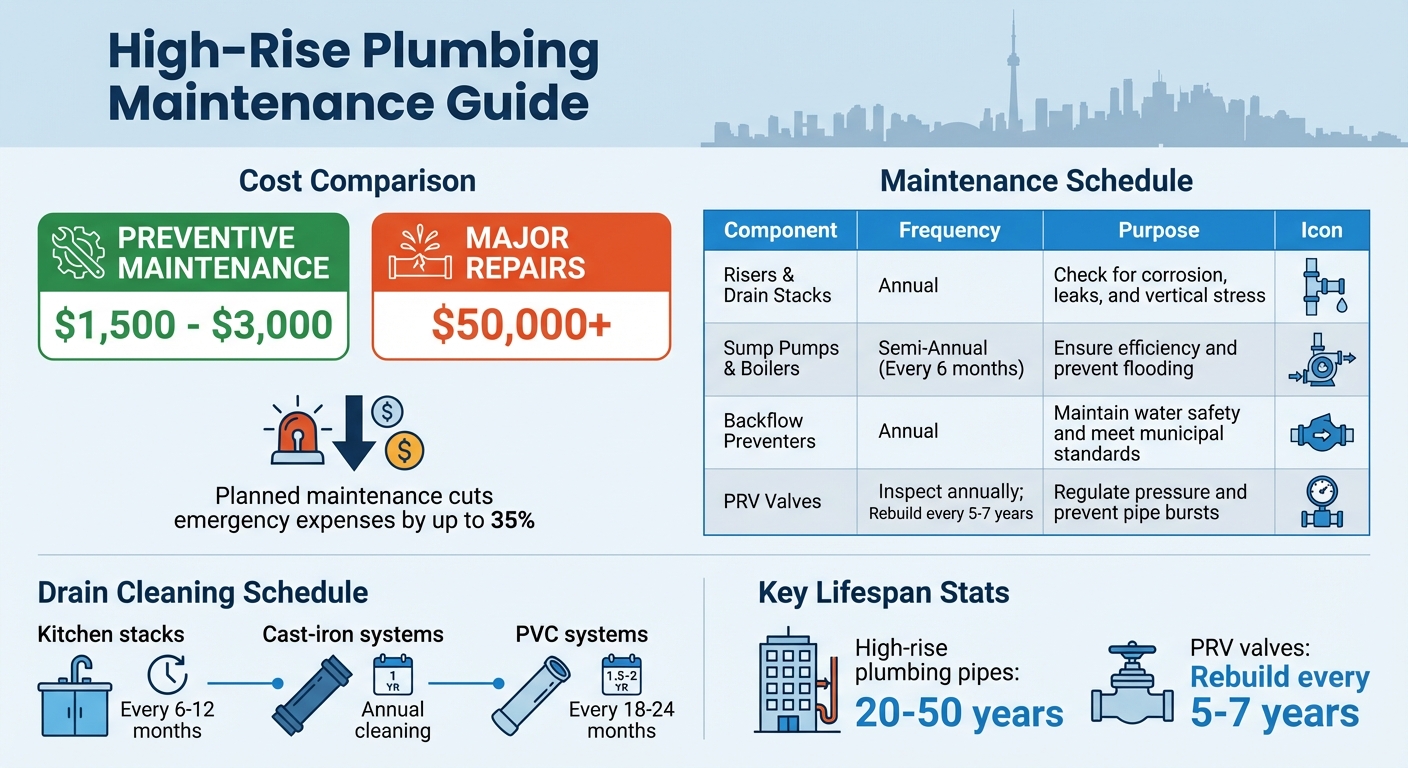
Toronto High-Rise Plumbing Maintenance Schedule and Cost Comparison
Keeping high-rise plumbing systems in good shape requires regular maintenance. Not only does this help prevent costly emergencies, but it also complements repair strategies by reducing the likelihood of future issues. In fact, planned maintenance can cut emergency plumbing expenses by up to 35%. While the cost of preventive maintenance ranges from $1,500 to $3,000, it can save you from major repairs that might cost over $50,000.
Scheduled Inspections and Leak Checks
Annual inspections of risers, stacks, and drainage systems are essential for spotting early signs of problems like corrosion, vertical stress, or wear in cast iron or copper pipes - issues that could lead to major failures if left unchecked. Additionally, sump pumps, boilers, and backflow preventers should be inspected every six months.
Be alert to warning signs such as fluctuating water pressure, discoloured water, or persistent dampness in shared spaces, as these could indicate underlying plumbing issues.
Pressure Reducing Valves (PRVs) deserve special attention. These valves typically fail every 5–7 years, so annual servicing is crucial to avoid problems like inconsistent water pressure, "water hammer" noises, or burst pipes on upper floors. Proper PRV maintenance also ensures balanced water flow across all floors, extending the life of fixtures.
| Component | Recommended Frequency | Purpose |
|---|---|---|
| Risers & Drain Stacks | Annual | Check for corrosion, leaks, and vertical stress |
| Sump Pumps & Boilers | Semi-Annual | Ensure efficiency and prevent potential flooding |
| Backflow Preventers | Annual | Maintain potable water safety and meet municipal standards |
| PRV Valves | Inspect annually; rebuild every 5–7 years | Regulate pressure and prevent pipe bursts |
Regular Drain Cleaning
Once inspections are complete, regular drain cleaning helps maintain the system’s integrity and prevents blockages. For instance, kitchen stacks should be cleaned every 6–12 months to avoid grease, oil, and fat (FOG) buildup. Older cast-iron systems benefit from annual cleaning, whereas newer PVC systems may only need attention every 18–24 months. High-pressure hydro-jetting is particularly effective for clearing hardened debris that can narrow shared pipes and create hygiene concerns.
Installing clean-outs every 4–5 floors along risers allows for bottom-up cleaning in stages, minimizing the risk of overloading lower floors during service. Educating residents can also go a long way. Encourage them to avoid pouring grease, rice, pasta, or coffee grounds down the drain and to run hot water for 30–60 seconds after washing greasy dishes to keep drains clear.
Working with Professional Plumbing Services
Licensed plumbers bring the right tools and expertise to the table. Using advanced equipment like 200-ft stack cameras, ultrasonic leak detectors, and thermal imaging, they can identify hidden issues without causing structural damage. Professionals also ensure compliance with the Ontario Building Code and Toronto Water regulations, including mandatory annual backflow testing.
For example, Creed Plumbing offers comprehensive preventive maintenance services tailored for Toronto high-rises. These include scheduled inspections, leak detection, drain cleaning, and emergency repairs. Their licensed technicians provide clear pricing and ensure all work meets municipal standards. Partnering with skilled professionals helps property managers maintain plumbing systems efficiently and avoid unexpected failures year-round.
Conclusion
Plumbing systems in Toronto's high-rise buildings come with their own set of challenges. Problems like low water pressure on upper floors, concealed pipe damage, frozen pipes during harsh winters, and blockages in drainage stacks can quickly escalate into issues affecting the entire building. As 17 Plumbing & Construction Design Ltd explains:
In a condo building, one leaking pipe rarely affects just one unit - the problem spreads vertically through risers and common walls.
Addressing these challenges requires more than quick fixes; long-term strategies are essential. Solutions such as installing booster pumps, pressure-reducing valves, hydro-jetting systems, and backflow prevention devices can help tackle these issues effectively. However, relying solely on reactive repairs won't cut it. With high-rise plumbing pipes typically lasting between 20 and 50 years and components like pressure-reducing valves needing rebuilding every 5 to 7 years, property managers must take a proactive stance.
Preventive maintenance is key to ensuring the reliability of high-rise plumbing systems. Regular inspections, scheduled drain cleaning, and professional servicing can help avoid emergencies that might cost as much as $50,000. Licensed professionals also ensure compliance with the Ontario Building Code and Toronto Municipal Code §851. Advanced diagnostic tools, such as thermal imaging and camera inspections, allow for the early identification of hidden issues, reducing the risk of severe structural damage.
Creed Plumbing provides tailored maintenance and emergency services designed specifically for Toronto high-rises. By adopting a proactive maintenance plan and relying on expert assistance, property managers can ensure their plumbing systems remain safe and dependable throughout the year.
FAQs
What can residents of Toronto high-rises do to improve water pressure on upper floors?
Residents of Toronto high-rises often face challenges with water pressure on upper floors, but there are practical steps to address the issue. One popular fix is installing booster pump systems. These pumps are designed to increase water pressure specifically for higher levels and can include variable-speed controls to adjust pressure based on the building's water demand.
Another solution involves pressure-reducing valves (PRVs). Adjusting or replacing these valves can help balance water pressure across all floors. Beyond that, regular maintenance is key - this includes checking for leaks and ensuring pipes remain clear of blockages to maintain steady water flow.
When the problem persists, it’s a good idea to consult licensed plumbers. They can pinpoint the causes of low water pressure and recommend custom solutions. For example, Creed Plumbing provides specialized services in Toronto, such as emergency repairs, leak detection, and fixture installations, helping high-rises maintain dependable plumbing systems.
How can hidden leaks be detected in older high-rise buildings in Toronto?
Detecting hidden leaks in older high-rises requires a mix of vigilance and modern technology. Start by keeping an eye out for early warning signs: unexpected spikes in water bills, water stains on walls or ceilings, areas that remain damp, or noticeable drops in water pressure in certain parts of the building. These clues often suggest a hidden leak.
For pinpoint accuracy, advanced methods like acoustic leak detection come into play. This technique uses specialized sensors to pick up the sound of water escaping from pipes, even when the leak is behind walls or buried underground. Additionally, systems like pressure and flow monitoring or hydrostatic testing can reveal leaks by identifying irregularities in the plumbing system.
To avoid small leaks turning into costly problems, regular inspections by licensed plumbers are a must. In cities like Toronto, professional plumbing services can help ensure the plumbing in older high-rises stays in top shape, safeguarding the building from long-term damage.
What steps can Toronto high-rises take to prevent pipe bursts during winter?
High-rise buildings in Toronto can take steps to lower the chances of pipe bursts during the cold winter months. One key approach is insulating exposed pipes in unheated areas like basements or garages. Materials such as foam sleeves or heat cables work well to keep pipes protected. Keeping indoor temperatures steady at a minimum of 17°C is another effective measure, and programmable thermostats can help maintain this consistency without much effort.
Another crucial step is winterizing outdoor plumbing. This includes shutting off exterior water lines, draining hoses, and using frost-proof taps or faucet covers. Additionally, sealing drafts around entry points and leaving cabinet doors open can help warm air circulate around pipes, reducing the risk of freezing. For buildings equipped with fan coil systems, regular maintenance and insulating circulating water lines are essential to prevent freezing-related problems.
By addressing these tasks early in the season, high-rise buildings can avoid expensive repairs and keep their plumbing systems running smoothly during Toronto’s tough winters.