Toronto winters often cause water pressure issues due to freezing temperatures and aging infrastructure. When the mercury dips below -10°C, pipes can freeze, watermains may break, and demand spikes as residents try to prevent freezes. These factors strain the city's water system, reducing flow rates and impacting daily life.
Key points to know:
- Frozen Pipes: Ice buildup restricts water flow, especially in unheated areas.
- Watermain Breaks: Cold weather causes pipes to burst, disrupting neighbourhood supplies.
- Increased Demand: Running water to prevent freezing adds pressure to the system.
- Old Plumbing: Galvanized steel or lead pipes can corrode, further reducing flow.
To prevent problems, insulate pipes, keep areas warm, and monitor for leaks. If issues persist, check municipal updates or consult a licensed plumber.
How Toronto's Winter Weather Affects Municipal Water Systems
Toronto's municipal water system faces considerable challenges during the winter months. Freezing temperatures put infrastructure under strain, shift water usage patterns, and lead to emergency repairs that can disrupt service across entire neighbourhoods.
Cold Temperatures and Infrastructure Strain
When temperatures plunge, the city's water distribution network takes a hit. Freezing water inside pipes expands, creating blockages or even causing pipes to burst, which restricts water flow and damages infrastructure. Frost also exerts pressure on supply lines, reducing the water volume that reaches homes. The City of Toronto has identified -10°C as a critical threshold - when temperatures drop below this at night, public alerts are issued to help residents prevent frozen pipes and avoid further strain on the system.
But the challenges don’t stop at physical damage. Winter conditions also impact how and when water is used.
Increased Water Demand During Extreme Cold
Cold weather doesn’t just stress infrastructure - it alters water usage patterns too. Toronto’s 18 pumping stations and 11 underground reservoirs operate continuously to meet demand, but extreme cold snaps push the system to its limits. For example, when the City advises residents to run a pencil-thin stream of water around the clock to prevent pipes from freezing, this collective effort adds significant strain to the municipal supply. These unusual usage patterns can lead to temporary drops in water pressure across entire districts.
And as demand rises, winter-related damage can further complicate matters.
Water Main Breaks and Emergency Repairs
Water main breaks are one of the most disruptive consequences of winter weather. A single break can affect an entire neighbourhood’s water supply. The repair process itself often prolongs the issue, as low water pressure may persist even after emergency fixes or maintenance on nearby fire hydrants. Toronto Water crews aim to respond within four hours for reports of "no water" and within 24 hours for sudden drops in pressure, but severe damage can take days to repair. During major repairs, the City may set up temporary water supplies for affected residents, though full pressure restoration might take longer.
Common Household Causes of Low Water Pressure in Winter
When winter hits Toronto, it's not just the municipal systems that can cause water pressure problems - issues inside your home can make matters worse. Freezing temperatures, older plumbing, and mineral deposits are some of the culprits that can limit water flow to your taps during the colder months. These challenges, combined with external municipal factors, can lead to noticeably lower water pressure.
Frozen and Partially Blocked Pipes
One of the most common winter plumbing problems is ice forming inside pipes. Even if a pipe doesn’t freeze solid, ice buildup along the inner walls can restrict water flow. This narrowing often happens in pipes located in unheated areas such as crawl spaces, attics, garages, or where the water service pipe enters through the foundation. Homes in Toronto are particularly prone to this issue due to the city's harsh winters.
If you notice only a faint trickle when you turn on a tap during cold weather, a partial freeze could be the problem. The City of Toronto suggests inspecting exposed pipes in cold areas for frost or bulging. To prevent freezing, keep water moving by running a thin stream from the lowest tap in your home during extreme cold snaps. If a pipe does freeze, gently thaw it with a hair dryer on a low heat setting or an electric heating pad. Avoid using open flames, as they can damage the pipe or cause a fire.
Old Pipes and Corrosion Problems
Older homes in Toronto often have plumbing made from galvanized steel or lead, which are prone to corrosion. Over time, these pipes can accumulate mineral deposits, reducing the internal diameter and, in turn, the water flow. If your home has old pipes and you're experiencing low pressure, it’s worth consulting a licensed plumber. Generally, residential water pressure should fall between 40 and 60 PSI, with anything below 40 PSI considered too low.
Sediment Buildup and Clogged Fixtures
Toronto's hard water leaves mineral deposits behind, and these can clog the small screens in faucet aerators and showerheads. Winter’s temperature swings can also shake loose debris already in the system, causing sudden clogs. Cooler water can even harden certain types of buildup inside pipes, making the problem worse. During winter, increased use of hot water can strain water heaters. If sediment has built up in the heater’s tank, it might get pushed into the hot water lines, reducing pressure at taps using hot water.
Paige Bennett, a contributing writer for Angi, notes: "If you notice that the cold water pressure is fine, but the hot water pressure is low, inspect the shut-off valve on your hot water heater".
To tackle these issues, remove faucet aerators and showerheads, rinse out any grit, and soak the parts in vinegar to dissolve mineral deposits. Additionally, flushing your water heater once a year can clear out sediment, which not only helps maintain water pressure but also improves heating efficiency.
How Low Water Pressure Affects Toronto Homes in Winter
Problems with Daily Water Use
Winter in Toronto often brings low water pressure, which can make everyday tasks a hassle. Showers lose their steady flow, washing machines take forever to fill, and dishwashers struggle to clean effectively. If the pressure dips below Toronto's standard of 7 L/min, even basic chores can become frustratingly slow.
In extreme cold, pipes can freeze entirely, cutting off water access altogether. Thawing them safely - using a hair dryer on low heat, for example - can take anywhere from one to six hours. During this process, residents often rely on heat lamps, hair dryers, or space heaters while keeping a close eye on the situation. To prevent pipes from freezing in the first place, the City advises running a pencil-thin stream of water continuously during severe cold snaps. However, this requires constant monitoring of drains to avoid flooding.
These daily disruptions are more than just annoyances - they can signal deeper plumbing issues.
Higher Risk of Plumbing Damage
Low water pressure isn’t just inconvenient; it can also indicate potential plumbing problems. When water freezes inside pipes, it expands, increasing internal pressure and potentially causing the pipe to burst. A burst pipe can lead to costly property damage and leave homes without water for days while repairs are underway.
"Frozen pipes can lead to significant property damage if they burst, resulting in no water for several days, depending on the severity of the repairs." - City of Toronto
The risk of frozen pipes rises significantly when nighttime temperatures drop below -10°C. To avoid this, the City recommends keeping areas with water pipes above 8°C. Additionally, knowing the location of the master water shut-off valve - usually found in the basement - can help limit damage in case of a burst pipe.
Cost and Safety Concerns
Alongside plumbing risks, low water pressure can lead to financial and safety worries. Running water continuously to prevent freezing adds to water bills, and if the issue is on private property, homeowners are responsible for hiring a licensed plumber to fix it.
The City strongly advises against using open flames or unsafe heating devices to thaw frozen pipes, as these can pose fire hazards. Instead, safer methods like electric heating pads, hair dryers, or warm towels should be used. For homes built before the mid-1950s with lead pipes, fluctuations in water pressure and plumbing disturbances may also increase the risk of lead exposure in drinking water.
sbb-itb-466cac3
How to Prevent and Fix Winter Water Pressure Problems
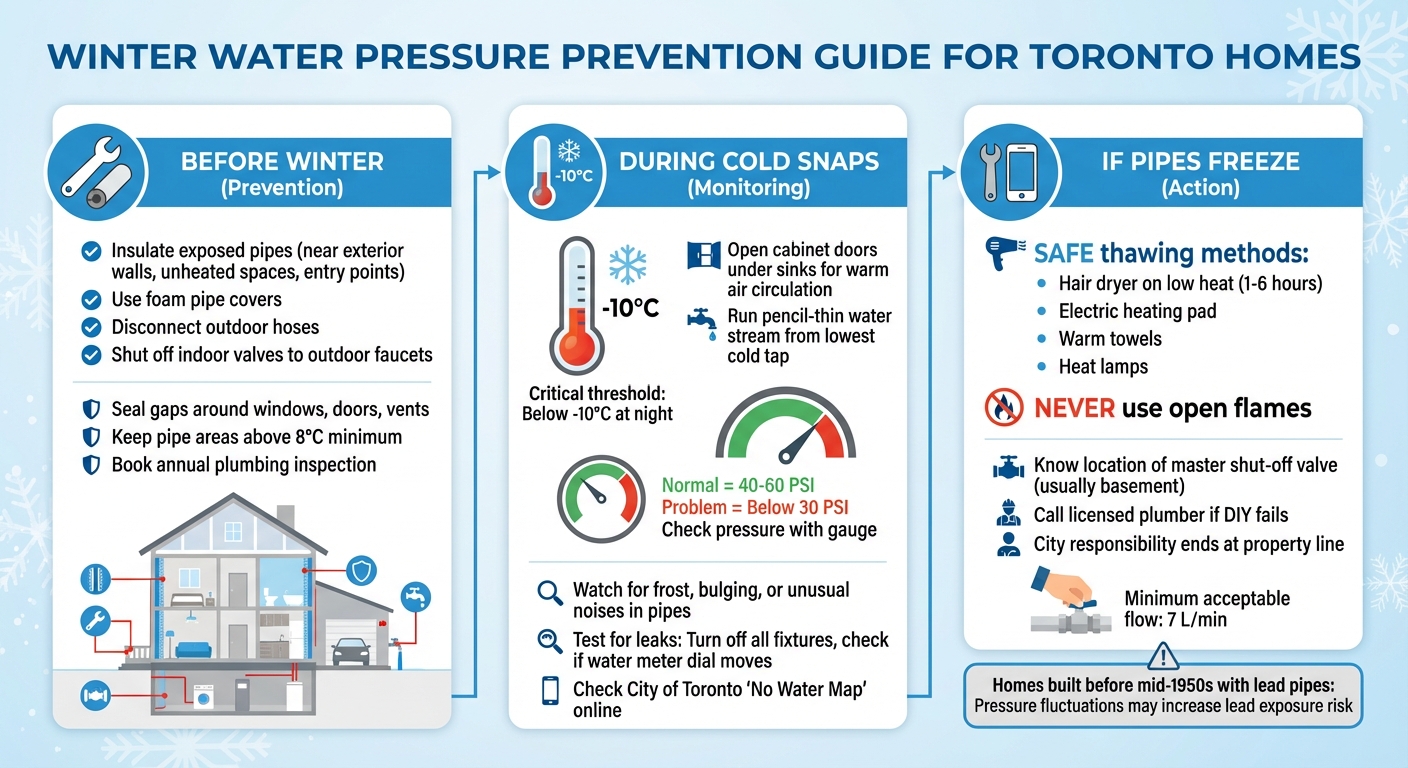
How to Prevent and Fix Low Water Pressure in Toronto Winters
Winter in Toronto can be tough on plumbing, with water pressure issues posing risks to everyday life and potential damage to your home. Taking proactive steps can help you maintain steady water pressure and avoid costly repairs.
Pipe Insulation and Protection
Before winter settles in, it's crucial to prepare your pipes for the cold. Start by insulating exposed pipes, especially those near exterior walls, in unheated spaces, or where the water line enters your home. Foam covers work well for this. Disconnect outdoor hoses and shut off indoor valves connected to outdoor faucets. Seal any gaps around windows, doors, and vents to keep cold air out and reduce the chances of freezing.
During extreme cold snaps, the City of Toronto suggests keeping areas with water pipes at a minimum of 8°C, especially when temperatures drop below -10°C. Opening cabinet doors under sinks can help warm air circulate around pipes. If it gets exceptionally cold, let a small stream of water flow from the cold tap at the lowest point in your home - this keeps water moving and helps prevent freezing.
Regular Monitoring and Early Detection
Spotting issues early is key to avoiding burst pipes and water damage. Use a water pressure gauge on an outdoor spigot or laundry tap to check your home's water pressure. Residential systems should typically measure between 40–60 PSI, and anything below 30 PSI is a sign of trouble. Also, ensure your main shut-off valve is fully open; the handle should be parallel to the pipe.
"If it is frozen lines, then the pressure loss might be gradual rather than all of a sudden." - Mr. Rooter Plumbing Toronto
Keep an eye on pipes in unheated areas for signs of frost, bulging, or unusual noises like banging or whistling. A simple way to check for hidden leaks is by turning off all water fixtures and observing the water metre. If the dial moves, there’s likely a leak causing pressure issues. Before calling in a plumber, check the City of Toronto's "No Water Map" online to see if local construction or watermain breaks are the cause.
If DIY methods don’t resolve the issue, it’s time to call in the pros.
Working with Licensed Plumbers
When basic troubleshooting fails, licensed plumbers can step in to handle the problem. Toronto Water staff won’t test pipes made of lead or galvanised steel, so homeowners with these materials will need professional help. Keep in mind that the City is only responsible for water pipes up to the property line. Any issues on private property, including frozen pipes, fall under the homeowner’s responsibility.
Plumbers have specialized tools to locate hidden leaks or blockages. They’re well-versed in Toronto’s plumbing challenges, from aging metal pipes in older homes to complex systems in modern condos. For example, Creed Plumbing (https://creedplumbing.ca) offers a range of services, including frozen pipe repairs, leak detection, water pressure diagnostics, and maintenance to help prevent winter plumbing emergencies.
"If staff determine that the pipes are frozen, or you have a private plumbing issue, you will be advised to contact a plumber." - City of Toronto
Booking an annual plumbing inspection before winter can save you from major headaches. Professionals can check your Pressure Regulator Valve (PRV), flush out sediment from your water heater, and pinpoint weak spots before they turn into costly problems. Remember, if your water metre gets damaged due to freezing, you’ll be responsible for replacement costs, with fees set annually by Toronto City Council.
Conclusion
Winter water pressure issues in Toronto stem from a mix of city-wide infrastructure challenges and individual home plumbing problems. The city's vast water network often faces extra stress during winter due to emergency breaks and planned construction projects. At the same time, many "no water" issues during cold weather are linked to frozen pipes on private properties. Pipes near exterior walls or entry points through foundations are particularly vulnerable when temperatures dip below –10°C.
On top of municipal concerns, household factors play a big role in winter water pressure problems. Protecting your pipes from freezing not only prevents costly repairs but also helps avoid damage. Simple steps like insulating exposed pipes and keeping your indoor temperature above 8°C can make a big difference. Since Toronto Water considers water flow below 7 L/min unacceptable, using a pressure gauge to monitor your system can help catch issues early. Keep in mind, Toronto Water’s responsibility ends at your property line, so if your home has older lead or galvanized steel pipes, calling a professional plumber might be your best bet.
FAQs
How can I stop my pipes from freezing during the winter in Toronto?
To keep your pipes from freezing during Toronto's chilly winters, follow these straightforward tips:
- Wrap exposed pipes with insulation, particularly those located near exterior walls, in crawl spaces, attics, or garages.
- Block drafts by sealing gaps around windows, doors, and utility openings to prevent cold air from creeping in.
- Make sure areas around your water meter stay warmer than 8°C to avoid freezing.
- Turn off and drain outdoor faucets to stop water from freezing in outside pipes.
- For added peace of mind, you might want to hire a licensed plumber, like Creed Plumbing, to professionally insulate your pipes or check your plumbing system for any weak spots.
These simple steps can save you from the headaches and expenses of dealing with frozen pipes.
Why does my water pressure suddenly drop during winter in Toronto, and what can I do about it?
A sudden drop in water pressure during Toronto’s chilly winters can stem from a variety of causes. To pinpoint the problem, start by determining whether the issue is limited to a single fixture or affects your entire home.
If it’s just one tap or shower that’s acting up, the solution might be as simple as cleaning the aerator or cartridge. Mineral deposits and debris can clog these components, restricting water flow.
For issues affecting the whole house, check that the main shut-off valve is fully open. You’ll typically find this valve in the basement, close to where the water line enters your home. Another common winter problem is frozen pipes, especially in unheated spaces like crawl spaces or garages. If a pipe feels unusually cold, it might be frozen - gently warming it can help restore water flow.
Still no luck? If these steps don’t solve the issue or you suspect hidden leaks or damaged pipes, it’s time to bring in a professional. Creed Plumbing provides dependable plumbing services in Toronto and can quickly diagnose and resolve the problem, getting your water pressure back to normal.
Who should I call to fix low water pressure on my property in Toronto?
If you're dealing with low water pressure at your property, reaching out to a licensed Toronto plumber is the smartest move. Experts, such as those at Creed Plumbing, can pinpoint the root cause - whether it’s frozen pipes, mineral buildup, or another plumbing issue - and offer the right fix.
Choosing a licensed and insured plumber means the job will be done safely and in compliance with local codes, which is especially reassuring during Toronto's tough winter season.