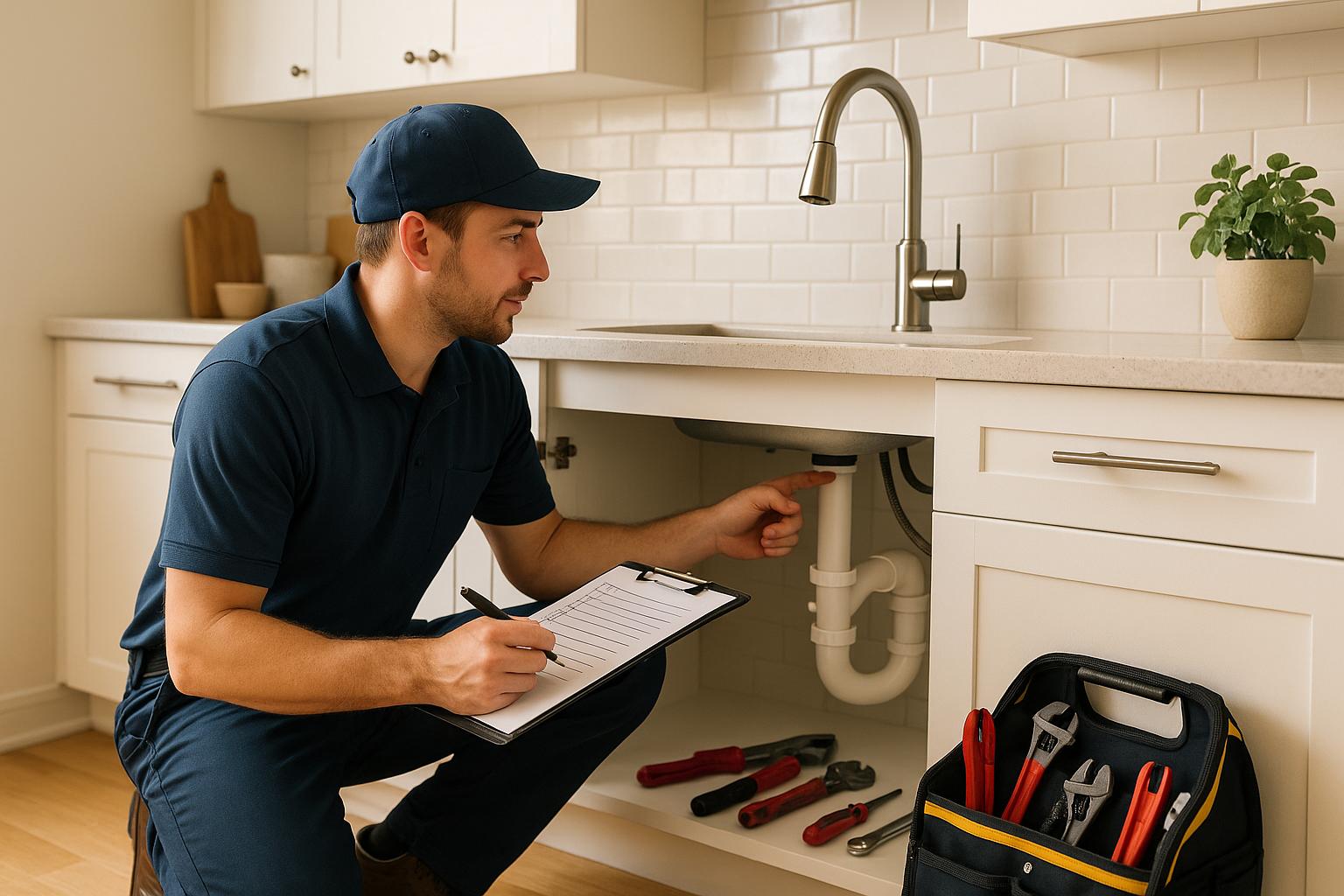

When hiring a plumber, ensuring their work is backed by a strong warranty can save you from unexpected repair costs and stress. Here’s a quick guide to what you need to know:
- Understand Warranty Types: Manufacturer warranties cover product defects, while workmanship warranties cover installation or repair quality. Both are crucial for major projects like water heaters or pipe replacements.
- Verify Credentials: Always hire a licensed and insured plumber. This ensures compliance with local codes and protects your warranty rights.
- Review Warranty Terms: Check what's covered (labor, parts, or both), the duration, and any exclusions like pre-existing issues or misuse.
- Compare Costs and Value: Don’t just choose the cheapest option - factor in warranty coverage and long-term savings.
- Document Everything: Keep contracts, invoices, and warranty details organized for easy claims later.
A reliable plumber with clear warranties and proper credentials ensures peace of mind and long-term protection for your home.
1. Determine What Warranty Coverage You Need
Before hiring a plumber, it's essential to figure out the type of warranty coverage you need. A quick drain repair won't require the same level of protection as a full water heater replacement. Understanding the available warranty options and their duration can save you from the frustration of paying for repairs that fail soon after completion.
Learn the Different Types of Warranties
Plumbing warranties generally fall into two categories: manufacturer warranties and workmanship warranties. Each serves a different purpose.
- Manufacturer warranties cover defects in the products themselves, such as water heater tanks, faucet bodies, toilet components, pipes, and valves. These warranties typically last between six and twelve years, depending on the product. However, they usually exclude issues caused by poor installation, misuse, or lack of maintenance.
- Workmanship warranties are offered by the plumbing contractor and focus on the quality of their installation or repair work. Most plumbers provide at least a one-year workmanship warranty, though some extend it to two years, covering both labor and parts.
For emergency repairs, workmanship warranties provide short-term protection. For larger projects like water heater installations or repiping, you’ll want both a strong manufacturer warranty and a solid workmanship warranty. Keep in mind that poor installation can void manufacturer coverage.
Routine maintenance, such as drain cleaning or inspections, often comes with little to no formal warranty. However, some plumbers might offer a courtesy service if the same issue recurs within 30 days.
You can also explore third-party protection plans. These plans, more like insurance, cover various plumbing systems in your home for a monthly fee. They often include exterior lines, sewers, gas lines, interior plumbing, and water heaters. Unlike traditional warranties, these plans provide ongoing coverage for unexpected problems rather than focusing on a single repair.
Once you’re familiar with the warranty types, align their duration with the complexity of your project.
Know How Long Warranties Should Last
The warranty period should reflect the scope and complexity of the job. For smaller repairs, expect a workmanship warranty of at least 30 to 90 days. However, some plumbers - like Creed Plumbing in Toronto - set a higher standard, offering up to one year on repairs.
Manufacturer warranties vary by product. For example, tank water heaters often come with six to twelve-year warranties on the tank and parts. However, labor coverage from the installer typically ranges from one to three years. When comparing quotes, consider both the manufacturer and installer warranties. A long manufacturer warranty won’t help much if the installer only backs their work for a short time.
For major projects like replacing sewer lines, repiping an entire house, or installing high-end fixtures, look for multi-year workmanship warranties to complement the manufacturer’s coverage. Since a tank water heater typically lasts 10 to 15 years, having protection beyond the first year of installation can save you from unexpected costs down the road.
Check Local Code Compliance
The value of a warranty increases when the work meets local building codes and standards.
In Toronto, for instance, all plumbing work must comply with the Ontario Building Code. Larger projects often require city permits and inspections, which aren’t just legal requirements - they also strengthen your warranty protection. When work is performed by a licensed plumber and follows code, the warranty is more enforceable because it meets established safety and quality standards.
Non-compliant or non-permitted work can void manufacturer warranties and limit your legal options if problems arise. For major jobs - like replacing old lead or clay pipes, fixing burst pipes, or installing new sewer lines - make sure the plumber secures all necessary permits and adheres to code. If a plumber is vague or dismissive about permits or compliance, consider it a red flag. Poor compliance can jeopardize your warranty and leave you vulnerable to future issues.
Any work over $50 should be backed by a written contract that aligns with local code and consumer protection rules. Before hiring a plumber for a significant project, confirm that they are licensed and insured, and ask how they ensure compliance with the Ontario Building Code. Also, clarify what steps they’ll take if code-related issues arise that could affect your warranty.
2. Verify Licensing, Insurance, and Credentials
Making sure a plumber has the proper credentials is key to protecting your warranty rights. A plumber’s license and insurance status can directly determine whether your warranty claims will be honored. Without these, even a top-tier workmanship warranty can lose its value, and manufacturer warranties on fixtures or appliances might be voided before you even file a claim.
Check License and Insurance Status
In Ontario, plumbers are required to hold a Certificate of Qualification, issued under the Skilled Trades Ontario framework. Before hiring, ask for the plumber’s legal business name, license type, and license number. Then, verify this information through the Technical Standards and Safety Authority (TSSA) or the relevant provincial licensing authority.
Reputable companies are transparent about their credentials. For instance, Creed Plumbing willingly shares proof of their Master Plumber license and business registration upon request, showing they are legally qualified to perform plumbing work in Ontario.
Insurance is just as critical. A professional plumbing contractor should carry at least $2 million in general liability insurance along with workers' compensation coverage. Always request a current insurance certificate that lists the policy limits and expiration date. Some homeowners even ask to have their property address added to the certificate for extra peace of mind.
Why does insurance matter? It safeguards you in case something goes wrong. For example, if a plumber accidentally causes a pipe to burst while replacing a fixture, their liability insurance covers the cleanup and repairs. Without insurance, you could end up paying out of pocket, and any workmanship warranty they offer becomes meaningless if they lack the resources to honor it.
Before signing any contract, ask these essential questions:
- Are you a licensed Master Plumber in Ontario? Can you provide your license number?
- Do you carry general liability insurance and workers' compensation coverage? Can you provide a current certificate of insurance?
- Is your license and insurance valid for the specific work I need, like gas line installations or water heater replacements?
- Do your credentials affect warranty validity?
If a plumber hesitates to provide their license number, gives you a blurry or handwritten copy of credentials, or claims to be licensed but doesn’t appear in the TSSA database, it’s a red flag. Walk away - this could jeopardize your warranty and, more importantly, your safety.
Once you’ve confirmed their credentials, it’s time to understand how they tie into your warranty rights.
Understand How Licensing Affects Warranties
After verifying licensing and insurance, it’s vital to see how these credentials protect your warranty. Many manufacturers require their products - like water heaters, faucets, or sump pumps - to be installed by a licensed professional. If an unlicensed person handles the installation, the manufacturer may deny any warranty claims, even if the product itself is defective.
Licensed plumbers are trained to meet Ontario Building Code and plumbing code standards, ensuring installations are safe and durable. This adherence to code not only protects your home but also strengthens warranty enforcement. When work is done properly, both manufacturer and workmanship warranties are more likely to hold up.
On the other hand, work done by an unlicensed individual can void manufacturer warranties and leave you liable for damages. A licensed and insured plumber, however, backs their work with a workmanship warranty and has insurance to cover accidental damage. For example, if a licensed plumber damages your property, their liability insurance takes care of repairs, and their workmanship warranty ensures the original issue is fixed without additional costs. You’re protected from surprise expenses and have legal options if problems arise.
In Ontario, certain jobs - like gas line installations, water heater replacements, and major pipe repairs - must be performed by a licensed Master Plumber under TSSA regulations. Unlicensed work may fail to meet code, and permits could be denied or revoked. This directly affects warranty eligibility, as manufacturers and warranty providers often insist on code-compliant, licensed installations.
For landlords and property managers, keeping a vendor file with up-to-date copies of each plumber’s license and insurance certificates is a smart move. It shows diligence in case of tenant disputes or property damage claims and ensures that warranty claims for plumbing systems are valid.
"Yes, Creed Plumbing is a fully licensed and insured plumbing service provider in Toronto." – Creed Plumbing
| Topic | Why It Matters for Warranties | Key Action for Homeowner |
|---|---|---|
| Licensing (Ontario plumber) | Manufacturer warranties often require licensed installation. | Verify the license number with the appropriate registry. |
| Liability & Worker Insurance | Covers property damage and worker injuries during repairs. | Request current insurance certificates before work begins. |
| Workmanship Warranty | Protects you if the work fails after completion. | Confirm the warranty’s length and terms in writing. |
| Written Service Agreement | Outlines credentials and responsibilities. | Include a clause to validate license and insurance. |
3. Review Warranty Terms and Conditions
After verifying a plumber's credentials, take a close look at the warranty document. This step is crucial to avoid any unpleasant surprises later on. A warranty's value lies in its details, so understanding the fine print can help you sidestep unexpected expenses and disagreements.
Identify What the Warranty Covers
Start by identifying exactly what the warranty includes. Plumbing warranties generally fall into three categories:
- Manufacturer’s warranty: Covers parts and equipment like faucets or water heaters.
- Workmanship warranty: Covers the plumber's labor and installation.
- Home warranty or protection plans: Covers systems such as interior plumbing, drains, and water or sewer lines.
For instance, workmanship warranties should address installation defects and labor for a specified period. Creed Plumbing, for example, offers up to a one-year warranty on their repairs. This ensures you're protected if issues arise due to how the job was done. Keep in mind, this is separate from any manufacturer warranty on the installed fixtures or equipment.
"Our repairs come with up to a year warranty for your peace of mind." – Creed Plumbing
Create a checklist to clarify what’s covered - parts, labor, and potential exclusions. Some warranties only cover parts, leaving you to pay for labor, while others may do the opposite. The best warranties clearly define these responsibilities.
For home protection plans, carefully review the list of covered systems. These might include interior plumbing, drainage, exterior water service lines, and even water heater repairs. If basement drain backups are a concern, look for terms like "interior drain issues" or "blocked drains" in the coverage.
Pay equal attention to exclusions. Common exclusions include:
- Pre-existing problems: Issues like long-standing leaks or code violations.
- Frozen pipes: Often excluded in colder climates unless adequate heat and insulation are maintained.
- Wear and tear: Fixtures like faucets, sinks, and certain valves are usually not covered.
- Specialty fixtures: High-end faucets, designer tubs, or smart toilets may only be backed by the manufacturer’s limited warranty.
- Damage from misuse or neglect: This includes harsh chemical use, improper DIY modifications, or failure to maintain fixtures.
- Municipal service issues: Problems with city-owned water mains or sewers.
Before signing, ask for a walkthrough of both covered items and exclusions. If anything is unclear, like what constitutes "normal wear and tear" or a "pre-existing condition", request examples and written clarification.
Examine Coverage Length and Requirements
Next, confirm the duration of the warranty and any associated obligations. Warranty lengths can vary widely:
- Workmanship warranties: Many plumbing companies offer at least a one-year warranty on labor and installation.
- Manufacturer warranties: These can range from one year to several years, typically covering parts only.
- Home warranty or protection plans: Often structured as month-to-month or annual contracts, remaining active as long as premiums are paid.
Match the warranty length to your project's scope. For minor repairs, a one-year warranty might suffice. For larger jobs, like repiping or water heater installation, consider extended labor coverage.
Keep in mind that warranties often require proper maintenance and timely issue reporting. Neglecting these responsibilities can void your coverage. For example, failing to flush your water heater annually or making unauthorized DIY modifications could jeopardize the warranty. Some plans also impose claim limits, like a maximum dollar amount per year or per incident.
Ask for a written list of your obligations, including maintenance schedules, usage rules, and required documentation. Keep all related paperwork - contracts, invoices, and maintenance records - in one place. If your plumber provides specific maintenance guidelines, follow them closely to preserve your warranty.
In colder regions, warranties often exclude damage from frozen pipes unless adequate insulation and heating are maintained. Be sure you understand any temperature thresholds or winterization steps required.
Learn the Warranty Claim Process
Finally, familiarize yourself with the claim process to ensure quick resolutions during emergencies. A confusing or slow process can leave you scrambling for support when you need it most.
Start by asking who to contact in case of a problem. For a plumber’s workmanship warranty, you’ll typically reach out to the plumber directly. For home warranties or protection plans, you might need to contact an administrator who will dispatch an approved plumber. Get these contact details in writing.
Clarify response times for both emergencies and non-urgent issues. Some plans offer 24/7 support with same-day dispatch for urgent problems like burst pipes, while others may take several days for non-emergency repairs. If fast emergency service is a priority, ensure the warranty specifies quick response times.
Also, check for any fees tied to warranty work. Some plans waive service call fees for covered repairs, while others may charge a fee for each visit. Premium plans might include perks like free service calls or priority emergency response, which can add value to the warranty.
"The price we quote is the price you pay, with no hidden fees or surprises." – Creed Plumbing
Request written documentation of the claim process. This should outline coverage details, limits (such as dollar caps or the number of free service calls), and the warranty’s start and end dates. It should also specify whether the warranty is transferable to a new homeowner, which can increase your property’s resale value.
If you’re comparing multiple providers, ask each one the same questions about their claim process. A slightly higher quote with clear warranty terms and reliable emergency support may save you more in the long run than a cheaper option with vague terms.
Ultimately, a warranty is only as reliable as the company standing behind it. Choose a licensed, insured, and well-established provider with a solid local presence.
sbb-itb-466cac3
4. Compare Costs and Warranty Value
Once you've reviewed warranty terms, it's time to figure out if the price makes sense for the protection offered. A low-cost quote might seem appealing, but without solid warranty coverage, it could end up costing more in the long run.
Get Written Cost Estimates
Before making a decision, collect written estimates from at least three licensed plumbers. A good estimate should clearly break down all costs, making it easier to compare.
Here’s what to look for:
- Labor costs: These should specify either an hourly rate or a flat fee for the job, such as $600 for water heater replacement or $150 for drain cleaning.
- Material costs: Each major part should be itemized - like a $1,200 water heater, $80 for copper piping, or a $150 faucet.
- Permit fees: For major installations, these fees (typically $50–$150) should be listed separately, depending on your local regulations.
- Warranty or protection plan costs: If extended coverage is offered, it should be clearly stated - for example, $200 for a three-year workmanship warranty.
Creed Plumbing highlights the importance of transparency:
"The price we quote is the price you pay, with no hidden fees or surprises."
This clarity makes it easier to evaluate the total cost and value. For example, a $2,000 quote for water heater installation that includes a one-year labor warranty and detailed parts breakdown is far easier to assess than a vague "$1,800 installed" quote that doesn’t specify warranty coverage.
Be cautious of hidden costs that can diminish warranty value. Some companies might advertise "free warranty repairs" but tack on $100–$150 service call fees for issues outside the warranty scope. Others may cover labor but require you to pay for replacement parts. Always ask for a detailed breakdown of potential fees in writing and confirm whether warranty claims are genuinely no-cost.
To simplify comparisons, create a table listing total price, labor and material costs, warranty length, what’s covered (parts, labor, service calls), and any exclusions. This approach turns abstract "warranty value" into clear, actionable numbers.
Once you’ve gathered estimates, compare repair costs with available protection plans.
Weigh Repair Costs Against Protection Plans
Some plumbing companies and third-party providers offer monthly or annual protection plans for common issues like clogs, leaks, and minor repairs. While these plans work well for some households, they aren’t a one-size-fits-all solution.
To decide if a protection plan is worth it, calculate the annual cost and weigh it against your typical repair expenses. These plans usually cost $18–$25 per month plus tax (about $250–$350 annually) and cover unlimited service calls, parts, and labor for common problems like blocked drains. However, they often exclude major systems like water heaters, water softeners, and septic systems.
Think about your home's repair history. For instance, if you live in an older home with frequent clogs or leaks and needed two or three service calls last year at $150–$250 each, a protection plan could save you money. A household with aging pipes and multiple bathrooms might need regular drain cleaning (costing $300–$600 per visit) and occasional faucet repairs ($150–$250), making the plan a smart choice.
On the other hand, if your home is newer and you rarely need plumbing repairs, paying $100–$150 per service call as issues arise is probably more cost-effective than committing to an annual $250–$350 plan.
Here’s a simple rule of thumb: if you need more than one or two plumbing services a year, a protection plan might be worth it. Otherwise, paying as you go is likely cheaper.
It’s important to note that protection plans are different from workmanship warranties. A workmanship warranty - like the one-year coverage Creed Plumbing offers - protects against defects in the specific work performed. A protection plan, on the other hand, is a separate monthly contract that covers broader systems but often has exclusions for major equipment.
Read the fine print carefully. Some plans may only cover specific types of clogs or leaks, exclude damage caused by freezing or neglect, or cap the dollar amount they’ll pay per incident or year. Ask for a detailed list of what’s covered and excluded, and compare it to the issues your home is most likely to face.
Beyond the upfront costs, think about how warranty length and potential future repairs affect the overall value.
Consider Long-Term Costs
Choosing the lowest quote might save you money upfront, but it can lead to higher costs over time. Instead of focusing solely on today’s price, consider the total cost over three to five years.
Here’s an example: A $300 drain cleaning with no warranty might seem cheaper than a $400 job that includes a one-year workmanship warranty. But if the clog reoccurs six months later and you have to pay another $300, your total cost jumps to $600. Meanwhile, the $400 job with a warranty would likely cover the follow-up at no extra charge, making it the better deal.
For larger projects, the stakes are even higher. Imagine a water heater replacement quoted at $1,800 with only a manufacturer warranty on the tank versus a $2,000 quote that includes a two-year labor warranty. If the installation develops a leak due to poor soldering after 18 months, the cheaper option could end up costing an additional $500–$1,000 in labor. The slightly higher upfront price with labor coverage protects you from that risk.
In markets like Toronto, a standard workmanship warranty is typically one year. However, some companies offer extended coverage - two years for labor and parts on major installations. Treat warranty length and coverage as crucial factors in your total cost evaluation.
A strong warranty reduces the risk of unexpected expenses over time. For example, a water heater with a six-to-twelve-year manufacturer warranty on the tank plus a one-to-two-year labor warranty means that if the tank fails early, you’ll likely pay little to nothing. Without labor coverage, even with a covered tank, you could face $500–$1,000 in labor costs to replace it.
High-quality workmanship also plays a role in long-term savings. Licensed, insured plumbers who focus on reliable work - like Creed Plumbing’s transparent approach - may charge more upfront, but their installations often last longer and require fewer follow-ups. This reliability translates into fewer headaches and lower costs down the road.
When comparing costs, ask yourself: What happens if something goes wrong? A warranty-backed service provides a clear answer and resolution at no extra charge. A lower quote without a warranty leaves you vulnerable to paying the full cost of future problems, which can quickly erase any initial savings.
Lastly, don’t underestimate the value of peace of mind. Knowing your plumber stands behind their work for a year or more allows you to budget confidently and avoid surprise repair bills.
5. Get Documentation and Confirm Ongoing Support
Once you've reviewed warranties and compared costs, it's crucial to document every agreement to safeguard your investment. Without clear records, even the most comprehensive warranty can be tough to enforce. Proper documentation and dependable support can mean the difference between hassle-free claims and drawn-out disputes.
Obtain a Written Contract
Never rely on verbal agreements. Every aspect of your plumbing project - and the associated warranty - should be captured in a written contract before any work begins. A well-drafted contract protects both you and the plumber by clearly defining responsibilities and making the warranty terms enforceable.
The contract should include essential details like the full legal names of both parties, contact information, and a thorough scope of work (including location, brands/models, materials, and any necessary code upgrades). Break down pricing in USD, outline payment terms, and specify warranty details - such as coverage, duration, and exclusions. It’s also wise to address cleanup responsibilities, property protection measures, and how disputes will be resolved.
Pay close attention to the warranty section. It should clearly define who provides which warranty - the contractor for workmanship and the manufacturer for products. Specify what is covered (e.g., labor, parts, or both), how long each warranty lasts (e.g., one year for labor, six years for a water heater tank), and any exclusions or conditions that could void the warranty. Common exclusions often include misuse, neglect (like ignoring a visible leak), unauthorized DIY repairs, freezing damage, or failure to perform required maintenance.
Before signing, go over the contract carefully. Compare it to any verbal promises the plumber made. If they mentioned a "no-leak guarantee" or "lifetime soldering coverage", make sure that language is included in the contract. For any handwritten changes, have both parties initial them to avoid future misunderstandings. Additionally, save copies of emails or text messages that confirm warranty terms - these can serve as evidence in case of a dispute.
Once the work is completed, document the results thoroughly to support any future warranty claims.
Keep Records of Work and Warranties
After the job is done, make sure you have a complete record of the installation, including a final walkthrough, signed contract, detailed invoice, and warranty certificates. Also, keep copies of permits, inspection reports, payment receipts, and before-and-after photos in both physical and digital formats.
Request a final walkthrough with your plumber. Have them explain the work completed, show you any hidden components (like new shutoff valves or access panels), and confirm that everything meets code and safety standards. This is your chance to ask questions and ensure you fully understand the installation before they leave.
Get an itemized invoice that lists labor, materials, and costs. Check that it matches the contract or that any changes are clearly explained. Collect all written warranty documents, detailing coverage for both labor and parts. For instance, if your new water heater comes with a one-year workmanship warranty from the plumber and a six-year tank warranty from the manufacturer, ensure you have separate documentation for each. Also, keep product manuals, serial numbers, and model numbers for all installed equipment - these are often required when filing warranty claims.
Store these records in both physical and digital formats. A physical folder labeled something like "Plumbing & Warranties" can keep everything organized and easy to find, while scanned copies saved in clearly named digital folders (e.g., "2024-03-15_kitchen_faucet_invoice.pdf") provide a backup in case of damage or loss.
Lastly, discuss ongoing maintenance to ensure your warranty stays intact.
Ask About Maintenance Plans
Talk to your plumber about a maintenance plan that outlines inspection frequency, scope, and costs. Get clear documentation of scheduled tasks and any discounts, as regular maintenance is essential to keeping your warranty valid.
A good maintenance plan should specify how often inspections will occur and what they’ll cover. For example, an annual checkup might include leak detection, water pressure tests, drain camera inspections, water heater evaluations, and backwater valve checks. Review pricing, renewal terms, and any discounts on repairs. Some plans also offer perks like priority scheduling, reduced emergency fees, or discounts on parts and labor.
Ask if the plan provides detailed inspection reports or invoices after each visit. These documents serve as proof that your system has been maintained according to industry recommendations - a critical factor in honoring warranty claims. Proper documentation of maintenance efforts can make all the difference when filing a claim.
For example, Creed Plumbing offers preventive maintenance plans to help customers avoid expensive repairs. Their services include regular checkups as part of their plumbing solutions in the Greater Toronto Area, covering everything from water heaters to more complex systems in older homes. This kind of structured support can be especially helpful for properties with intricate plumbing setups.
Maintenance plays a key role in preserving your warranty. Keeping thorough records of regular upkeep can be the deciding factor between a covered repair and a denied claim.
Conclusion
This checklist equips you with the tools to protect your investment and steer clear of unexpected problems. By following these steps, you've learned how to identify the warranty coverage you need, confirm your plumber's licensing and insurance, carefully review warranty terms, assess overall value beyond just the price, and gather complete documentation for every job.
Prioritizing quality and reliability pays off in the long run. A rock-bottom bid might seem appealing but often signals shortcuts: unlicensed work, skipped permits, or cheap materials that wear out quickly. When those failures occur, you'll end up paying for the same repair twice - plus dealing with potential water damage. On the other hand, a slightly higher quote from a licensed and insured plumber offering a one- to two-year workmanship warranty and clear claims process can save you hundreds, if not thousands, over time.
Licensed plumbers who adhere to local codes ensure your warranties remain valid and safeguard your long-term investment. Many home warranty plans and insurance policies demand that plumbing work be performed by licensed professionals to maintain coverage. Following local building and plumbing codes minimizes the risk of leaks, sewer backups, or pressure issues that could lead to costly repairs down the line. Additionally, when it comes time to sell your home, having documented, code-compliant work completed by licensed plumbers - and warranties that can transfer to the new owner - can simplify inspections and spare you from expensive last-minute fixes.
Keep all written records organized - this includes your contract, itemized invoices, proof of payment, warranty certificates, permits, inspection reports, and photos of the completed work. Having these documents on hand makes filing warranty claims, proving coverage to insurers or buyers, and tracking completed work much easier, even years after the fact.
By insisting on clear, written warranties, licensed work, and solid protection plans, you transfer financial risk to the plumbing service. A backed-up drain or failed water line can lead to repair and cleanup bills in the thousands, but proper coverage or a strong workmanship warranty can significantly reduce your out-of-pocket costs. This preparation turns what could be a chaotic emergency into a manageable situation, with processes, costs, and responsibilities already outlined.
For future plumbing projects, use this checklist as your guide. Ask every plumber about their licensing, insurance, written warranties, and the support they provide. Then, choose the provider offering the clearest coverage and the best overall value - not just the lowest price. By taking these steps, you'll reduce plumbing-related stress and unexpected expenses, ensuring your home's plumbing is handled by qualified professionals, backed by enforceable guarantees and thorough documentation.
FAQs
What’s the difference between a manufacturer warranty and a workmanship warranty in plumbing?
A manufacturer warranty focuses on the materials or products themselves, covering issues like a defective faucet or a faulty pipe for a set period defined by the manufacturer. On the other hand, a workmanship warranty guarantees the quality of the plumber's installation or repair work, ensuring it’s done without errors or defects for a specified time. While both warranties offer reassurance, they serve distinct purposes by addressing separate aspects of performance and dependability.
How can I confirm that my plumber is licensed and insured?
Before hiring a plumber, it's important to confirm they are both licensed and insured. Simply ask to see their credentials and proof of insurance before the job begins. Any trustworthy plumbing service should be happy to provide this information. A license ensures the plumber meets state and local regulations, while insurance safeguards you from being held liable for any accidents or damages that might occur during the work.
At Creed Plumbing, we take pride in being fully licensed and insured, bringing professionalism and confidence to every project we handle.
What should I do if a plumbing issue happens after the warranty has expired?
If you’re dealing with a plumbing issue after your warranty has expired, the first step is to evaluate the situation to see how urgent it is. For smaller problems, you might be able to handle a temporary fix yourself. However, for anything more serious, it’s a smart move to call a licensed plumber who can handle the repairs professionally and safely.
When contacting a plumber, make sure they provide clear pricing details and explain your repair options before starting any work. If you're in Toronto, Creed Plumbing is a dependable choice for services like emergency repairs and leak detection. They emphasize transparency and quality in their work. Additionally, regular maintenance is a great way to avoid future problems and keep your plumbing system running smoothly for years to come.