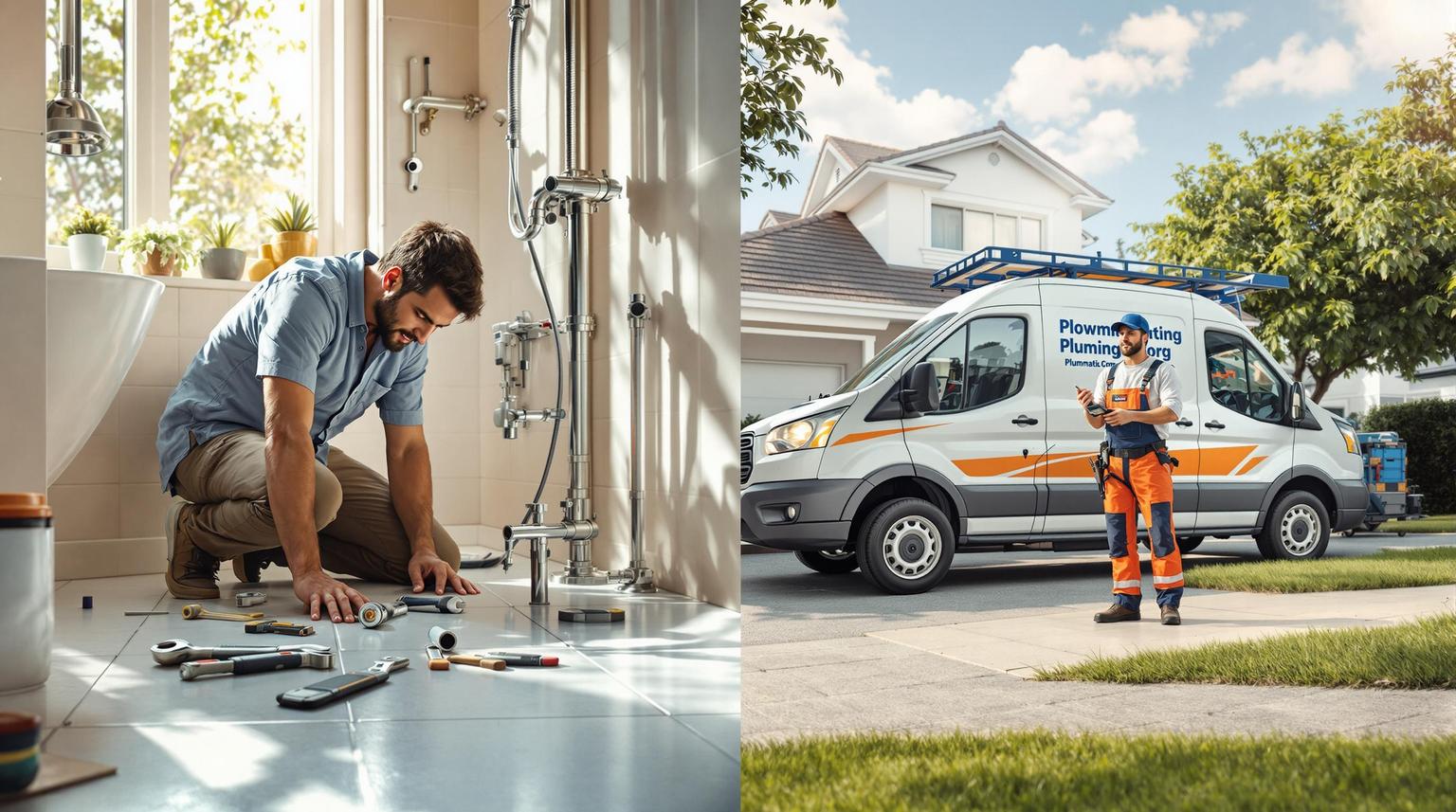

Should you fix that plumbing issue yourself or hire a pro? Here's a quick breakdown to help you decide:
- DIY Pros: Saves money upfront, builds skills, and handles simple tasks like unclogging drains or fixing a leaky faucet.
- DIY Cons: Risk of costly mistakes (e.g., water damage), requires tools and knowledge, and may void insurance for major issues.
- Professional Pros: Expertise, advanced tools, warranty-backed work, and compliance with building codes. Ideal for complex tasks like sewer line repairs or water heater installations.
- Professional Cons: Higher upfront costs, but often saves money long-term by avoiding errors.
Quick Comparison
| Factor | DIY | Professional |
|---|---|---|
| Cost | Low upfront, high risk of mistakes | Higher upfront, avoids costly errors |
| Skill Level Required | Basic to moderate | Advanced |
| Tools Needed | Basic plumbing tools | Specialized equipment |
| Time | Varies; can be time-consuming | Faster, especially for complex jobs |
| Safety Risks | Medium (e.g., leaks, flooding) | Low; insured and trained |
| Code Compliance | May require permits for some tasks | Fully compliant |
For small fixes like a dripping faucet, DIY is fine if you have the tools and patience. For anything complex - like gas lines or major leaks - always call a professional to avoid costly mistakes and ensure safety.
Hiring a Professional Plumber vs. DIY: When to Call in the Experts for Repairs
DIY Plumbing Basics
Tackling basic plumbing repairs yourself can save money and time. But it's important to know which tasks you can handle and when to call in a professional to keep your home's plumbing in good shape.
Common DIY Repairs
Here are some plumbing fixes you can handle on your own:
- Unclogging drains using a plunger or a drain snake
- Fixing a running toilet by replacing the flapper or adjusting the fill valve
- Stopping a dripping faucet by swapping out washers, O-rings, or cartridges
- Installing simple fixtures like shower heads, faucet aerators, or toilet handles
- Cleaning P-traps to remove blockages or retrieve small lost items
Tools and Skills You’ll Need
Having the right tools and know-how makes DIY plumbing easier. Here’s a quick guide:
| Tool | Use | Cost Range |
|---|---|---|
| Plunger | For clearing minor clogs | $10–15 |
| Adjustable wrench | Tightening or loosening connections | $25–35 |
| Pipe wrench | Gripping and turning pipes | $20–30 |
| Basin wrench | Reaching tight spots under sinks | $15–25 |
| Plumber’s tape | Sealing threaded pipe connections | $3–5 |
| Drain snake | Removing stubborn clogs | $30–40 |
Key skills to master include:
- Reading repair guides
- Locating shut-off valves
- Connecting pipes securely
- Identifying plumbing materials
- Using plumber’s tape effectively
- Troubleshooting basic issues
How Much Can You Save?
DIY plumbing can save you a lot of cash. For instance:
- Fixing a leaky faucet might cost only $5–15 in parts compared to $150–300 for a professional.
- Replacing a toilet flapper could run you $8–12 in materials versus $100–200 for a plumber's visit.
That said, know your limits. Keep a plumber's contact info handy for repairs that require expertise or specialized tools.
Next, we’ll dive into when it’s better to call a professional for more complex plumbing issues.
Professional Plumbing Services
Why Hire a Professional Plumber?
Hiring a licensed plumber comes with several advantages that go beyond quick fixes. Their skills, tools, and warranty-backed work ensure accurate diagnostics and durable solutions. Here are some key perks:
- Advanced tools and diagnostics: Plumbers use equipment like video cameras and leak detectors to pinpoint problems efficiently.
- Code compliance and insurance: They ensure all work meets local regulations and includes liability coverage.
- Warranty-backed repairs: Most services come with guarantees for added peace of mind.
- Emergency support: Many offer 24/7 availability for urgent plumbing problems.
When to Call a Professional
Some plumbing issues are too complex or risky for a DIY approach. Here's a breakdown of common problems that require expert help:
| Problem Type | Why You Need a Pro | Risks of DIY |
|---|---|---|
| Sewer Line Issues | Specialized tools and expertise required | Property damage, health risks |
| Gas Line Work | Safety regulations and legal requirements | Explosion risk, code violations |
| Main Water Line Problems | Tied to municipal systems | Service disruption, water damage |
| Hot Water System Installation | Complex plumbing and electrical work | Safety hazards, inefficient operation |
| Major Pipe Replacements | Requires structural knowledge | Improper installation, water damage |
What Affects Plumbing Costs?
The cost of hiring a plumber typically includes a base fee, hourly labor (depending on job complexity), emergency service charges, and the price of parts. Warranty coverage is often included, adding value to the service. For large projects like installations or remodels, plumbers usually provide detailed estimates that include permits and inspections. While upfront costs may be higher than DIY, professional work often saves money long-term by avoiding expensive mistakes.
"When you choose Creed Plumbing for your plumbing services in Toronto, you're getting a local plumber who is committed to honesty, reliability, and exceptional workmanship."
Next, we'll explore the costs and risks associated with DIY plumbing versus hiring a professional.
sbb-itb-466cac3
Cost Analysis
DIY Supply Costs
If you're tackling plumbing repairs yourself, you'll need a basic toolkit. Here's a breakdown of common tools and their costs:
| Item | Cost | Purpose |
|---|---|---|
| Pipe Wrench Set | $30–50 | For gripping and turning pipes |
| Plunger | $10–20 | To clear simple clogs |
| Plumber's Tape | $3–5 | Seals pipe threads |
| Basin Wrench | $20–30 | Reaches tight faucet spaces |
| Drain Snake | $25–50 | Clears minor blockages |
| Pipe Cutter | $15–25 | Cuts copper or PVC pipes |
Beyond tools, you might need materials like a toilet repair kit ($20–35), faucet parts ($15–50), or PVC pipes and fittings ($5–20 each). While these costs seem manageable, it's important to consider the financial risks of mistakes.
Cost of DIY Mistakes
Mistakes during DIY plumbing can lead to expensive repairs. Here's what can go wrong and the potential costs:
| DIY Error | Potential Damage | Average Repair Cost |
|---|---|---|
| Overtightened Connections | Cracked pipes or fittings | $250–500 |
| Improper Pipe Alignment | Water damage or leaks | $500–2,000 |
| Wrong Material Usage | System failure or flooding | $1,000–5,000 |
| Missed Hidden Leaks | Structural damage or mold | $2,500–10,000 |
Insurance often won't cover damage caused by DIY errors, leaving you to foot the bill. For example, repairing water damage from a failed DIY fix typically costs $3,000–7,000. These risks make professional services an option worth considering.
Professional Service Rates
Here's how professional plumbing services compare in cost and benefits:
| Service Type | Average Cost | What's Included |
|---|---|---|
| Basic Service Call | $75–150 | Diagnosis and minor repairs |
| Emergency Response | $150–300 | After-hours service |
| Hourly Labor Rate | $90–200 | Standard repairs |
| Complex Repairs | $300–1,000+ | Includes parts, labor, and warranty |
Professional plumbers provide upfront estimates and warranties, ensuring proper permits, code compliance, and insurance coverage. While the upfront cost may be higher than DIY, it often saves money in the long run by avoiding costly mistakes. For instance, a DIY faucet installation could save $200 initially but might result in $1,000 or more in water damage repairs if done incorrectly.
Safety and Regulations
DIY Safety Risks
Taking on plumbing tasks yourself can come with some serious risks. Here are some common hazards and how to avoid them:
| Safety Hazard | Consequences | Prevention |
|---|---|---|
| Toxic Gas Exposure | Sewer gas poisoning, respiratory issues | Ensure proper ventilation, use gas detectors |
| Scalding | Severe burns from hot water | Turn off the water heater and let pipes cool |
| Electrical Shock | Electrocution from water-powered tools | Use GFCI outlets and keep tools dry |
| Flooding | Property damage and slip hazards | Locate the main shutoff valve, use water sensors |
| Contamination | Exposure to harmful bacteria in sewage | Wear gloves, goggles, and masks for protection |
These risks highlight the importance of understanding and following plumbing safety guidelines.
Plumbing Codes
Plumbing codes are in place to protect public health and safety. In the U.S., most plumbing work must meet the standards of the International Plumbing Code (IPC) or the Uniform Plumbing Code (UPC). Here's a breakdown of common work types and their requirements:
| Work Type | Permit Required | Code Compliance |
|---|---|---|
| Minor Repairs (e.g., faucet, toilet) | No | Basic safety standards |
| New Installations | Yes | Must meet full code requirements |
| Pipe Modifications | Yes | Must follow material and size specifications |
| Water Heater Replacement | Yes | Requires proper venting and pressure compliance |
| Sewer Line Work | Yes | Must adhere to slope and material standards |
Failing to comply with these codes can lead to hefty fines, ranging from $500 to $10,000, depending on the violation and location. Following these standards is also essential for maintaining valid insurance coverage.
Insurance Requirements
DIY plumbing can have a big impact on your home insurance. Here's how it compares to hiring a professional:
| Insurance Aspect | DIY Impact | Professional Service Impact |
|---|---|---|
| Coverage Validity | Coverage may be voided | Full coverage remains intact |
| Liability Protection | Limited or none | Covered by the plumber's insurance |
| Claim Processing | May face increased scrutiny | Easier with professional documentation |
| Premium Rates | Could rise after DIY-related incidents | Standard rates remain unchanged |
Most insurance providers require proof of professional installation for fixtures worth over $500. Additionally, water damage caused by DIY mistakes is often excluded from coverage, leaving homeowners to cover repair costs out of pocket. Hiring a professional not only ensures compliance but can also safeguard your financial security.
Choosing DIY or Professional Help
When deciding how to tackle a repair, it's important to weigh both the complexity of the job and the potential risks involved.
Job Difficulty Level
Think about how challenging the task is and what tools or skills are needed:
- Basic – DIY Friendly: Simple tasks like unclogging a sink, replacing faucet washers, or fixing a running toilet. These jobs usually require basic tools and straightforward instructions.
- Intermediate – Proceed with Caution: Jobs like installing new fixtures, swapping out p-traps, or minor pipe repairs. These require more advanced tools and a bit of plumbing knowledge.
- Advanced – Leave It to the Pros: Complex tasks such as gas line work, main sewer repairs, or repiping an entire house. These require professional licensing and specialized equipment.
Understanding these levels can help you decide whether to handle the repair yourself or call in an expert.
Emergency Situations
Certain situations demand immediate professional help:
- Burst Pipes: Quick action is necessary to control flooding and avoid further damage.
- Sewage Backups: Dealing with contaminated water requires specialized tools and expertise.
- Gas Line Issues: Only licensed professionals should handle these due to fire hazards and the risk of carbon monoxide exposure.
- Major Water Leaks: Fast intervention is key to limiting damage to your walls, floors, or foundation.
Professionals are equipped with the right tools and offer 24/7 emergency services when you need them most.
Conclusion
We've covered the upsides and downsides of both DIY and professional plumbing. Here's a quick guide to help you decide which path to take.
Your choice should depend on factors like the complexity of the repair, potential safety risks, costs, and how quickly the issue needs to be resolved. Simple fixes - like unclogging a drain or repairing a faucet - can often be handled on your own if you have the right tools and know-how. On the other hand, more complicated jobs, such as working with gas lines, main sewer systems, or extensive repiping, require professional skills.
Key things to keep in mind:
- Safety: Avoid situations that could lead to property damage or health risks.
- Cost: While DIY might save money upfront, mistakes can become costly.
- Time: Serious or urgent problems often need immediate attention from a professional.
- Legal Requirements: Some projects require permits and must follow building codes.
Understanding these points will help you decide when to roll up your sleeves and when to call in a licensed plumber. For example, fixing a faucet might be manageable, but tackling a main line issue is best left to the pros. If you're unsure, it's always safer to consult an expert.