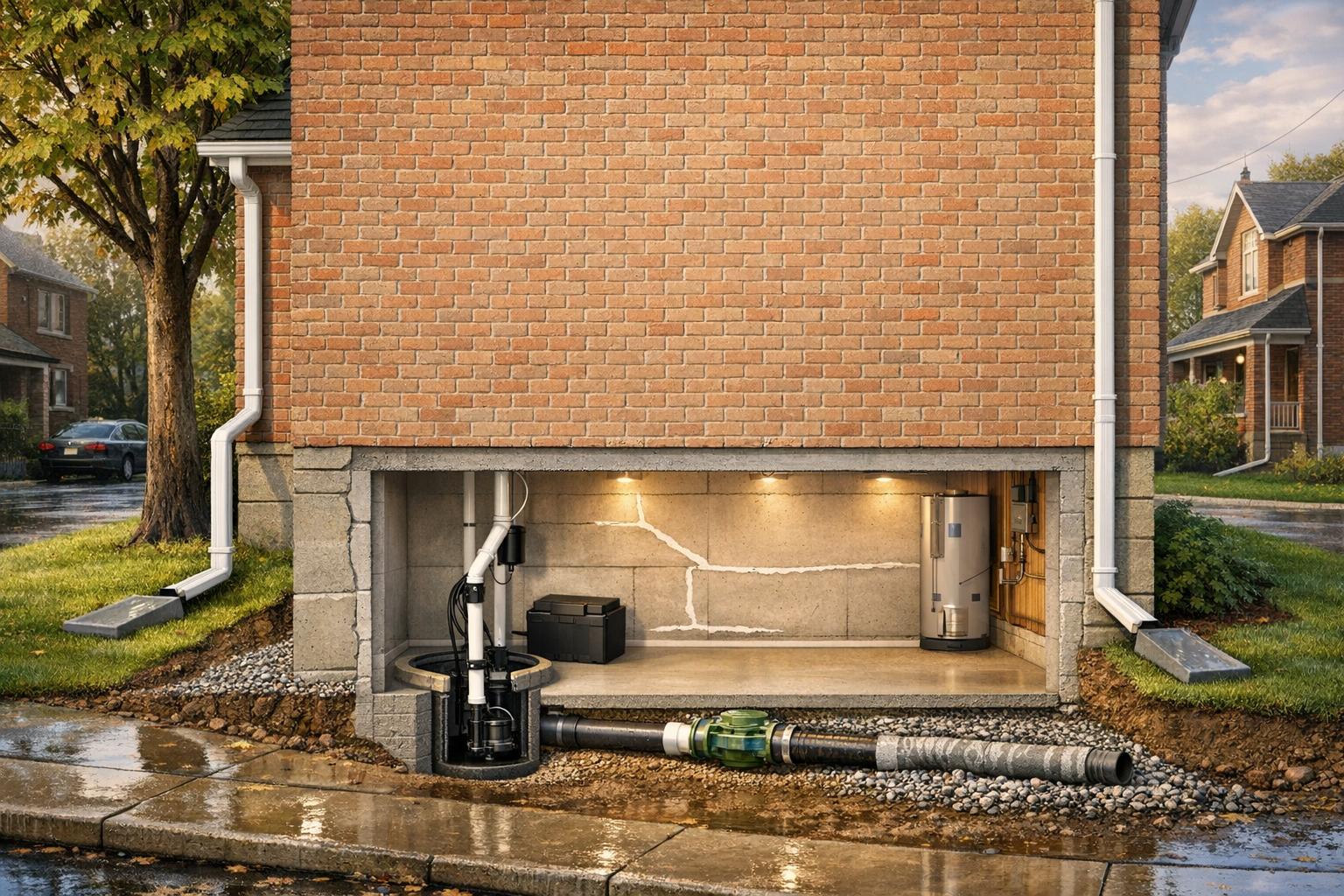

If you live in an older Toronto home, basement flooding is a common risk due to outdated drainage systems, clay-heavy soil, and intense weather patterns. The good news? You can prevent costly damage with a few practical steps:
- Improve drainage: Clean eavestroughs, extend downspouts, and ensure the ground slopes away from your foundation.
- Install a sump pump: Choose one with a battery backup to handle heavy rain or power outages.
- Add a backwater valve: Protect against sewer backups during storms.
- Seal cracks and waterproof: Use injection sealing or full waterproofing systems to stop water infiltration.
- Maintain plumbing: Regularly inspect sump pumps, backwater valves, and pipes to catch issues early.
Toronto offers a Basement Flooding Protection Subsidy of up to $3,400 to help cover costs for sump pumps, backwater valves, and more. Proactive measures like these can save you thousands in repair costs and protect your home from future flooding.
City of Toronto campaign to help prevent basement flooding in homes
Why Basements Flood in Older Toronto Homes
Older Toronto homes often face basement flooding issues due to a mix of outdated infrastructure, natural wear and tear, and the city’s challenging weather. Let’s break down the key reasons behind this problem.
Old Drainage Systems and Worn-Out Pipes
Many older homes in Toronto were built with sewer pipes made from cast iron or clay. Over time, these materials degrade, leading to cracks that allow water to seep through. While tree roots aren’t the original cause of damage, they’re drawn to the moisture escaping from these cracks, making the problem worse by causing blockages. Add to this the build-up of grease, debris, and so-called “flushable” wipes, and you’ve got a recipe for potential sewage backups.
Another issue is the outdated weeping tile systems in older homes, which are often connected directly to the city’s sewer system. During heavy rainfall, this setup can cause water to back up through floor drains, flooding basements. It’s worth noting that homeowners are responsible for maintaining the sewer service line from their property boundary to their home interior.
Poor Grading and Shifting Soil
Over the years, the soil around a home’s foundation can settle and shift, often creating a slope that directs water toward the house instead of away from it. When rain or snowmelt saturates the soil, the clay expands, creating hydrostatic pressure. This pressure can force water through even the smallest cracks in the foundation.
Toronto’s Intense Rain and Snowmelt
Toronto’s weather patterns also play a big role in basement flooding. Summers bring heavy, fast-moving thunderstorms that can dump large amounts of rain in a short time. The city’s older combined sewer systems often struggle to handle this volume, leading to backups through floor drains, sinks, and toilets.
During heavy rain, the sewers can become overloaded. It is essential that homeowners take steps to help protect their home from basement flooding.
Spring brings its own challenges with rapid snowmelt. If snow isn’t cleared from around the foundation, the meltwater can pool against basement walls, seeping into any weak spots. Without modern defences like backwater valves or sump pumps with battery backups, these homes are especially vulnerable during storms and power outages.
Understanding these risks underscores the importance of updating drainage systems and investing in waterproofing solutions to safeguard against basement flooding.
Improving Your Drainage System
Taking care of your eavestroughs, downspouts, and ensuring proper ground slope around your home can go a long way in keeping water away from your foundation. These small but effective steps can help safeguard your basement from potential water damage.
Cleaning and Extending Eavestroughs and Downspouts
Clearing out your eavestroughs at least twice a year is key to keeping water flowing smoothly. Leaves, twigs, and other debris can clog elbows and outlets, so give those areas extra attention. If you notice water spilling over the sides during heavy rain, it’s a sign that clogs might be the issue.
In Toronto, there’s an added responsibility: disconnecting downspouts from the city’s sewer system is mandatory. This helps prevent sewer backups during storms and keeps polluted rainwater out of local rivers and lakes. To disconnect, cut the downspout about 23 cm (9 inches) above the sewer line, cap the standpipe with a rubber or PVC cap to block debris and pests, and then attach an elbow and extension. Make sure the extension directs water at least two metres away from your home’s foundation.
"It doesn't matter how watertight a foundation might be; if water is there long enough it will get in!" – Doyle Plumbing, Heating & Cooling
To further protect your property, install splash pads at the end of downspout extensions. These help control water flow and prevent soil erosion. Be mindful of where the extensions lead - avoid crossing walkways or driveways, as they can create tripping hazards or icy spots in winter. If you’re a low-income senior or living with disabilities, you might be eligible for up to $500 in financial aid to cover the costs of labour and materials.
Adjusting Ground Slope Around Your Foundation
The ground around your foundation should always slope away from the house. Over time, soil can settle and create areas where water pools, directing it toward your basement instead. To fix this, add sand and soil to restore the proper downward slope.
Another area to check is drainage swales - those shallow ditches between properties. Make sure they’re free of debris so water can flow unimpeded. During winter, don’t let snow pile up against your foundation. Shovel it onto your lawn instead, so meltwater doesn’t collect around your basement walls.
Installing and Maintaining a Sump Pump
Once you've improved your drainage, the next step to protect your home from water damage is installing a reliable sump pump system.
A sump pump is installed in a pit at the lowest point of your basement. Its job? To remove groundwater that seeps in through weeping tiles or foundation cracks. When water in the pit reaches a certain level, a float switch activates the pump, which then pushes the water out through a discharge pipe, directing it safely away from your home. This is especially important because waterlogged soil can increase hydrostatic pressure, forcing water through foundation cracks.
Did you know that about 60% of homes experience moisture issues below ground? And mould can start growing within just 24 to 48 hours of water exposure. A standard residential sump pump can handle between 2,000 and 5,000 gallons of water per hour, offering solid protection during heavy rainfall or rapid snowmelt. If you're in Toronto, there's good news: the City offers a Basement Flooding Protection Subsidy of up to $3,400 per property, with up to $1,750 available specifically for sump pump installations.
Selecting a Sump Pump with Battery Backup
When choosing a sump pump, go for a cast-iron submersible model. These pumps are quiet, powerful, and naturally cool during operation. A 1/2 horsepower (HP) pump is sufficient for most homes with moderate water issues, but if you're in a high-risk flood zone, consider upgrading to a 3/4 HP or higher. Professional installation costs typically range from $800 to $1,500, while models with a battery backup can cost between $1,200 and $2,000.
A battery backup is a must-have, providing 8–10 hours of operation during power outages. Make sure the pump is plugged directly into a dedicated GFCI outlet - avoid using extension cords, as they can overheat or fail. Also, ensure the discharge pipe releases water at least 2 metres away from your foundation to prevent it from seeping back into your basement.
Once installed, regular testing and setting up an alarm system are key to keeping your sump pump in top shape.
Testing Your Sump Pump and Installing a Water Alarm
Routine testing and monitoring are essential for your sump pump to effectively defend against basement flooding.
Every three months, test your pump by pouring a five-gallon bucket of water into the pit. The float switch should activate the pump immediately, and you should see the water being discharged quickly. If you hear grinding, rattling, or other unusual noises, it could signal a damaged impeller or a missing check valve.
For added security, install a high-water alarm. These alarms alert you if the water level gets too high or if the pump fails. Basic models start at $20, while advanced smart alarms that send text alerts can cost up to $300.
Finally, don’t forget maintenance. Clean the sump pit and inlet screen twice a year - spring and fall are ideal times - to remove debris like mud, gravel, or lint that could clog the system. In winter, check that the discharge line isn’t frozen, as ice blockages can cause the pump to overwork, leading to motor failure and potential flooding. Regular upkeep ensures your home stays protected, especially in Toronto's older buildings, which often face unique water management challenges.
sbb-itb-466cac3
Sealing Cracks and Waterproofing Your Basement

Basement Waterproofing Costs and Methods Comparison for Toronto Homes
While sump pumps help manage water, they don't stop it from sneaking in through cracks. Sealing and waterproofing your basement adds an extra layer of defence against water infiltration.
A sump pump won't prevent water from seeping through cracks in your foundation. Homes built on clay-heavy soil are especially vulnerable, as the soil increases hydrostatic pressure over time.
Start by inspecting your basement for signs of trouble. Look for cracks, stains, or efflorescence on walls, floors, and corners. Peeling paint, bubbling drywall, or a musty smell could also point to moisture trapped within your walls.
As highlighted:
"Hairline or wide cracks in basement walls or floors can allow water to enter. Toronto homes often show these cracks before major leaks occur." - WaterGuard Plumbing
Once you've identified the issues, you can choose between interior waterproofing for a cost-effective solution or exterior methods for more extensive protection. These approaches work hand-in-hand with drainage systems and sump pumps to keep your basement dry.
Repairing Foundation Cracks with Injection Sealing
For individual cracks, injection sealing is a practical fix. Epoxy injections are ideal for structural repairs because they bond the concrete together. On the other hand, polyurethane expands on contact with moisture, creating a flexible and watertight seal.
Crack injection costs typically range from $450 to $1,000, depending on the size and severity of the crack. Addressing these issues early can save you from costly structural repairs down the line, which could run into thousands of dollars.
Once the cracks are sealed, you can further protect your basement with a complete waterproofing system.
Applying Waterproofing Inside and Outside
Interior waterproofing focuses on managing moisture that's already present. This involves installing drainage channels and vapour barriers - heavy-duty plastic membranes - to control humidity and prevent mould. This option is particularly useful for finished basements or situations where excavation isn't feasible. Costs range between $70 and $140 per linear foot.
Exterior waterproofing, however, takes a more thorough approach. This method involves excavating to the foundation's footing, cleaning the walls, and applying a waterproof membrane (usually made of rubberized asphalt or polyurethane). Contractors often install or replace weeping tiles alongside this process to redirect groundwater away from your home. This option costs between $100 and $300 per linear foot, with a full system ranging from $18,000 to $35,000 or more.
| Waterproofing Method | Cost (CAD) | Best For |
|---|---|---|
| Crack Injection | $450 – $1,000 | Narrow or large cracks, minor seepage |
| Interior System | $70 – $140 per linear foot | Managing moisture, wet wall bases |
| Exterior System | $100 – $300 per linear foot | Aging foundations, deep cracks, structural leaks |
| Full System | $18,000 – $35,000+ | High-risk flood zones, finished basements |
Installing a Backwater Valve to Stop Sewer Backups
While sump pumps handle groundwater, a backwater valve is your defence against sewer backups. Even with a dry foundation and a well-functioning sump pump, heavy storms can overwhelm sewer systems and flood your basement. A backwater valve acts as a one-way gate in your main sewer line, allowing wastewater to flow out but blocking anything from coming back in.
This type of protection is especially important during Toronto’s intense rainstorms, which can overload municipal sewer lines. The valve is designed to stop backups caused by city sewer system overloads or shared drain blockages. However, it won’t prevent flooding caused by groundwater or clogs within your home’s plumbing.
Before installing a backwater valve, hire a licensed plumber to perform a camera inspection of your sewer line. This step identifies potential issues like cracks or tree roots that could interfere with the valve’s operation. In Toronto, you’ll also need a standalone drain permit, which costs $38.67 as of January 1, 2026, and must be applied for online starting January 12, 2026.
The City of Toronto offers a Basement Flooding Protection Subsidy of up to $3,400 to help cover installation costs, which typically start in the low thousands. To qualify, you’ll need to submit a "Consent to Enter" form, granting City staff permission to verify the installation.
Keep in mind that when the valve closes during a storm, you must stop using water inside your home. Activities like flushing toilets or running appliances can lead to indoor flooding since the valve prevents any water from leaving your home while it’s sealed.
Choosing and Maintaining Your Backwater Valve
Picking the right valve and maintaining it properly are crucial for reliable protection.
Toronto regulations require single-family homes to use a "fullport" (normally open) backwater valve that meets CSA standards. Valves that are "normally closed" are not allowed in building drains.
Look for a valve with a transparent cover for easy visual checks and consider one with an alarm or sensor that signals when the flap closes. Additionally, a valve with clean-out ports is essential for maintenance and future sewer work.
| Maintenance Task | Frequency | Key Action |
|---|---|---|
| Visual Check | Quarterly | Inspect for debris and test the alarm |
| Cleaning | Annually | Clear debris and ensure flap movement |
| Gasket Replacement | As Needed | Replace seals to prevent leaks |
| Camera Inspection | Every 3–5 Years | Check for cracks, root growth, or pipe shifts |
Annual maintenance includes opening the clean-out port to remove debris, checking the flap for smooth operation, and replacing worn gaskets. For optimal performance, make sure your weeping tiles connect downstream of the backwater valve. This prevents blockages when the valve closes.
Regular Plumbing Maintenance to Prevent Flooding
Even if you've invested in upgraded systems, regular maintenance plays a key role in protecting your basement over the long term. In Canada, basement flooding costs homeowners an average of $3,000 to $5,000 per incident, while insurance claims for these issues add up to about $140 million annually. The good news? Many of these costly problems can be avoided with routine inspections and simple upkeep.
In Toronto, older homes built before 1980 often face additional risks. Many underground pipes from that era - made of clay or cast iron - have exceeded their expected lifespan. These ageing pipes, combined with tree root intrusion and sediment buildup, can turn minor plumbing issues into major emergencies. Regular maintenance, from basic equipment checks to camera inspections, strengthens your home's flood prevention measures.
Annual Inspections of Sump Pumps and Drains
Spring is the perfect time to schedule a professional inspection, just before the rainy season hits. A licensed plumber can clean your sump pump, remove debris from the pit, and test the float switch to ensure it's working properly. They’ll also check that the discharge pipe is free from blockages caused by ice, debris, or vegetation.
Between these professional visits, you can take simple steps to keep things running smoothly. Lift the float switch manually every few months to confirm the pump is operational. Don’t forget to check your high-water alarm and battery backup, especially since heavy storms often come with power outages.
Backwater valves also need attention. Once a year, open the clean-out port to remove debris that could prevent the valve's flap from sealing. Inspect the gaskets for wear and replace them if necessary. If the valve can't close properly, it won't protect your home from sewer backups.
To catch hidden issues that aren't visible during routine checks, consider adding periodic camera inspections to your maintenance plan.
Using Camera Inspections to Find Drain Problems Early
Scheduling a drain camera inspection every three to five years is an excellent way to detect hidden problems in your pipes. These inspections use CCTV technology to provide a clear view inside your underground pipes, helping plumbers identify cracks, misaligned joints, breaks, or tree root intrusions. This proactive step can uncover issues that other methods might miss, making it a valuable addition to your regular maintenance routine.
"It's recommended that home owners also take action by periodically having their pipes camera inspected and maintained as required." - Capital Regional District
Camera inspections are particularly useful for spotting blockages caused by fats, oils, grease, or so-called "flushable" wipes before they lead to backups. They can also help determine whether the issue lies on your property or the City's side of the sewer line, which affects who is responsible for repairs. If you're planning to install a backwater valve, a camera inspection is essential to confirm that the existing pipe conditions won’t interfere with its operation.
Consistent maintenance of your plumbing systems is one of the most effective ways to avoid the high costs of basement flooding. For those in Toronto, Creed Plumbing offers a range of services, including main drain camera inspections and preventive maintenance plans, designed to address potential problems before they escalate.
Conclusion
Protecting your older Toronto home from basement flooding doesn’t have to be overwhelming. Start with straightforward steps: keep eavestroughs clear, extend downspouts at least two metres from your foundation, and ensure the ground slopes away from your house. These simple exterior fixes can go a long way in keeping water out of your basement and set the stage for more robust indoor protections.
Inside your home, focus on critical defences like installing a sump pump with a battery backup and a backwater valve on your main sanitary line. These systems help guard against groundwater and sewer backups. Don’t overlook the importance of sealing foundation cracks promptly and performing regular maintenance, such as testing your sump pump every quarter and cleaning your backwater valve annually. These small tasks can save you from expensive headaches down the road.
Dr. Blair Feltmate, Head of the Intact Centre on Climate Adaptation at the University of Waterloo, emphasizes the growing challenges ahead:
"Climate change is irreversible... precipitation events are going to get increasingly challenging going forward, because warmer air holds more moisture".
Even if your Toronto home hasn’t experienced flooding before, the risk is real for every property. This makes it all the more crucial to take proactive measures.
To ease the financial burden, the City of Toronto offers the Basement Flooding Protection Subsidy, which provides up to $3,400 per property to help cover installation costs. For expert advice or professional system upgrades, reach out to Creed Plumbing, known for licensed sump pump, backwater valve, and camera inspection services.
Preventing basement flooding often comes down to preparation and regular upkeep. By acting now, you’re not just protecting your property - you’re preserving the memories and peace of mind that make your home truly special.
FAQs
What is the Basement Flooding Protection Subsidy, and how can I benefit from it?
The Basement Flooding Protection Subsidy is a program offered by the City of Toronto to assist homeowners in safeguarding their properties against basement flooding caused by heavy rain or severe weather. If you own a single-family home, duplex, or triplex, you could qualify for up to $3,400 per property to install flood prevention measures like backwater valves, sump pumps, or storm sewer disconnection systems.
Proposed updates to the program aim to make it even more helpful. These include increasing the maximum subsidy to $6,650, expanding coverage to include additional devices, and extending the application window to two years after the work is completed. If approved, these changes could come into effect as early as May 1, 2026.
To apply, confirm your property meets the eligibility requirements and submit your application through the city’s official portal. Don’t forget to keep all receipts and documentation for the completed work, as these may be needed during the application process.
How often should I check and maintain my sump pump and backwater valve in Toronto homes?
To keep your basement safe from flooding, it’s crucial to inspect and maintain your sump pump and backwater valve regularly - this is especially important for older homes in Toronto. Aim to check your sump pump at least once a year to confirm that it activates and pumps water properly. It’s also smart to test it before periods of heavy rainfall or snowmelt.
When it comes to backwater valves, annual inspections are a good rule of thumb, though you might want to check them more often after major storms. Ensure they’re free of debris, securely sealed, and working as they should. Simple tasks like clearing out debris, confirming the power supply (and keeping a backup battery for your sump pump), and inspecting for any damage can make a big difference in avoiding expensive basement flooding.
By staying on top of maintenance, you’ll have systems that are ready to handle Toronto’s frequent heavy rains and snowmelt, keeping your home protected and giving you peace of mind.
What are the warning signs that my basement needs waterproofing?
If you notice dampness, mould, or mildew on your basement walls or floors, these could be signs of moisture problems. Other indicators to watch for include water stains, peeling paint, or a white, powdery residue known as efflorescence, which points to water seeping through. Persistent musty smells or unusually high humidity levels are also warning signs that shouldn't be ignored.
Homes in Toronto, especially older ones, are more vulnerable to these issues. Many have ageing foundations that lack modern waterproofing or proper drainage systems. Tackling these problems early can save you from expensive repairs down the road. Options like sump pump installation, exterior waterproofing, or using interior sealants can effectively protect your basement from moisture. To ensure a lasting solution, consider reaching out to a licensed local plumber for a professional evaluation.