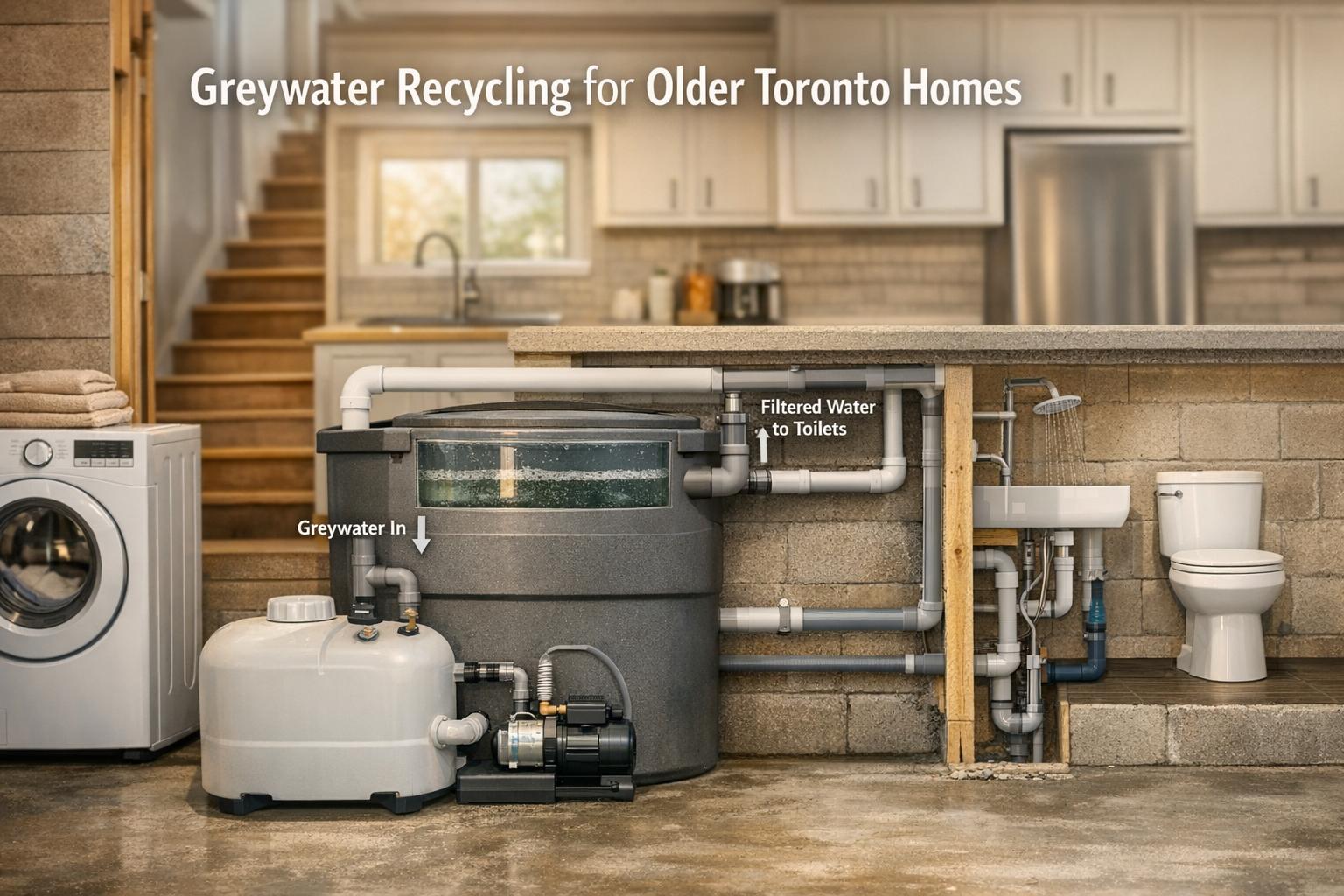

Greywater recycling is a smart way to reuse water from showers, sinks, and laundry for non-drinking purposes like flushing toilets or irrigation. In older Toronto homes, this can save up to 45% of potable water use and reduce strain on combined sewer systems, which helps prevent pollution in Lake Ontario. However, retrofitting these systems comes with challenges, including outdated plumbing, limited space, and freezing risks during winter. Costs range from $300 for basic setups to $15,000 for advanced systems, with potential savings of 30–40% on annual water bills.
Key points to know:
- What it is: Reusing household water (not from toilets or kitchens) for secondary uses.
- Benefits: Cuts water bills, supports city infrastructure, and reduces wastewater.
- Challenges: High retrofitting costs, space constraints, and winter-proofing.
- Costs: $300–$15,000 depending on the system.
- Savings: 30–45% reduction in water use, with a 3–7 year payback period.
Licensed plumbers are essential for safe and compliant installation. Systems like laundry-to-landscape setups are affordable and simple, while advanced filtration systems offer year-round use indoors. Proper planning, maintenance, and winterization are key to success.
Problems and Regulations for Greywater Retrofits in Toronto
Technical Limits of Older Homes
Retrofitting older homes in Toronto for greywater systems comes with unique challenges. These homes often have infrastructure that wasn't designed to handle water recycling. For instance, separating greywater from blackwater typically involves cutting into walls and floors to install additional piping. Plus, treatment tanks and filtration systems require space - something basements or utility rooms in older homes may lack . Cathy Rust from BEC Green puts it plainly:
"Retrofitting an already built home is difficult unless a renovation is being undertaken".
Another hurdle is the plumbing itself. Diverting greywater from upper-floor showers to a treatment unit in the basement often demands extensive structural changes . Maintenance adds another layer of complexity. Soap scum can corrode valves and cause leaks, and lint from laundry systems tends to clog filters . These challenges make compliance with local building codes even more critical for ensuring safe and functional systems.
Toronto Regulations and Permits
In Toronto, greywater systems must meet the requirements of the Ontario Building Code and the CAN/CSA-B128 standard for non-potable water systems . Chris Thompson of Greyter Water Systems explains:
"Ontario Building Code supports the use of Greywater for flushing toilets. The CSA Standard B128 also provides guidance for building inspectors to ensure the system is acceptable".
Permitted uses for greywater in the city are limited to flushing toilets and urinals or for subsurface irrigation . Installing a greywater system requires a Plumbing Building Permit, which costs $214.79 for single-family homes as of January 1, 2026. If your system includes backflow prevention devices, each device will incur an additional fee of $92.79. To ensure safety, all greywater lines must be clearly labelled throughout the home. These regulations, combined with technical challenges, highlight the complexity of implementing greywater systems in Toronto.
Weather and Climate Problems
Toronto's harsh winters introduce another set of challenges for greywater systems. Pipes and storage tanks are at risk of freezing and cracking if not properly insulated or buried below the frost line. The best way to prevent freezing damage is by installing treatment units and storage tanks in insulated indoor spaces, like basements.
Additionally, Toronto's heavy rainfalls and spring runoff can contaminate stored greywater if vents or overflow pipes aren't sealed properly. Stagnant water can also become a breeding ground for bacteria like Legionella. To address these risks, it's essential to use screened air vents and tightly sealed access hatches, which can keep insects, animals, and contaminated surface water out, especially during intense rainstorms.
How to Install a Graywater Irrigation System | This Old House

How to Retrofit Greywater Systems in Older Homes
Retrofitting greywater systems in older Toronto homes requires a careful evaluation of the existing plumbing and a methodical approach to installation and maintenance. Here's how to get started.
Checking Your Current Plumbing
Before installing a greywater system, begin by assessing your home's plumbing. Identify which fixtures can supply greywater - bathroom sinks, showers, tubs, and washing machines are ideal. However, avoid using water from kitchen sinks, as food particles and grease classify it as blackwater.
Older Toronto homes, especially those built before the mid-1950s, may have unique challenges. For instance, lead service pipes are common in these homes and must be identified and addressed for safety. Additionally, some older neighbourhoods rely on combined sewer systems, where stormwater and sewage share the same pipes. These systems can complicate overflow and drainage management.
It's wise to hire a licensed plumber to conduct a main drain camera inspection. This inspection can help pinpoint diversion points and assess the condition of your pipes. Ensure that gravity-fed systems can maintain a consistent 2% downward slope - this translates to a 1/4-inch drop for every foot of pipe. If you plan to use greywater for outdoor irrigation, a percolation test will confirm whether your soil can absorb water effectively without pooling. Once your plumbing has been evaluated, you’re ready to move forward with installation.
Installing the System
The next step is to install separate plumbing lines to divert greywater from the main sewer system. This process may involve cutting into walls and floors to add new piping, which is often best done during larger home renovations.
Key components of the system include a 3-way diverter valve, multi-stage filtration, and either a pump or a gravity-fed mechanism. If space is limited, consider compact diversion units that can be installed in crawl spaces, partially buried, or fully underground. For example, professional-grade systems like the Aqua2use GWDD cost around $949.00 and can handle up to 10 kg of solids before the filters need cleaning.
Remember, any work involving buried plumbing in Toronto requires a building permit. As of January 1, 2026, the flat fee for plumbing permits related to buried piping in single-family homes is $214.79, with an additional $38.67 per device for backwater valves. Once your system is installed, it’s crucial to protect it from Toronto’s harsh winters.
Protecting Against Freezing
Toronto’s cold winters can pose a risk to greywater systems, so taking precautions is essential. One of the best ways to prevent freezing is to place treatment units and storage tanks indoors - in a basement, garage, or utility room where temperatures stay above freezing.
For pipes located in unheated areas like crawl spaces or near exterior walls, insulating them with foam pipe covers can help. Additionally, sealing air leaks around pipe entries, electrical wiring, and dryer vents reduces the chances of cold air seeping in. Before frost sets in, shut off the valve for irrigation lines, disconnect hoses, and drain outdoor pipes to avoid freeze damage.
During the winter months, it’s a good idea to turn off the greywater system and divert discharge to the municipal sewer. This not only protects the system from freezing but also allows the soil in your irrigation area to recover during the colder months.
Greywater Recycling Technologies for Older Toronto Homes

Greywater System Comparison for Toronto Homes: Costs, Maintenance and Features
When choosing greywater recycling systems for older Toronto homes, it's essential to consider your budget, available space, and how you plan to reuse the water. Here's a closer look at some options, helping you find the right fit for your needs.
Laundry-to-Landscape Systems
Laundry-to-landscape (L2L) systems are a straightforward and cost-effective solution that avoids the need to modify existing plumbing. These systems use the washing machine's internal pump to send water through a three-way diverter valve directly to your garden. The greywater is distributed to trees and shrubs through mulch basins. You can set up an L2L system with basic DIY materials for about $300.
However, these systems are strictly for outdoor irrigation. Toronto’s freezing winters pose a challenge, so it’s crucial to protect exposed piping by burying HDPE tubing, using insulated fittings, or opting for freeze-rated components. During the colder months, the system should be shut off, and the greywater redirected to the municipal sewer.
Biofilter and Mechanical Treatment Units
For more advanced greywater recycling, consider systems like the Hydraloop H300 or Aqua2use. These units use multi-stage filtration processes - such as sedimentation, flotation, bioreaction, and UV disinfection - to treat greywater from showers and sinks. The treated water is clean enough for indoor uses like toilet flushing. For instance, the Hydraloop can cut household drinking water use by up to 45%, while the Aqua2use GWDD, starting at $629.00, can save up to 40,000 gallons of water annually.
"At the end of the day, it makes no sense flushing toilets with perfectly good drinking water." – John Bell, Co-founder and Chief Commercial Officer, Greyter
These systems are ideal for year-round operation when installed in heated spaces like basements or utility rooms, bypassing Toronto’s freezing temperatures. However, they do require ongoing maintenance, such as cleaning filters, which might be a drawback for some homeowners. High-end systems like Greyter units cost between $7,000 and $10,000, with replacement filters priced at about $219.95.
Compact Constructed Wetlands
For a more natural approach, compact constructed wetlands use plants and media to filter greywater. These systems work best in indoor spaces like greenhouses or Earthship-style setups, where they are protected from freezing. Besides being functional, they also add year-round greenery to your home. Modular green wall systems, for example, can remove up to 80% of organic matter while cutting energy use by up to 80% compared to centralized systems.
A key consideration is that plants in these systems can absorb a lot of water through evapotranspiration, which might limit the amount available for irrigation. Maintenance involves caring for the plants and ensuring proper light and substrate conditions, making it a good fit for those who enjoy gardening.
These technologies provide flexible solutions tailored to the challenges of older homes in Toronto.
| Technology | Best Use Case | Installation Cost | Maintenance Level | Year-Round Operation |
|---|---|---|---|---|
| Laundry-to-Landscape | Outdoor irrigation | ~$300 | Low | No (requires winterizing) |
| Aqua2use GWDD | Subsurface irrigation | $629.00+ | Moderate | Indoor only |
| Hydraloop/Greyter | Indoor toilet flushing | $7,000–$10,000 | Moderate to High | Yes (indoor installation) |
| Constructed Wetlands | Aesthetic filtration | Varies | Moderate | Yes (with indoor setup) |
sbb-itb-466cac3
Costs and Savings of Greywater Recycling Retrofits
Installation Costs and Water Savings
When considering greywater retrofits for older Toronto homes, understanding both costs and potential savings is crucial.
The cost of retrofitting a greywater system can vary widely depending on the complexity of the setup. A simple laundry-to-landscape system might cost around $300 CAD in materials. On the other end of the spectrum, advanced whole-home systems that include filtration and treatment could range between $5,000 and $15,000 CAD. If you’re looking for something in between, units like the Aqua2use GWDD start at roughly $1,280 CAD for the unit alone.
Keep in mind that permit fees will add to the upfront costs. To ensure compliance with the Ontario Building Code, professional installation by a licensed plumber is often required. For expert assistance, you can reach out to local professionals such as Creed Plumbing (https://creedplumbing.ca).
The savings potential is significant. Depending on the system, households can cut water consumption by 30–45%. Field tests in Ontario have shown average savings of 16.6 litres per person daily. Over time, this translates to a 30–40% reduction in annual water bills.
"At current water rates, a homeowner would save 30-40% on their water bill annually with a graywater system".
For a complete picture, it’s also important to consider ongoing maintenance and the expected payback period.
Maintenance and Payback Period
Long-term savings from greywater systems depend on regular maintenance and the time it takes to recover your initial investment.
Routine maintenance is essential to keep the system running efficiently. You should budget $200–$500 CAD annually for tasks like filter cleaning, pump checks, and biological monitoring. Simpler systems typically need filter rinsing every four to six months, with full replacements required every three years. Advanced filtration systems, on the other hand, can handle up to 10 kg of solids before needing cleaning.
The payback period for a greywater system depends on factors like installation costs, local water rates, and household water usage. In Toronto, most homeowners can expect to break even within three to seven years. However, if your home already has water-efficient fixtures such as low-flow toilets, the payback period might be longer since there’s less water to save. That said, retrofitting during major renovations - when plumbing is accessible - can significantly reduce installation hurdles and costs.
Maintaining and Improving Greywater Systems
Regular Maintenance Tasks
Keeping your greywater system in good shape is essential, especially in older Toronto homes. One key task is filter maintenance. Filters should be rinsed every four to six months to clear out hair, lint, and soap residue. If your system is connected to laundry, you may need to clean the filters more often. To keep everything running smoothly, replace the filter media every three years.
Toronto’s cold winters bring their own set of challenges, making winterization a must. Before the first frost, shut off outdoor water supplies and drain all pipes to prevent freezing and bursting. Pay extra attention to pipes in crawlspaces, attics, or near exterior walls by covering them with foam insulation. Also, clear out catch basins and eavestroughs to avoid blockages during heavy rain.
Don’t skip leak detection - it’s something you should do at least once a year. A simple dye test in your toilet tank can reveal silent leaks, and checking your water meter’s "red triangle" indicator while taps are off can help spot hidden ones. If your home was built before the mid-1950s, it’s worth checking for lead water service pipes during any plumbing updates.
Sticking to these maintenance routines ensures your system runs efficiently and lays the groundwork for effective performance monitoring.
Monitoring System Performance
Once your greywater system is properly maintained, keeping an eye on its performance helps catch problems early. Many modern systems come with smart device managers that send real-time alerts and automatically track water savings. If your system is manual, regular visual checks of external filters can help you spot clogs caused by hair and debris. You can also use MyWaterToronto to monitor water usage patterns, which can reveal inefficiencies or leaks.
It’s important to maintain the right balance between greywater production and demand. For example, a 10-minute shower with a low-flow head generates about 70 litres of greywater, while daily toilet flushing uses approximately 42 litres per person. If your system consistently produces more greywater than needed, you might avoid connecting additional sources like laundry, which would increase filter cleaning requirements. During Toronto’s rainy spells, rain or soil moisture sensors can be a smart addition to deactivate your irrigation pump and prevent over-saturating the soil.
For professional help with monitoring or maintenance, consider reaching out to Creed Plumbing. They provide services like leak detection, water pressure tests, and drain cleaning to keep your system in top shape (https://creedplumbing.ca).
Conclusion
Main Points
Retrofitting greywater systems into older Toronto homes is both practical and rewarding. By reusing water from sources like laundry, showers, and bathroom sinks, homeowners can save up to 40,000 gallons of water annually for outdoor use. This not only cuts water bills but also supports Toronto’s TransformTO Net Zero Strategy and Green Standard objectives.
Greywater recycling also reduces the strain on Toronto's sewer systems and helps protect local water bodies from pollution. Success hinges on careful planning, proper installation, and regular maintenance. For older homes, simpler systems such as laundry-to-landscape setups are often the most suitable since they avoid the need for extensive plumbing modifications. It’s crucial to use plant-safe products and avoid storing greywater for more than 24 hours.
These advantages highlight the value of professional expertise in ensuring a smooth and effective installation.
Working with Licensed Plumbers
Given the complexities involved, hiring a professional is key to a successful greywater system retrofit. Licensed plumbers ensure that the system operates efficiently while adhering to Toronto’s regulations. They bring expertise in navigating permit requirements, assessing site-specific conditions like soil type and plumbing layouts, and preventing cross-contamination between potable water and greywater lines.
Creed Plumbing offers specialized services for Toronto homeowners exploring greywater solutions. As Master Plumber Tony Nguyen puts it:
"I believe every customer wants a reliable and trusted plumber who is transparent with their pricing and is one that they can count on, whether a plumbing emergency or finding an efficient solution for a project".
Their offerings include leak detection, water pressure testing, and installing fixtures compatible with greywater systems (https://creedplumbing.ca). Consulting with licensed professionals early in the process can simplify permit applications, help you select the ideal system for your home, and establish a maintenance routine to keep your system running efficiently for years to come.
FAQs
What challenges come with installing a greywater system in older Toronto homes?
Installing a greywater system in older Toronto homes presents several challenges, largely due to the way these homes were originally built. For starters, the plumbing in older properties wasn’t designed with modern greywater systems in mind. Retrofitting often means cutting into walls, adding new drainage lines, and carving out space for filtration and diversion units. This can be a labour-intensive process, and in homes with limited space, it can feel especially disruptive.
Cost is another hurdle. Greywater systems typically require multi-stage filtration and pumps, which can quickly add up. On top of that, additional upgrades - like backflow preventers or electrical work - might be necessary, pushing the initial investment even higher. While these systems can save up to 40.9 litres of water per household daily, Ontario’s relatively low water rates can make the financial benefits less compelling unless incentives are available.
Lastly, Ontario’s Building Code introduces its own set of challenges. Greywater systems must meet strict standards for treatment and disinfection, which can be tricky to implement in older homes. To navigate these requirements and ensure the system is both efficient and compliant, homeowners can benefit from working with a licensed and insured plumber, such as Creed Plumbing. They can help adapt the system to the unique constraints of older Toronto properties while meeting all necessary regulations.
What are Toronto’s regulations for installing greywater systems in older homes?
Toronto has clear regulations for greywater systems under its Sewers By-law (Municipal Code, Chapter 681). Greywater - wastewater from sources like showers, baths, and washing machines - must be properly treated before it can be discharged into the municipal sewer system. If homeowners want to reuse greywater for purposes such as toilet flushing or subsurface irrigation, they need to secure a water-related permit, install approved backflow prevention devices, and ensure their system meets the city's discharge standards.
In older Toronto homes, plumbing upgrades may be necessary to create separate greywater lines and avoid any risk of cross-contamination with drinking water. The Toronto Green Standard also supports water reuse by offering performance targets that can be helpful for designing or retrofitting greywater systems in such properties.
While these rules can seem overwhelming, Creed Plumbing offers expert guidance. They assist with permits, backflow prevention, and tailored greywater solutions to help homeowners stay compliant with Toronto’s regulations.
How can I prevent my greywater system from freezing during Toronto's winters?
To keep your greywater system running smoothly through Toronto’s harsh winters, it’s all about keeping things warm and well-protected. Start by insulating all pipes in unheated spaces like crawl spaces, attics, or garages. Foam pipe wrap or insulated sleeves work well for this. Next, seal up any drafts around windows, doors, and vents to prevent cold air from sneaking in. And don’t forget to maintain a warm indoor temperature - set your thermostat to at least 12 °C. For extra protection, you can add a small heater or heat-trace cables.
For outdoor components, it’s best to drain or shut off exposed parts. Turn off exterior water supplies and empty spigots to avoid freezing. If you can, move your greywater tank to a heated spot like a basement. If that’s not an option, wrap the tank in insulation and use thermostatically controlled heat tape to keep it from freezing. A quick inspection every fall can help you catch any potential issues before the cold sets in.
Older homes can be trickier to winterize, but Creed Plumbing can step in to help. They’ll assess problem areas, add professional-grade insulation, and install heat-trace systems to make sure your greywater system stays functional all winter long.