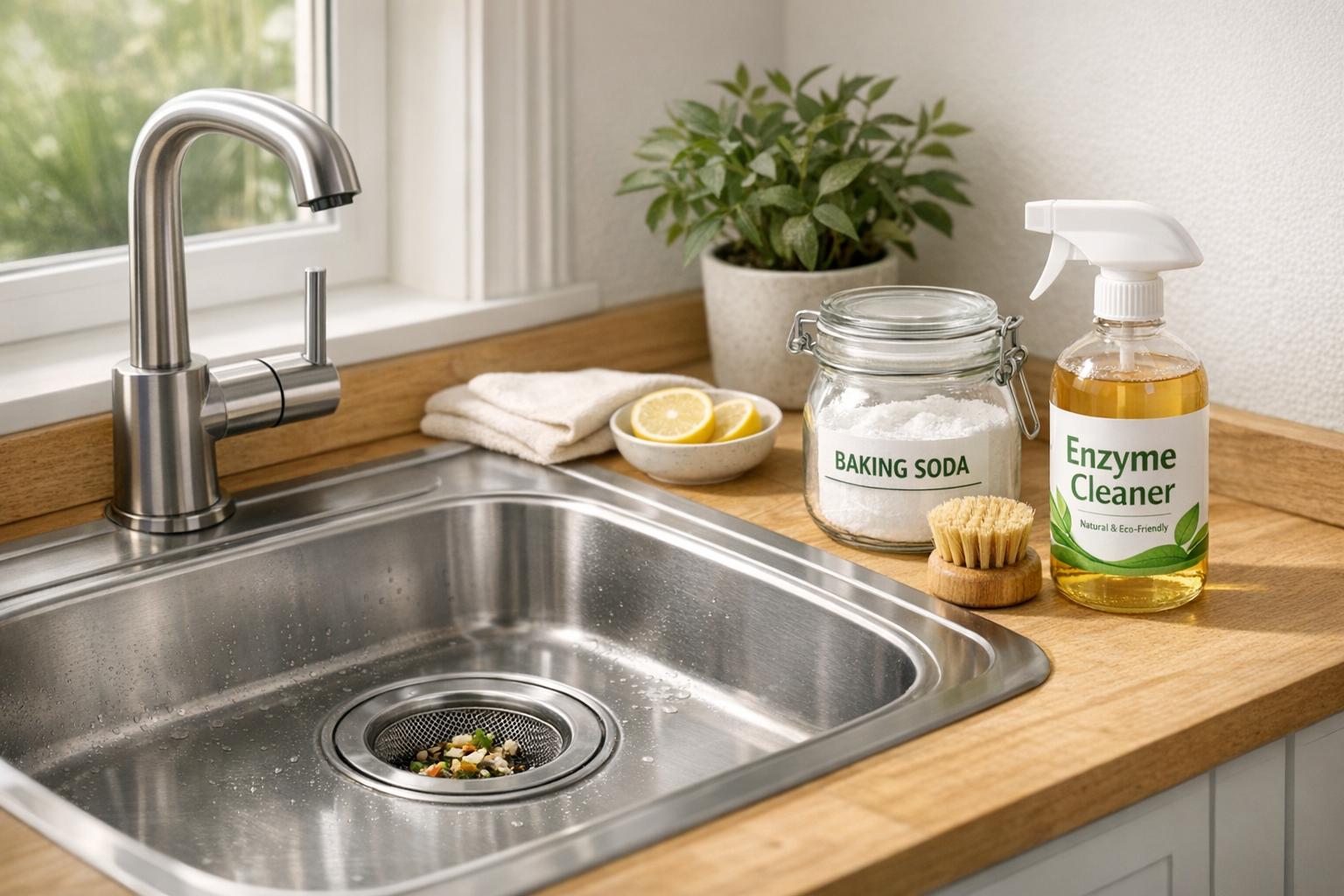

Clogged drains can disrupt your day and even damage your plumbing. Here's how to manage them effectively and responsibly:
- Avoid chemical cleaners: Harsh products corrode pipes and harm waterways.
- Use eco-friendly solutions: Baking soda and vinegar or enzyme-based cleaners safely break down buildup.
- Watch for common culprits: Grease, hair, soap scum, and tree roots are frequent causes of blockages.
- Prevent clogs proactively: Flush drains with hot water, install mesh screens, and dispose of grease properly.
For stubborn clogs, professional services like hydro jetting and camera inspections offer safe, effective solutions. By choosing natural methods, you protect your home, save money, and reduce pollution.
What Eco-Friendly Options Replace Harsh Drain Cleaners?
What Causes Drain Clogs in Toronto Homes
Understanding what goes down your drains is key to keeping them clear. Everyday habits can gradually lead to blockages, and in Toronto, the combination of older infrastructure and mature trees adds some unique challenges. Many of these issues often start with what happens in the kitchen and bathroom.
Grease, Food Particles, and Soap Scum
One of the most common culprits behind kitchen drain clogs in Toronto is fats, oils, and grease (FOG). When you pour warm cooking oil or grease - like bacon drippings - down the sink, it may seem harmless at first. But as it cools, it solidifies inside the pipes, clinging to the walls and narrowing the space for water to flow. Over time, this hardened grease traps food particles, creating a stubborn blockage.
"Warm grease runs down your drain until it cools in the pipe, where it congeals to start forming a clog. Then other stuff gets stuck in it, and before you know it you've got a major clog." – Family Handyman
In bathrooms, older pipes with rust and scaling make the problem worse. Soap scum, a sticky residue from soap, combines with hair and other debris to create tough clogs. Everyday grooming habits can unintentionally contribute to these issues.
Hair and Personal Care Products
Did you know the average person loses between 50 and 100 strands of hair daily? A lot of this hair ends up in bathroom drains. Without a hair catcher, these strands mix with personal care products like conditioner or lotion, forming dense clogs that are tough to remove. On top of that, soap can leave behind a film that traps even more debris, gradually shrinking the pipe's capacity.
Flushing items that aren't meant to go down the toilet - like wet wipes, paper towels, tampons, dental floss, or cotton balls - makes the situation worse. Unlike toilet paper, these materials don’t break down easily and can block your plumbing system entirely.
Tree Roots in Main Sewer Lines
Toronto’s beautiful, tree-lined streets come with a hidden risk: tree roots invading sewer lines. Roots naturally seek out water and nutrients, which can lead them to infiltrate pipes through cracks, leaks, or joints - especially in older clay tile systems. Once inside, the roots form a tangled mesh that traps debris, slowing wastewater flow and eventually causing major blockages or even pipe failure.
"Tree roots may also grow into a cracked pipe, partially obstructing the flow of waste." – DrainWorks Plumbing
Homes in older Toronto neighbourhoods with aging clay pipes and mature landscaping are particularly vulnerable to this issue. Recognizing these causes is the first step toward finding effective and eco-friendly solutions.
Why Chemical Drain Cleaners Are Harmful
Using chemical drain cleaners might seem like a quick fix for a clogged sink, but it often comes with hidden consequences. These products typically contain powerful chemicals like sulfuric acid, hydrochloric acid, and sodium hydroxide.
The first issue starts within your pipes. These harsh substances can corrode metal pipes and weaken PVC ones, causing them to soften or warp. Over time, this can lead to leaks or even complete structural failure. On top of that, the chemicals can break down the seals, gaskets, and caulking that hold your plumbing system together.
"The chemicals in Drano can erode not only the clogged material causing the blockage but will also quickly eat away at the metal plumbing pipes themselves, causing more harm than good." – Thomas & Galbraith
But the damage doesn’t stop at your home. Once these chemicals wash down the drain, they enter Toronto’s wastewater system and eventually local waterways. Since city treatment plants can’t completely remove these toxins, they end up harming fish and throwing aquatic ecosystems off balance.
The health risks are just as alarming. Chemical drain cleaners can cause serious injuries, including chemical burns, eye damage, respiratory issues, and skin irritation. For homes with septic systems, the chemicals kill the bacteria necessary for breaking down organic waste. This can disrupt the system, causing backups and other costly problems.
These dangers highlight the importance of considering safer, eco-friendly alternatives for maintaining your drains. Making informed choices can protect your home, your health, and the environment.
sbb-itb-466cac3
Eco-Friendly Methods to Prevent Drain Clogs
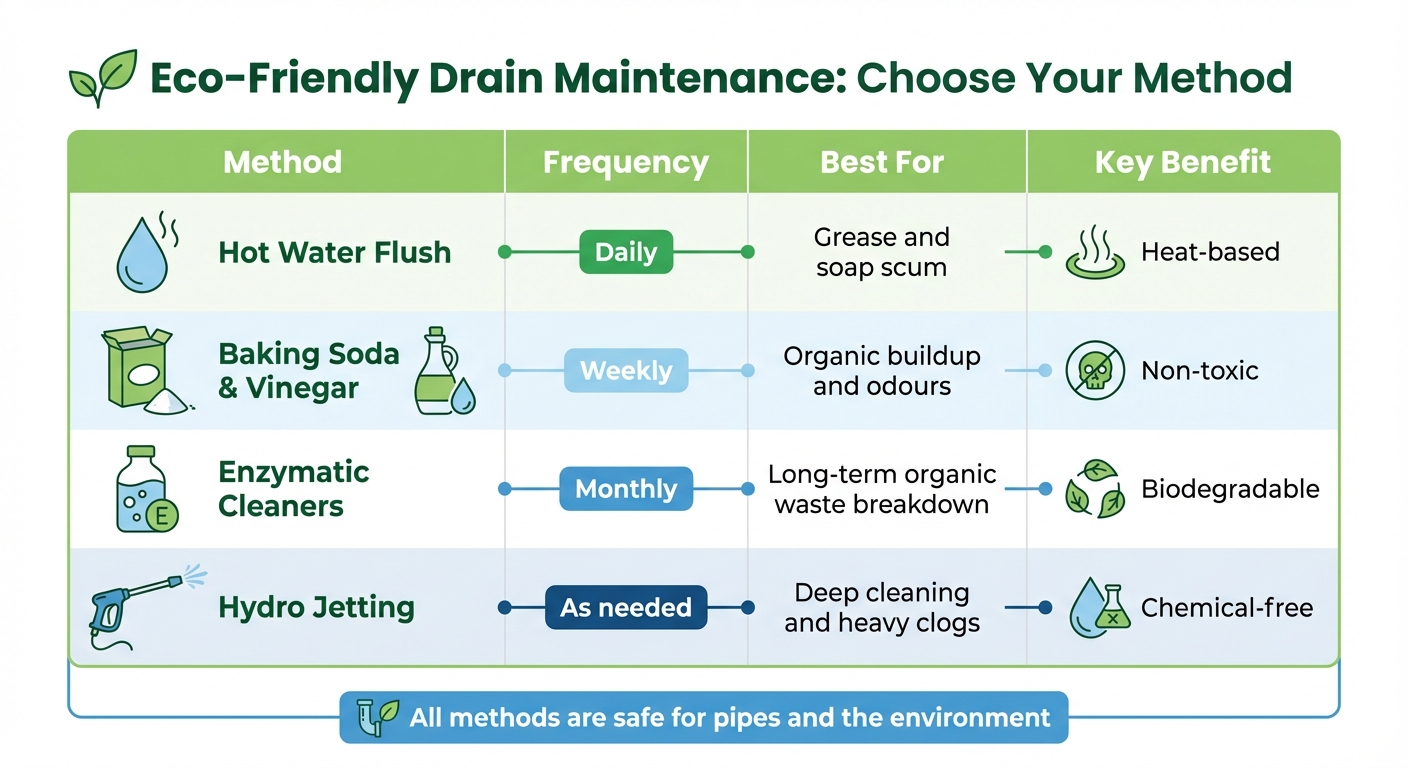
Eco-Friendly Drain Maintenance Methods Comparison Chart
Taking care of your drains in an environmentally conscious way not only prevents clogs but also helps protect Toronto's plumbing systems and waterways.
Baking Soda and Vinegar Mixture
A tried-and-true solution, the combination of baking soda and vinegar generates carbon dioxide bubbles that help break down organic buildup. When the base (baking soda) reacts with the acid (vinegar), it creates a bubbling effect that loosens debris in your pipes.
"The bubbling reaction from the baking soda and vinegar helps to loosen the drain clog, and the boiling water... helps remove it from your pipes." – Liquid-Plumr
Here’s how to do it: Pour 1/2 cup of baking soda into the drain, followed by 1/2 to 1 cup of white vinegar. Cover the drain with a plug or a damp cloth and let the mixture sit for 10 to 30 minutes. Then, flush it out with a kettle of hot water.
Tip for Toronto homeowners: If you have PVC pipes, avoid boiling water, as it can damage the plastic. Instead, heat the water to about 80°C. Using this method weekly can help prevent grease and soap scum from accumulating.
If this bubbling method doesn’t fully address persistent buildup, enzyme-based cleaners are another eco-friendly option.
Enzymatic Cleaners for Regular Maintenance
Enzyme-based cleaners, such as Bio-Clean, use naturally occurring bacteria and enzymes to break down organic waste like hair, grease, and food particles. Unlike harsh chemical cleaners, these biodegradable options are safe for your pipes and won’t harm aquatic ecosystems.
"Bio-Clean is one of the best ways to clean organic materials from your plumbing system... in an environmentally friendly way that's safe for you and your plumbing system." – Hoerner Heating & Plumbing
Apply these treatments once a month for consistent maintenance. They’re especially useful for kitchen sinks prone to grease buildup and bathroom drains that often clog with hair and soap scum. Plus, they’re safe to use with septic systems.
For more thorough cleaning or to address stubborn clogs, additional methods can be helpful.
Hot Water Flushes and Hydro Jetting
A simple hot water flush after each use can help dissolve grease and soap residue, keeping your drains clear on a daily basis.
For more intensive cleaning, professional hydro jetting uses high-pressure water to thoroughly clean the inside of your pipes without the need for chemicals. This method is great for removing tough blockages and years of accumulated buildup. It’s especially useful for slow drains or as part of an annual maintenance routine. Plus, it’s a chemical-free option that’s gentle on your plumbing and the environment.
| Method | Frequency | Best For | Key Benefit |
|---|---|---|---|
| Hot Water Flush | Daily | Grease and soap scum | Heat-based |
| Baking Soda & Vinegar | Weekly | Organic buildup and odours | Non-toxic |
| Enzymatic Cleaners | Monthly | Long-term organic waste breakdown | Biodegradable |
| Hydro Jetting | As needed | Deep cleaning and heavy clogs | Chemical-free |
Professional Eco-Friendly Drain Maintenance with Creed Plumbing
While DIY drain maintenance is great for everyday upkeep, some situations demand the expertise of seasoned professionals. Since 2015, Creed Plumbing has been a go-to choice for Toronto residents, offering eco-conscious drain care that prioritizes both plumbing efficiency and environmental responsibility.
Creed Plumbing uses three standout eco-friendly techniques: hydro-jetting, which clears blockages without resorting to harsh chemicals; camera inspections, allowing precise identification of clogs without the need for disruptive digging; and enzymatic solutions, which safely break down organic buildup. These methods work hand-in-hand with the DIY techniques discussed earlier, delivering comprehensive drain protection.
Master Plumber Tony Nguyen, who brings over 20,000 hours of hands-on experience, highlights the company's dedication to honest pricing and dependable service. As he puts it:
"I believe every customer wants a reliable and trusted plumber who is transparent with their pricing and is one that they can count on, whether a plumbing emergency or finding an efficient solution for a project".
In addition to repairs, Creed Plumbing offers preventative maintenance services, including thorough whole-house inspections aimed at catching potential issues early. They provide upfront pricing, back their work with a one-year warranty, and extend additional discounts to seniors and military members.
"At Creed Plumbing, we don't just fix the problem, we take preventative measures to stop it from happening again." - Creed Plumbing
For Toronto homeowners dealing with stubborn drainage problems or looking to stay ahead of potential issues, professional eco-friendly services from Creed Plumbing can deliver lasting solutions while supporting the integrity of the city’s aging infrastructure.
Conclusion
Maintaining clear drains doesn’t require harsh chemicals. By choosing eco-friendly methods, you can protect your plumbing, save money, and help safeguard Toronto’s waterways. Simple steps like installing mesh screens, properly disposing of grease, and flushing drains with hot water monthly can go a long way in preventing clogs. Keep an eye out for warning signs such as slow drainage, gurgling noises, or unpleasant odours - these can signal trouble brewing in your pipes.
For tougher clogs, natural solutions like baking soda and vinegar or enzyme-based cleaners can effectively break down buildup without harming your pipes or septic system. As the David Suzuki Foundation highlights:
"You'll save money, preserve your plumbing and prevent toxic chemicals from entering the environment."
When blockages persist or become severe, calling in a professional can make all the difference. Creed Plumbing’s eco-conscious techniques, including hydro-jetting, camera inspections, and enzymatic treatments, tackle problems at their root while keeping your home’s plumbing intact.
FAQs
Are eco-friendly drain care methods as effective as chemical cleaners?
Yes, environmentally friendly drain care solutions can work just as well - sometimes even better - than chemical-based cleaners. Tools like drain snakes and enzyme-based products are excellent for clearing clogs without damaging your pipes or impacting the environment negatively.
Chemical cleaners, on the other hand, often come with risks. They can corrode your plumbing over time and release harmful substances into your home and surroundings. Eco-friendly alternatives offer a safer option for your household, your family, and the planet. They’re an ideal choice for keeping drains clear in Toronto homes while being mindful of sustainability.
What are the best eco-friendly ways to prevent drain clogs in older Toronto homes?
Older homes in Toronto often come with plumbing systems that have seen better days. Materials like cast-iron or early PVC pipes are common and can be more vulnerable to clogs caused by things like hair, food scraps, grease, hard-water deposits, or even tree roots. While it might be tempting to grab a harsh chemical drain cleaner, these products can harm your pipes and the environment. A better approach? Eco-friendly solutions that protect your home and Toronto’s waterways.
Here are some simple, natural ways to keep your drains clear:
- Use drain screens: These handy covers for sinks, tubs, and showers catch debris before it can clog your pipes.
- Flush with hot water: Pour hot water (around 90°C) down your drains once a week to help dissolve grease and keep things flowing.
- Baking soda and vinegar trick: Pour ¼ to ½ cup of baking soda into the drain, followed by 1 cup of vinegar. Let it sit for 30 minutes, then rinse with boiling water.
- Install a water softener: This can help reduce hard-water mineral buildup, which is a common issue in older plumbing systems.
- Check for tree roots: Older pipes are particularly susceptible to blockages caused by tree roots. Regular inspections can help catch this early.
If you need professional assistance, Creed Plumbing offers licensed and insured services across Toronto. They specialize in eco-friendly drain maintenance and inspections, tailored specifically for the unique challenges of aging homes.
How can I prevent tree roots from blocking my sewer line?
Tree roots are naturally drawn to the moisture and nutrients found in sewer lines. Even tiny cracks in the pipes can provide an entry point for these roots, which can lead to blockages over time. To avoid this issue, it’s smart to plan ahead when planting trees. Before digging, check the location of underground utilities by contacting your local Toronto municipal department. If you’re planting trees with aggressive root systems - such as oak, maple, or willow - make sure they’re planted several metres away from sewer lines.
If you already have trees growing near sewer lines, you can take action to protect your plumbing. Installing a physical root barrier, like a high-density polyethylene sheet, can help redirect roots away from pipes. For cases where roots have already infiltrated the lines, eco-friendly options such as biodegradable foaming root killers can halt further growth without relying on harsh chemicals. Additionally, scheduling regular video inspections - especially in early spring - can help spot and address root-related issues before they escalate into costly repairs.
For Toronto homeowners, professional maintenance is an essential part of keeping sewer systems in good shape. Creed Plumbing provides licensed video inspections, root removal services, and preventive measures like root barriers to help safeguard your plumbing and avoid expensive damage.